 Save
Save My neighbor stopped by one evening with a bag of beautiful salmon fillets and mentioned she'd been craving something bright and nourishing. We decided to throw together a bowl that evening, and I still remember how the ginger and soy filled the kitchen with this warm, sophisticated smell as the salmon baked. That simple dinner became something we made together regularly, each time tweaking the vegetables or adding a squeeze of lime at the end. Now whenever I make it alone, I can almost hear her voice asking for just a tiny bit more sesame oil.
I made this for my parents on a weeknight when my mom was too tired to cook, and watching my dad go back for seconds while telling stories about his day reminded me how food can reset an entire evening. That bowl somehow made a regular Tuesday feel like an occasion.
Ingredients
- Salmon fillets (150g each): Look for ones that feel firm and smell briny, not fishy—that's how you know they're fresh. Pat them dry before glazing so the sauce sticks properly.
- Soy sauce: This is your umami backbone, so don't skip it or cut corners with the cheapest bottle on the shelf.
- Fresh ginger: The grated kind from a jar will work in a pinch, but fresh ginger adds a brightness that actually matters here.
- Honey: It balances the saltiness of the soy and caramelizes slightly on the salmon's surface—pure magic happens in that glaze.
- Rice vinegar: This tiny splash keeps everything from tasting heavy and adds a subtle tartness that ties the whole bowl together.
- Sesame oil: Use the toasted kind; it has so much more personality than the neutral version.
- Jasmine or sushi rice: These grains are fluffy and slightly sweet, which complements the glaze beautifully.
- Fresh vegetables (carrots, cucumber, bell pepper): Julienne them thin so they stay crisp and look restaurant-quality in the bowl.
- Edamame: You can buy them shelled and cooked, which saves enormous amounts of time.
- Sesame seeds and scallions: These are your finishing touches—they add texture and a bit of visual pop that makes people actually want to eat what you've made.
Tired of Takeout? 🥡
Get 10 meals you can make faster than delivery arrives. Seriously.
One email. No spam. Unsubscribe anytime.
Instructions
- Rinse and cook the rice:
- Run your rice under cold water until the water turns clear—this removes the starch so each grain stays separate and fluffy. Combine with water, bring to a boil, then drop the heat and cover; let it steam quietly for 15 minutes while you do everything else.
- Build your glaze:
- Whisk soy sauce, honey, ginger, garlic, rice vinegar, and sesame oil together in a small bowl. Taste it raw on your finger—it should make you slightly pucker but also want another taste.
- Thicken if you like:
- If you want a glaze that clings rather than pools, mix cornstarch with a tablespoon of water and stir it in. This step is optional but worth it if you're serving guests.
- Prepare your workspace:
- Line a baking sheet with parchment paper and preheat your oven to 200°C (400°F). This takes two minutes and saves you from scrubbing later.
- Glaze and bake the salmon:
- Pat your salmon dry, lay it on the sheet, and brush generously with glaze. Save the rest—you'll need it for drizzling. Bake for 12 to 14 minutes until the flesh is opaque and flakes easily.
- Finish the glaze:
- While the salmon cooks, pour remaining glaze into a small saucepan and let it simmer over medium heat for a minute or two, stirring occasionally. It'll thicken slightly and deepen in color—that's when you know it's ready.
- Prep your vegetables:
- Julienne the carrots, cucumber, and bell pepper into thin, even strips. Take your time here; neat vegetables make the bowl look intentional instead of haphazard.
- Assemble your bowls:
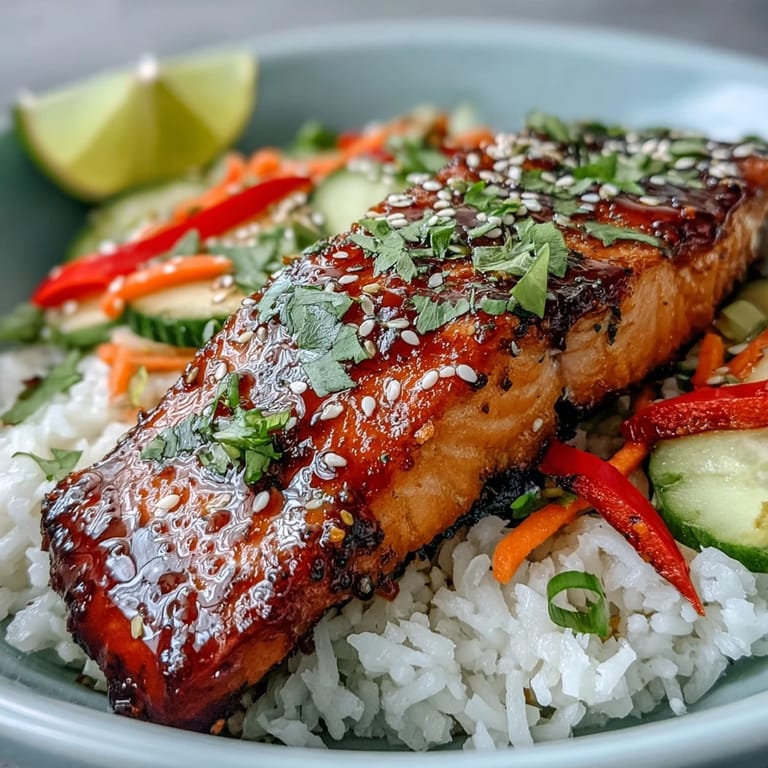
- Divide rice among four bowls, nestle a salmon fillet on top, and arrange the vegetables and edamame in sections around it like you're creating something you'd want to photograph.
- Add the finishing touches:
- Drizzle the thickened glaze over everything, scatter sesame seeds and scallions across the top, and squeeze lime if you're using it. Serve immediately while the salmon is still warm.
 Save
Save There's something quietly satisfying about building these bowls—the way each component has its own texture and temperature, but they all make sense together on one plate. It's like cooking taught me something about balance that went beyond just food.
Why the Glaze Changes Everything
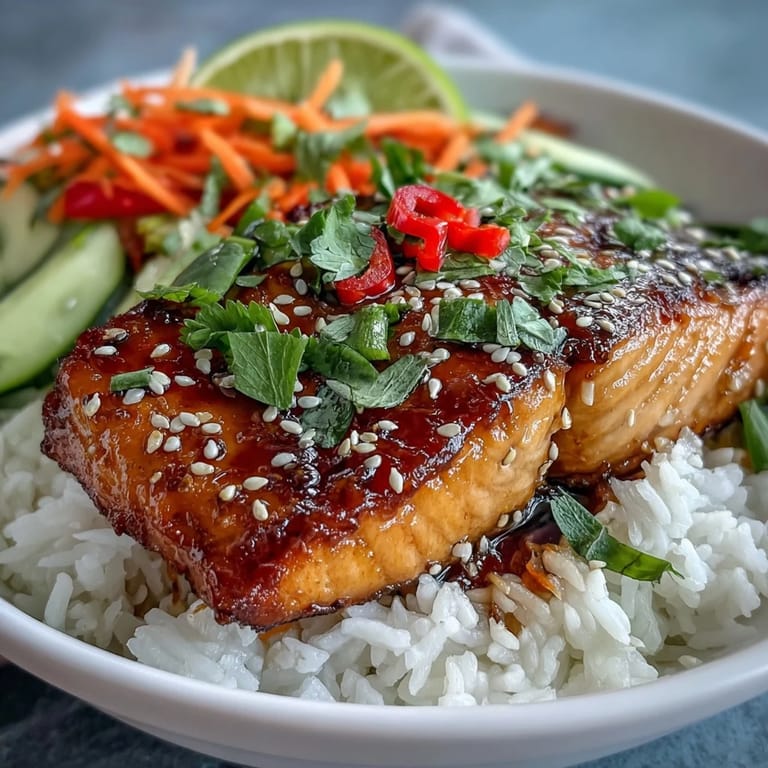
I used to make glazed salmon the old way, cooking it plain and then spooning sauce over it, and the results were always just fine. Then I started brushing the glaze directly on before baking, and the honey actually caramelizes slightly against the heat, creating this lacquered, restaurant-quality finish that tastes completely different. The ginger and garlic also infuse into the salmon itself rather than just sitting on top—it's a small change that somehow matters.
Building Your Bowl Like You Mean It
The arrangement might seem fussy, but here's what I've learned: when you take thirty seconds to arrange vegetables in sections instead of mixing them all together, people actually slow down and taste each component instead of just plowing through. The colors also matter more than you'd think—a thoughtfully assembled bowl feels nourishing before you even take a bite. It sounds silly, but presentation is part of why this dish works.
Variations and Adaptations
I've made this bowl at least fifty times and I'm still tinkering with it. Some evenings I add avocado for richness, other times I pickle some ginger the night before for a sharper note. You could swap the jasmine rice for quinoa or brown rice if you want more nutrition, and honestly, the bowl tastes just as good cold the next day if you keep the glaze separate until serving.
- Swap sesame seeds for crushed peanuts or cashews if you want more crunch and protein.
- Add a drizzle of sriracha or a tiny splash of chili oil if your household likes heat the way mine does.
- Leftover vegetables can be turned into a simple stir-fry the next evening—nothing gets wasted in this formula.
 Save
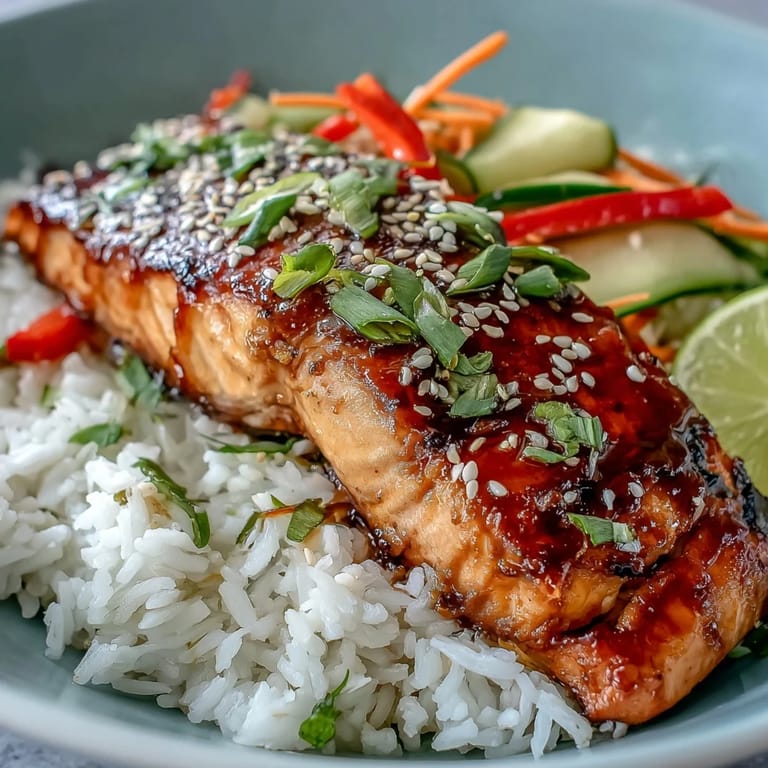
Save This bowl has become my go-to when I want to impress someone without actually stressing, and it reminds me every time that the best meals are the ones where everything tastes intentional but nothing felt difficult to make. That's the kind of cooking I want to keep doing.
Recipe FAQ
- → Can I use frozen salmon fillets?
Yes, frozen salmon works well. Thaw completely in the refrigerator overnight before patting dry and applying the glaze. This ensures even cooking and proper seasoning absorption.
- → What vegetables work best in this bowl?
Julienned carrots, cucumber, and red bell pepper provide excellent crunch and color. You can also add shredded cabbage, snap peas, or thinly sliced radishes for variety.
- → How do I store leftovers?
Store components separately in airtight containers. Keep rice and vegetables refrigerated for up to 3 days. Reheat salmon gently at 160°C (325°F) for 8-10 minutes to maintain texture.
- → Can I make the glaze ahead of time?
Absolutely. Mix the glaze ingredients and store in the refrigerator for up to 5 days. The flavors will meld together, potentially enhancing the overall taste.
- → Is this bowl gluten-free?
Traditional soy sauce contains gluten. To make this bowl gluten-free, substitute tamari or coconut aminos for the soy sauce. All other ingredients are naturally gluten-free.
- → Can I grill the salmon instead?
Certainly. Grill salmon over medium-high heat for 4-5 minutes per side, brushing with glaze during the last 2 minutes. The smoky char adds another dimension to the dish.