 Save
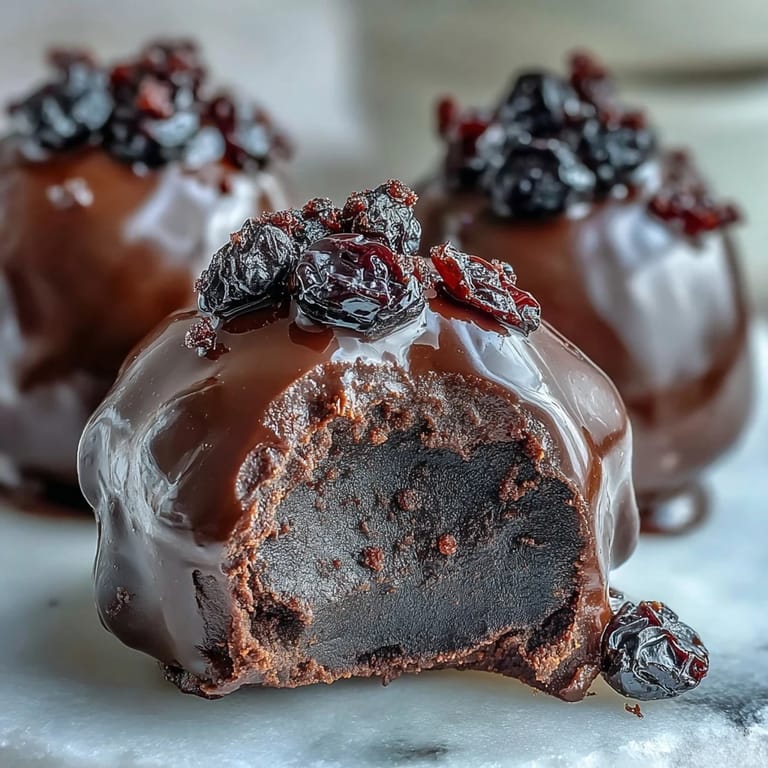
Save My friend Claire handed me a single black currant truffle at her dinner party, and I bit into something that shouldn't have worked but absolutely did—the tartness of the fruit cutting through dark chocolate like a secret whispered at the right moment. She'd been experimenting for weeks, she said, trying to capture that balance between richness and brightness. That night, watching people's faces light up as they tasted them, I realized these weren't just chocolates; they were tiny moments of unexpected delight wrapped in cocoa.
I made these for my mother's book club last winter, and someone actually asked for the recipe before they'd finished their first truffle. The conversation stopped for a moment—that rare quiet when people are genuinely lost in eating something good. My mom later told me one of the guests had called to ask where she found them, convinced they'd come from a fancy chocolatier downtown.
Ingredients
- Dark chocolate (70% cocoa), 120 g finely chopped: This percentage walks the line between bitter and sweet; anything darker tastes austere, anything lighter loses the sophistication that makes these special.
- Heavy cream, 60 ml: The cream creates that silky ganache texture that melts on your tongue rather than crumbles.
- Unsalted butter, 2 tbsp at room temperature: Cold butter won't incorporate smoothly, so take it out before you start heating the cream.
- Black currant purée, 3 tbsp strained and unsweetened: Straining removes the seeds, which would be gritty in the filling; look for it in specialty stores or make your own by blending and pushing through a fine sieve.
- Black currant liqueur, 1 tbsp optional: This deepens the fruit flavor, but if you skip it, add a teaspoon of lemon juice instead to brighten the ganache.
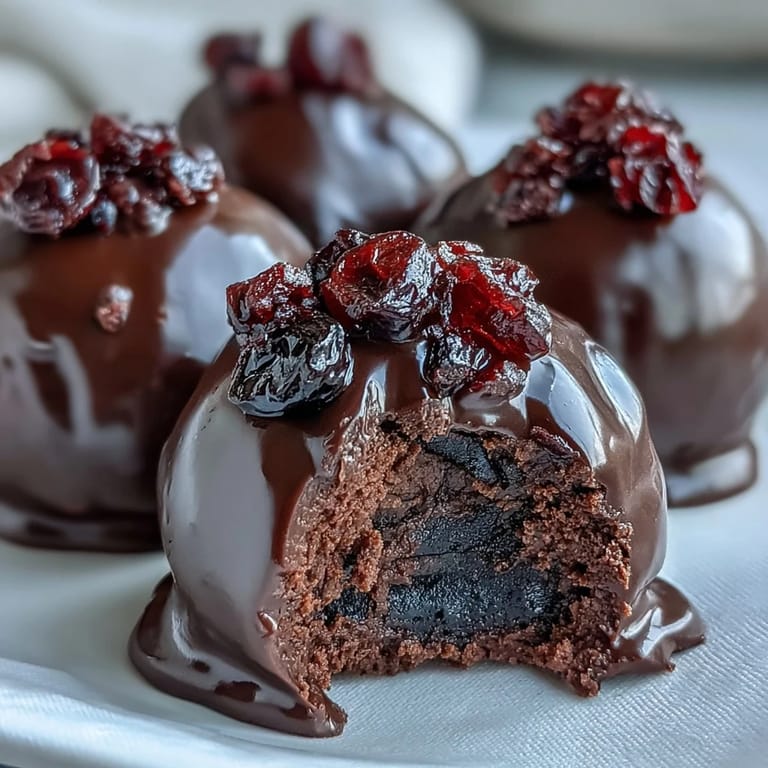
- Dark chocolate for coating, 200 g finely chopped: This is your shell, so use the same quality as the ganache; good chocolate tempering creates that satisfying snap when you bite through.
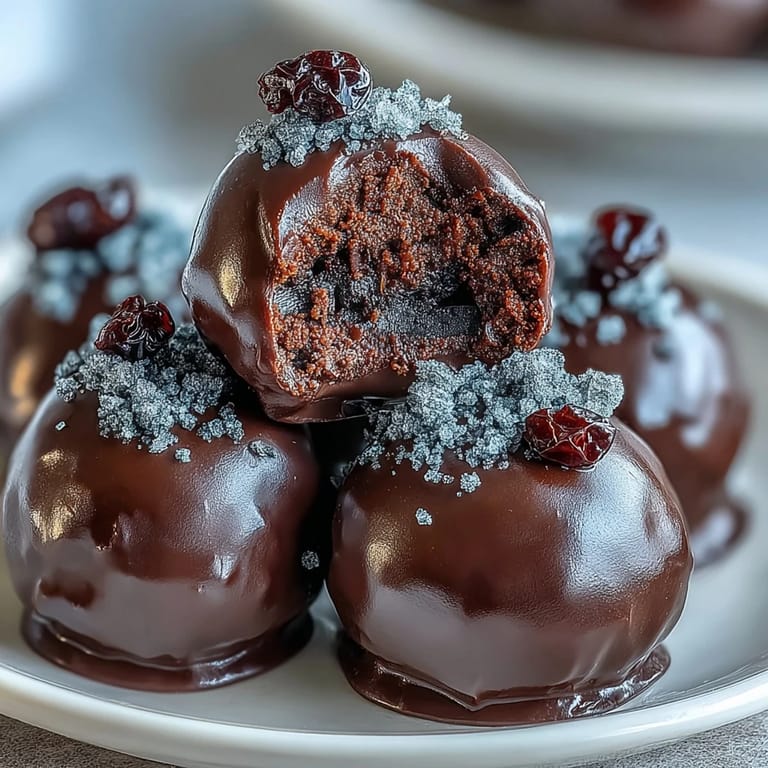
- Freeze-dried black currants, 2 tbsp crushed, optional garnish: These add both crunch and visual punch—look for them in specialty food shops where they're often sold with baking supplies.
- Cocoa powder, 2 tbsp optional garnish: A simple dust of cocoa is elegant and masks any imperfect coating.
Tired of Takeout? 🥡
Get 10 meals you can make faster than delivery arrives. Seriously.
One email. No spam. Unsubscribe anytime.
Instructions
- Heat your cream until it just shivers:
- Watch for that moment when small bubbles form around the edges and a curl of steam rises—you want it hot but not boiling, which would cook the chocolate unevenly.
- Melt the chocolate in a pool of warmth:
- Pour the hot cream over your chopped chocolate and let it sit for exactly one minute; the residual heat will soften the chocolate without scorching it. Then stir slowly until everything is glossy and combined.
- Fold in butter, purée, and liqueur:
- Add these while the ganache is still warm so they incorporate seamlessly; a wooden spoon works better than a whisk here, as you're gently coaxing rather than beating.
- Chill until the ganache holds its shape:
- One to two hours in the refrigerator gets it to the right consistency—it should be firm enough to scoop but not so hard it cracks when you roll it.
- Roll your ganache into imperfect spheres:
- Use a small spoon or melon baller, and don't worry about perfection; slight irregularities actually look more artisanal once they're coated. If your hands are warm, dip your fingers in cocoa powder to prevent sticking.
- Freeze the balls briefly:
- Twenty minutes in the freezer firms them up so they won't collapse when you dip them in warm chocolate.
- Melt chocolate for dipping using gentle, steady heat:
- A double boiler prevents scorching; stir occasionally and let the chocolate cool slightly before dipping so the coating sets properly instead of sliding off.
- Dip with confidence and a steady hand:
- Use a fork or truffle dip, submerge briefly, tap the excess onto the bowl's edge, and slide onto parchment paper in one smooth motion.
- Add garnish while chocolate is still tacky:
- Crushed freeze-dried currants or cocoa powder stick best when applied immediately after dipping.
- Let them rest and set:
- Room temperature takes about thirty minutes; refrigerating accelerates this but isn't necessary if you're patient.
 Save
Save These truffles have a way of becoming part of rituals—my neighbor now expects a small box each December, and somewhere along the way, giving them stopped being about showing off and became about saying something without words. That's when you know a recipe has moved beyond technique into something more meaningful.
The Black Currant Question
Black currants were new to me when I started making these, and I spent an embarrassing amount of time in specialty stores asking staff where to find them. What I learned is that they're underrated in American kitchens—tart, floral, somehow both serious and playful at once. Once you taste them paired with chocolate, you start seeing them everywhere: in jams, liqueurs, even high-end pastry shops. Using the purée gives you the flavor without the texture of seeds, which is why straining matters.
Why Timing Matters More Than Temperature
The first time I rushed this recipe, trying to speed up the chilling phase by putting the ganache in the freezer, I ended up with grainy chocolate that separated when I tried to roll it—a reminder that some things can't be hurried without consequences. The slow refrigeration allows the cocoa solids and fats to bind smoothly; freezing disrupts that chemistry. Since then, I've learned that chilling overnight actually improves the flavor by allowing the black currant to develop more complexity.
Beyond the Classic
Once you've mastered the base formula, these truffles become a canvas for exploration—I've experimented with raspberry in place of black currant, added a whisper of cardamom to the ganache, and even coated some in white chocolate for contrast. Each variation teaches you something about how flavors interact and how small changes shift the entire character of the final bite. The joy isn't just in eating them but in discovering what combinations sing together.
- Swap black currant purée for raspberry, cherry, or even passion fruit for completely different flavor profiles.
- A tiny pinch of sea salt in the ganache sharpens the fruit and deepens the chocolate without tasting salty.
- If you can't find black currant purée, freeze fresh berries (if you're lucky enough to find them) and push them through a sieve yourself.
 Save
Save These truffles remind me that the best recipes are the ones that invite you to taste them alongside someone else, to watch their reaction, to pass them forward. That's when you really know you've made something worth making.
Recipe FAQ
- → How long do these truffles need to chill?
The ganache requires 1-2 hours in the refrigerator until firm enough to shape. After rolling and coating, allow an additional 30 minutes at room temperature for the chocolate shell to set completely, or refrigerate for faster results.
- → Can I make these without black currant purée?
Yes, you can substitute raspberry purée, cherry purée, or even passion fruit for different flavor variations. Each fruit will create its own unique balance with the dark chocolate while maintaining the same creamy texture.
- → What's the best way to store these truffles?
Keep them in an airtight container in the refrigerator for up to one week. The cold temperature prevents the ganache from becoming too soft and preserves the fresh fruit flavor. Bring to room temperature 10 minutes before serving for optimal texture.
- → Why is 70% dark chocolate recommended?
The higher cocoa percentage provides enough bitterness to balance the tart black currant while still delivering the smooth, melty texture essential for truffles. Milk chocolate would result in an overly sweet final product that masks the fruit notes.
- → How do I get a smooth chocolate coating?
Tempering your chocolate by heating it to 45°C, cooling to 27°C, then gently warming back to 31-32°C creates a glossy finish with a satisfying snap. Work in a cool room around 20°C to prevent the chocolate from seizing or developing streaks.
- → Can these be made dairy-free?
Absolutely. Replace the heavy cream with full-fat coconut cream and use dairy-free dark chocolate. The coconut cream actually complements the black currant flavor beautifully while creating an equally silky ganache texture.