 Save
Save My neighbor brought over a jar of homemade black currant gummies last summer, and I was instantly hooked by that deep, tart-sweet punch that felt so much more alive than anything from a store shelf. I'd never made gummies before, but after that first handful, I knew I had to figure out how. Turns out, they're surprisingly simple—just fruit, sugar, gelatin, and patience—but the result feels like you've unlocked some kind of kitchen magic. There's something satisfying about watching a syrupy mixture transform into chewy little jewels in your fridge.
I made a batch for my daughter's school bake sale, and watching kids' faces light up when they bit into something homemade and chewy was worth every minute of simmering and straining. One kid asked his mom why these tasted "real"—and she later texted me asking for the recipe because he'd been raving about them all week.
Ingredients
- Fresh or frozen black currants (1 cup / 150 g): These little berries pack a punch of tartness that's essential to the flavor—don't skip them for something milder, or you'll miss what makes these special.
- Water (1/3 cup plus 1/3 cup): The first amount cooks down the berries, while the second blooms the gelatin and keeps everything smooth.
- Lemon juice (2 tablespoons): This brightens the black currant flavor and cuts through the sugar so the gummies don't taste one-dimensional.
- Granulated sugar (3/4 cup): Dissolve it completely in the warm fruit mixture, or you'll end up with a grainy texture that's disappointing.
- Unflavored powdered gelatin (3 tablespoons / 30 g): This is what gives gummies their signature chew—blooming it first prevents lumps and ensures smooth, even setting.
- Granulated sugar for coating (1/4 cup, optional): A light coating adds a pleasant crunch and makes them look bakery-polished.
Tired of Takeout? 🥡
Get 10 meals you can make faster than delivery arrives. Seriously.
One email. No spam. Unsubscribe anytime.
Instructions
- Soften the black currants:
- Pour the black currants and 1/3 cup water into a saucepan and set it over medium heat. You'll notice the berries start releasing their deep purple juice almost immediately—let them simmer for 5 to 7 minutes until they're soft and bursting. The kitchen will smell like pure concentrated fruit, which is honestly the best part.
- Strain to get pure juice and pulp:
- Pour everything through a fine mesh strainer into a clean bowl, pressing gently with a spoon to coax out every drop of liquid and soft fruit—you're after about 2/3 cup of puree. Discard the seeds and skins; what's left is the good stuff that'll make your gummies taste authentic.
- Sweeten and flavor:
- Stir the lemon juice and sugar into your warm black currant mixture, making sure the sugar dissolves completely. This is your gummy base, so taste it and adjust—it should taste a little sweeter than you'd want to eat straight, since the gelatin will mellow it slightly.
- Bloom the gelatin:
- In a small bowl, sprinkle the powdered gelatin over 1/3 cup of cold water and let it sit undisturbed for 5 minutes. It'll look like sandy paste—this is perfect, and it prevents lumps when you add it to the warm fruit mixture.
- Combine and dissolve:
- Pour the black currant mixture back into the saucepan and set it over low heat. Add the bloomed gelatin and stir constantly until it's completely dissolved—this usually takes 2 to 3 minutes. Never let it boil, or you'll damage the gelatin's setting power.
- Pour into molds:
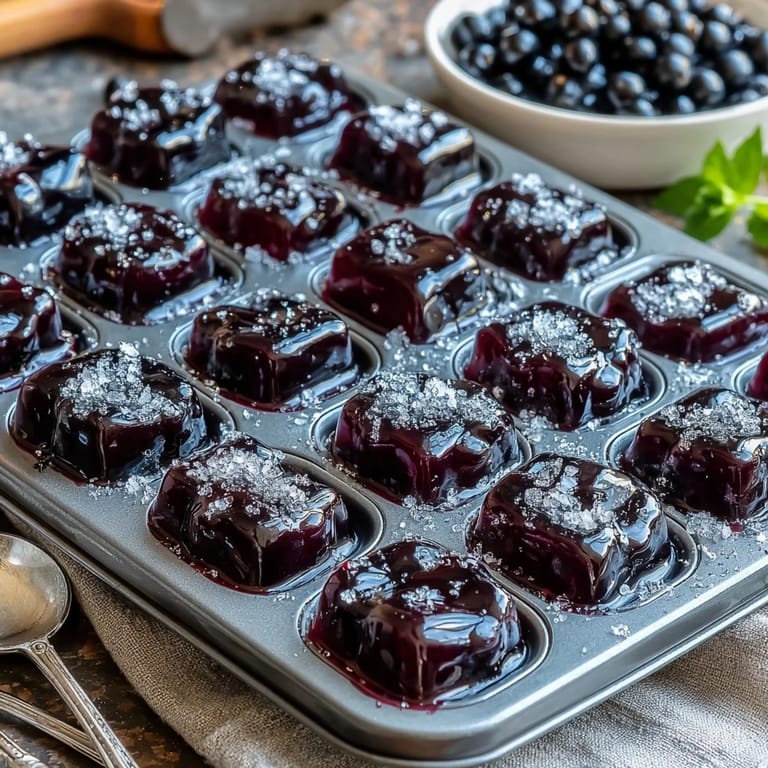
- Carefully pour the warm mixture into silicone candy molds or a parchment-lined 8x8-inch pan. Tap the molds gently against the counter a few times to release any trapped air bubbles that might make your gummies look spotted.
- Chill until set:
- Pop everything into the refrigerator for at least 2 hours, though overnight is even better if you want them extra firm. You'll know they're ready when they hold their shape and bounce back slightly when you press them.
- Unmold and finish:
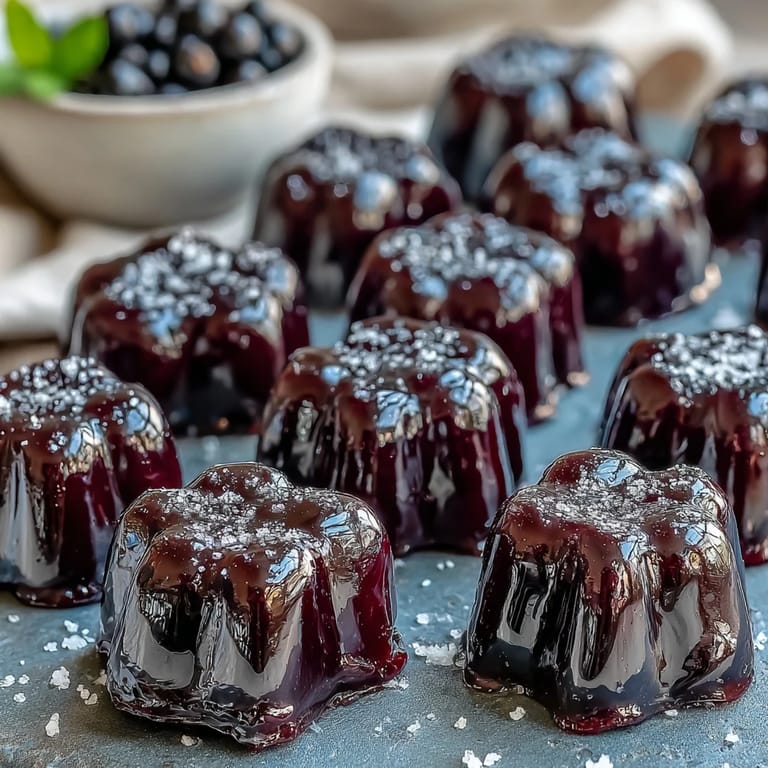
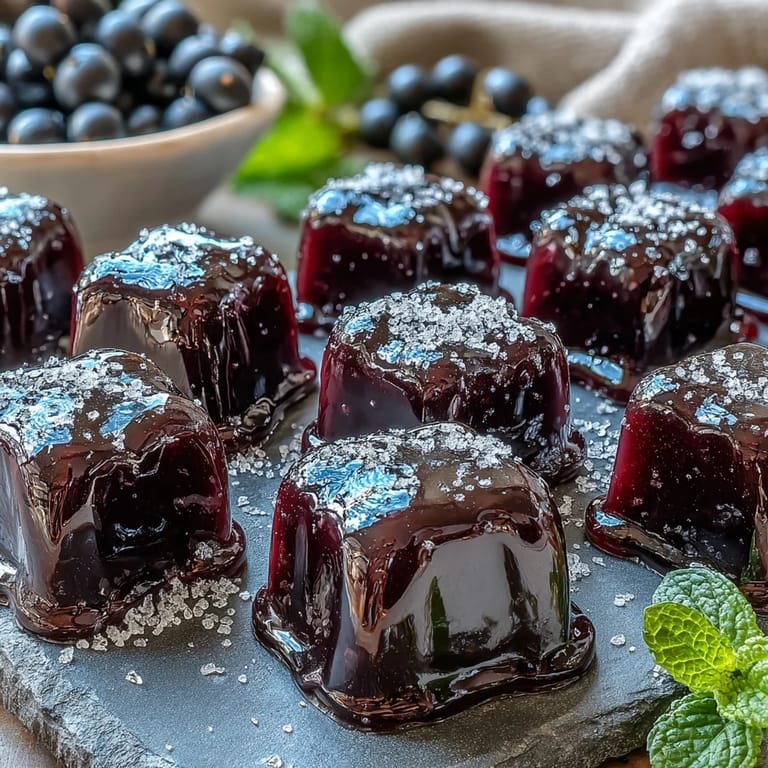
- Pop the gummies out of their molds or cut them into squares if you used a pan. If you want that sugary coating, toss them in granulated sugar while they're still slightly tacky from the fridge—it'll stick beautifully.
 Save
Save There was this quiet moment when I pulled the finished gummies from the mold and held one up to the light—it glowed like a tiny jewel, and suddenly making candy at home didn't feel like a chore anymore. It felt like creating something small but genuine, something that tasted like actual fruit and care.
Black Currants: A Berry Worth Knowing
Black currants have this complex flavor that's tart, slightly floral, and a little earthy all at once—they're not as sweet as blueberries or raspberries, which is why they're perfect for gummies. If you've never worked with them before, they might seem intimidating, but they're forgiving and reward you with a flavor that feels sophisticated and homemade. Fresh ones are best, but frozen work beautifully too (no thawing needed—just toss them straight into the pot).
Storage and Keeping Quality
Store your gummies in an airtight container in the refrigerator, where they'll stay fresh and chewy for about two weeks. If they start to get a little sticky or soften, leave them uncovered in the fridge overnight to firm up—a trick I discovered by accident but now do on purpose. They won't last that long anyway if you have a household of gummy lovers.
Playing with Flavor and Texture
Once you've made these once and felt confident, you can start experimenting—try a mix of black currants and lemon zest for brightness, or add a tiny pinch of cardamom for warmth. The basic formula stays the same, so you're really just playing with toppings and flavor accents once you understand how gelatin works. I've even made batches with a hint of rosemary, which sounds wild but actually works.
- If you want vegan gummies, swap the gelatin for 1.5 tablespoons of agar powder, though the texture will be slightly firmer and more brittle.
- You can substitute raspberries, blueberries, or even a mix of berries—just keep the fruit weight roughly the same so your ratios don't shift.
- For a sugar-free version, replace the granulated sugar with your preferred sweetener, though you may need to adjust amounts since sweetness varies by brand.
 Save
Save Making gummies at home is one of those skills that feels fancy but honestly just requires patience and following a few simple rules. Once you taste the difference between homemade and store-bought, you'll understand why people get excited about candy they've made themselves.
Recipe FAQ
- → How long do homemade black currant gummies last?
When stored properly in an airtight container in the refrigerator, these gummies will stay fresh for up to two weeks. They may become slightly firmer over time but remain delicious and safe to eat.
- → Can I make these gummies without gelatin?
Yes, you can substitute gelatin with agar-agar powder for a vegan version. Use approximately 1.5 tablespoons of agar powder instead of the gelatin, though the setting method and ratios may need slight adjustment.
- → What other fruits work well for homemade gummies?
Raspberries, blueberries, strawberries, and blackberries all make excellent gummies. Each fruit will impart its unique flavor profile and natural sweetness. You can also mix different berries for complex flavor combinations.
- → Why do my gummies feel too soft or too firm?
Soft gummies typically mean the gelatin wasn't fully dissolved or the mixture didn't set long enough. Firm gummies can result from using too much gelatin or letting them set uncovered overnight, which causes moisture evaporation.
- → Do I need special equipment to make these gummies?
You only need basic kitchen tools—a saucepan, fine mesh strainer, mixing bowls, and measuring cups. Silicone candy molds create uniform shapes, but a simple parchment-lined baking pan works perfectly for cutting squares afterward.
- → Can I use frozen black currants instead of fresh?
Absolutely. Frozen black currants work just as well as fresh in this preparation. They may require slightly longer simmering time to soften completely, but the final flavor and texture remain identical.