 Save
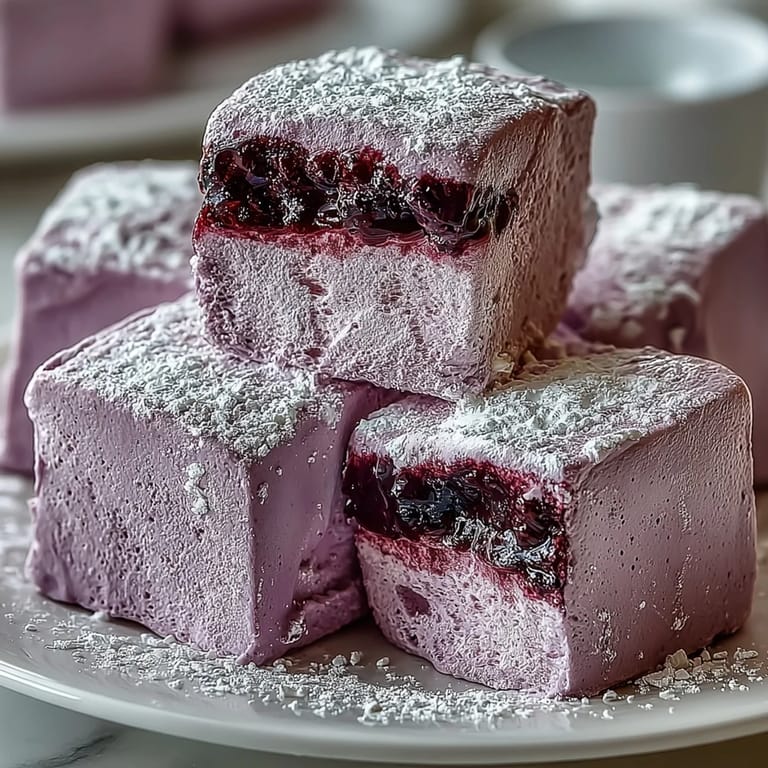
Save There's something almost alchemical about watching gelatin and sugar syrup transform into clouds of marshmallow in a stand mixer—I discovered this while experimenting with fruit purées one autumn afternoon, trying to capture the tartness of blackcurrants in something pillowy and light. What started as a casual weekend project became an obsession; the deep purple swirl of blackcurrant turning the mixture into this soft lavender shade felt like magic happening in real time. My kitchen smelled like a jam kitchen and a candy shop had collided, and honestly, I couldn't stop eating the scraps.
I made a batch for a dinner party in late October, and watching my guests' faces when they bit into one—expecting regular sweetness and getting that punchy blackcurrant bite instead—was worth every minute of candy thermometer watching. Someone asked if I'd added edible flowers, which made me laugh; it's just the fruit doing its tart, beautiful work.
Ingredients
- Blackcurrant Purée (2/3 cup, 150 g): This is where the magic happens—fresh or frozen blackcurrants blended and strained give you that distinctive tart, almost jammy depth that elevates these beyond vanilla marshmallows.
- Water (2 tbsp for purée reduction): Just enough to help the purée simmer gently and concentrate its flavor without turning it into jam.
- Granulated Sugar (2 tbsp for purée, 1 1/2 cups for syrup): The smaller amount balances tartness in the purée; the larger amount creates the syrup structure that, when whipped with gelatin, becomes those airy clouds.
- Powdered Unflavored Gelatin (3 packets, 21 g): This is your structural backbone—don't skip blooming it properly or your marshmallows won't set with the right tender texture.
- Cold Water (1/2 cup for blooming): Must be cold to activate the gelatin without cooking it; warm water will make the gelatin grainy.
- Light Corn Syrup (1/2 cup, 120 ml): This prevents crystallization and keeps your marshmallows glossy and smooth—it's the secret to that silky mouthfeel.
- Water (1/4 cup for syrup): Part of your sugar syrup; helps the sugar dissolve evenly before you crank up the heat.
- Salt (1/4 tsp): A tiny pinch that amplifies the blackcurrant tartness without tasting salty—trust it.
- Vanilla Extract (1 tsp): Optional but it adds a subtle warmth that echoes nicely against the tart fruit.
- Confectioners Sugar (1/2 cup, 60 g) and Cornstarch (1/4 cup, 30 g): Your dusting mixture keeps marshmallows from sticking and seals them; the cornstarch prevents the sugar from dissolving when exposed to humidity.
Tired of Takeout? 🥡
Get 10 meals you can make faster than delivery arrives. Seriously.
One email. No spam. Unsubscribe anytime.
Instructions
- Prep Your Pan Like You Mean It:
- Line an 8x8 inch baking pan with parchment paper and dust it generously with the confectioners sugar and cornstarch blend—this prevents your marshmallows from sticking and becoming a scraped-off mess later. Think of it as creating a soft landing pad for your future marshmallows.
- Reduce That Blackcurrant:
- In a small saucepan, combine the blackcurrant purée with 2 tbsp water and 2 tbsp sugar, then simmer over medium heat for 4–5 minutes, stirring occasionally until it thickens slightly and deepens in color. You're concentrating the flavor and cooking off excess moisture; let it cool completely before you'll fold it in later.
- Bloom Your Gelatin:
- Sprinkle the gelatin over 1/2 cup of cold water in your stand mixer bowl and let it sit untouched for 10 minutes—this hydration step is non-negotiable, as it ensures smooth incorporation and prevents lumps. The mixture should look spongy and squishy when you poke it.
- Cook the Sugar Syrup to Exactly the Right Temperature:
- In a medium saucepan, combine 1 1/2 cups sugar, corn syrup, and 1/4 cup water over medium-high heat, stirring until the sugar dissolves completely. Insert your candy thermometer (clip it to the side of the pan) and cook without stirring until the syrup reaches 240°F—this is the soft-ball stage, which gives you marshmallows that are tender but stable.
- Whip the Gelatin and Syrup Into Clouds:
- With your mixer running on low speed, pour the hot syrup very slowly into the gelatin mixture—rushing this step can cause splattering and uneven incorporation. Once it's all in, increase the speed to high and whip for 6–8 minutes; you'll watch it transform from thin and syrupy to thick, glossy, and tripled in volume—it's hypnotic.
- Fold In the Blackcurrant:
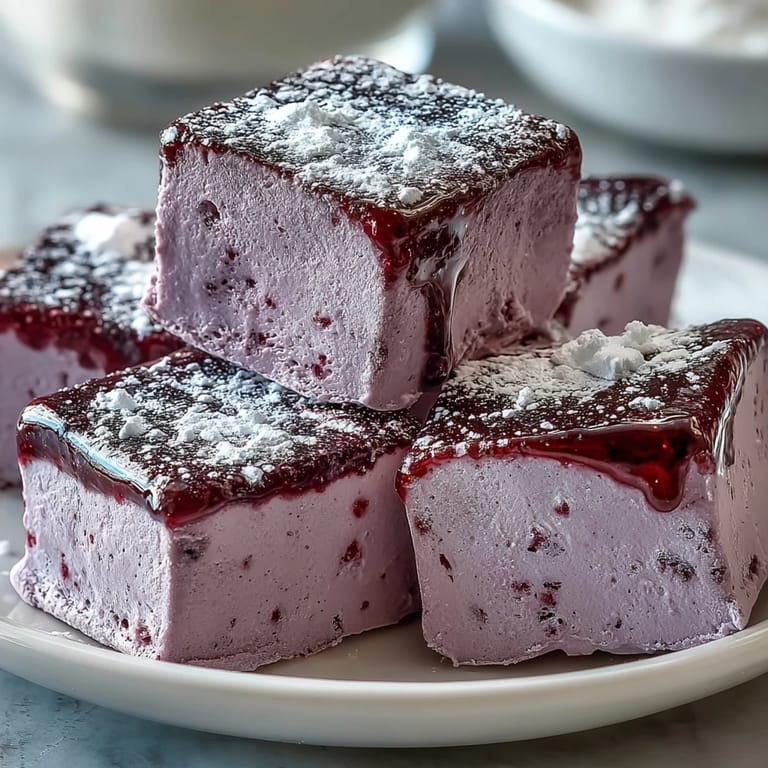
- When the mixture looks pale and fluffy, add the salt, vanilla extract, and your cooled blackcurrant purée, then whip for another 1–2 minutes until everything is seamlessly blended and the whole thing has turned a gorgeous soft lavender. Stop as soon as it's uniform; over-mixing at this point can deflate all your whipped air.
- Set It and Forget It (Mostly):
- Pour the marshmallow mixture immediately into your prepared pan and use a spatula to smooth the top—work quickly because it'll start to set and become harder to spread. Dust generously with the confectioners sugar-cornstarch mixture and let it sit uncovered at room temperature for at least 4 hours, though overnight is even better.
- Cut and Dust:
- Once fully set, turn the entire slab onto a cutting board and carefully peel away the parchment paper from the back. Dust all exposed sides with more of the sugar-cornstarch mixture, then cut into squares with a sharp knife (dust the blade between cuts to prevent sticking)—these marshmallows deserve clean edges.
- Store With Care:
- Keep your finished marshmallows in an airtight container at room temperature for up to a week; they'll stay soft and pillowy. The confectioners sugar coating continues to protect them from humidity.
 Save
Save What moved me most about making these wasn't the technique or the chemistry—it was the moment my grandmother tried one and her eyes lit up with that specific recognition of tartness and lightness together, something she hadn't tasted in decades. That's when I realized these weren't just marshmallows; they were edible nostalgia wrapped in powdered sugar.
Why Blackcurrant Changes Everything
Standard vanilla marshmallows are lovely, sure, but they're also one-note in a way that makes you forget you're eating them halfway through the bag. Blackcurrant—with its tart, almost berry-wine complexity—wakes up your mouth and makes every bite feel intentional and special. I've learned that fruit-forward marshmallows work best when the fruit flavor is concentrated enough to punch through the sweetness, which is why the simmering step matters so much.
The Temperature Game
Candy making feels intimidating until you realize it's just applied physics—sugar syrup at different temperatures creates different textures, and 240°F is the golden zone for marshmallows. I learned this the hard way by making a batch at 235°F (they were too soft and weeping) and another at 245°F (they were almost crunchy), so now I obsessively check that thermometer bulb is submerged in the actual syrup, not just steam. It's a small thing that makes all the difference between marshmallows you're proud of and ones you hide in the back of the pantry.
Storage Secrets and Variations
These marshmallows keep beautifully in an airtight container because the confectioners sugar coating acts as a moisture barrier—but if you live somewhere humid, toss in a small desiccant packet to keep them from getting tacky. You can absolutely swap the blackcurrant for blackberry, raspberry, or even cherry purée if blackcurrants aren't available, though each will shift the tartness level slightly, so adjust sugar in the fruit reduction to taste.
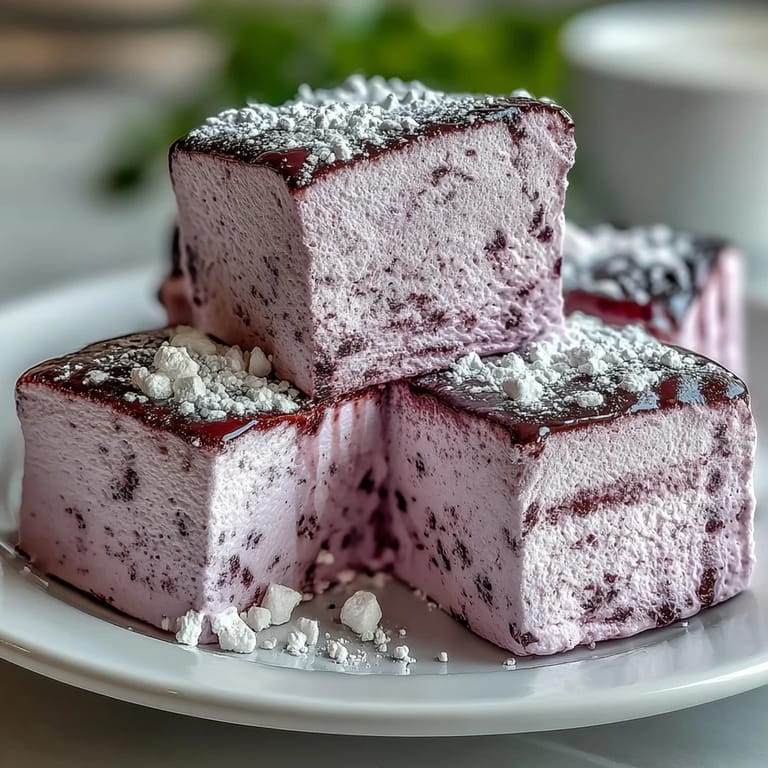
- For extra tartness, swirl in a little additional blackcurrant purée just before pouring into the pan to create beautiful purple ribbons.
- Pair these with dark chocolate, coffee, or drop them into hot cocoa for an unexpected flavor revelation.
- If you don't have a candy thermometer, you're going to struggle—this really isn't a recipe to eyeball.
 Save
Save Homemade marshmallows feel like a small luxury, especially when they're infused with something as distinctive as blackcurrant. Once you've made these, store-bought versions will feel like cardboard by comparison.
Recipe FAQ
- → How long do black currant marshmallows take to set?
The marshmallows need to sit uncovered at room temperature for at least 4 hours to fully set before cutting. This allows the gelatin to stabilize and the texture to become perfectly firm yet pillowy.
- → Can I use frozen blackcurrants instead of fresh?
Yes, simply blend frozen blackcurrants and strain them to create the purée. Thawed frozen berries work just as well as fresh ones for this preparation.
- → What temperature should the sugar syrup reach?
The sugar syrup needs to reach 240°F (115°C), known as the soft-ball stage. Using a candy thermometer ensures accuracy for achieving the proper marshmallow texture.
- → Are these marshmallows suitable for vegetarians?
These marshmallows contain gelatin, which is not vegetarian. For a plant-based version, you could experiment with agar-agar, though the texture may differ slightly.
- → How should I store black currant marshmallows?
Store in an airtight container at room temperature for up to 1 week. Keep layers separated with parchment paper to prevent sticking. Avoid refrigerating as this can make them too firm.
- → Can I substitute the blackcurrant with other fruits?
Absolutely—blackberry, raspberry, or cherry purée work beautifully as alternatives. Adjust the sugar in the fruit reduction based on the natural tartness of your chosen fruit.