 Save
Save My aunt brought a tin of these to a summer garden party, and I watched them disappear faster than the conversation could keep up. The moment I bit into one, I understood the appeal—that crisp, shattering snap followed by the tart blackcurrant brightness felt like eating edible air with personality. She admitted later that she'd stress-tested the recipe three times because she was convinced something so light couldn't possibly be this foolproof. It turns out meringues are less about technique and more about respecting a few quiet rules, and once you know them, you're unstoppable.
I made these one rainy afternoon when my neighbor mentioned she'd never had a proper homemade meringue, only the store-bought kind that tastes like sweetened Styrofoam. I piped them onto trays while she sat at my kitchen island, and she kept asking if they were really going to stay crispy. When she bit into one an hour after they cooled, her face did that thing where surprise and delight happen at the same time. She asked for the recipe immediately, and I knew right then these weren't just cookies—they were small moments of proof that simple ingredients could actually deliver magic.
Ingredients
- Egg whites (4 large, room temperature): Cold eggs won't whip to the same volume, so pull them from the fridge 20 minutes before you start—this matters more than you'd think.
- Superfine sugar (1 cup/200 g): Regular granulated sugar works in a pinch, but superfine dissolves faster and gives you that silky, glossy peak without any grittiness.
- Cream of tartar (1/4 tsp): This stabilizes the egg whites and helps them hold their structure, making the difference between meringues that weep and ones that stay crisp for days.
- Salt (1/4 tsp): A tiny pinch brightens the sweetness and keeps the meringues from tasting one-dimensional.
- Blackcurrant powder (2 tbsp freeze-dried, finely ground): The star of the show—seek it out online or at specialty shops because it brings that tart, jammy flavor without adding moisture.
- Lemon juice (1 tsp, optional): If you want to push the tang even further, this adds a whisper of brightness that makes people wonder what that flavor is.
Tired of Takeout? 🥡
Get 10 meals you can make faster than delivery arrives. Seriously.
One email. No spam. Unsubscribe anytime.
Instructions
- Set your stage:
- Preheat your oven to 225°F (110°C) and line two baking sheets with parchment paper—this low, slow heat is what keeps meringues delicate instead of browning them into cookies.
- Begin with impeccable egg whites:
- In a completely clean, dry bowl, whisk your room-temperature egg whites and cream of tartar on medium speed until they turn foamy and start holding their shape. Any trace of yolk or oil will sabotage this step, so if you're nervous, break each egg over a separate bowl first.
- Build the structure gradually:
- Add your superfine sugar one tablespoon at a time, whisking continuously until the meringue transforms into stiff, glossy peaks that stand straight up when you lift the whisk. This takes patience—rushing this step is why meringues sometimes collapse or weep.
- Season with intention:
- Beat in the salt and lemon juice (if using), and watch how the meringue suddenly tastes rounder and less aggressively sweet.
- Marble in the blackcurrant:
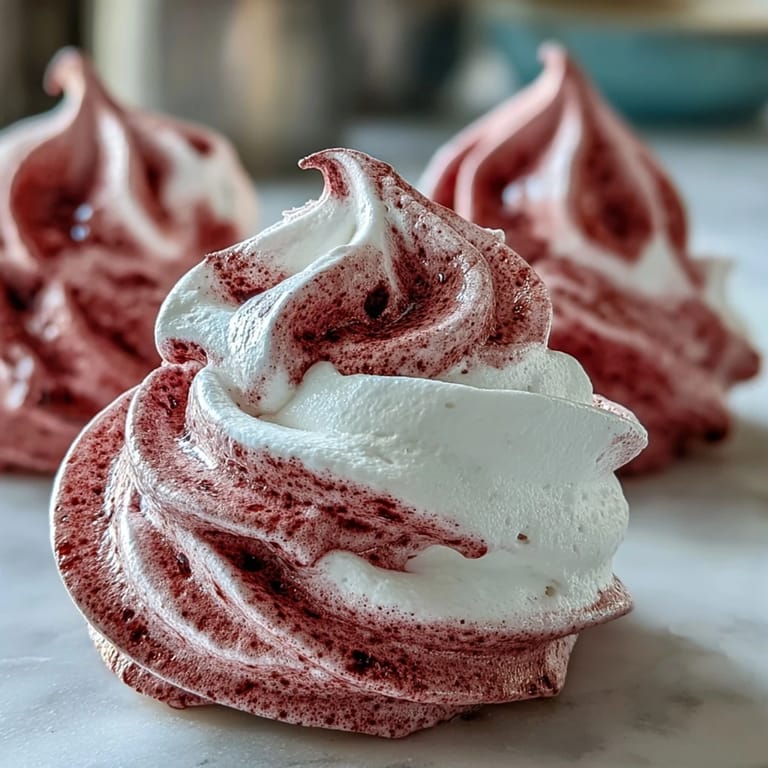
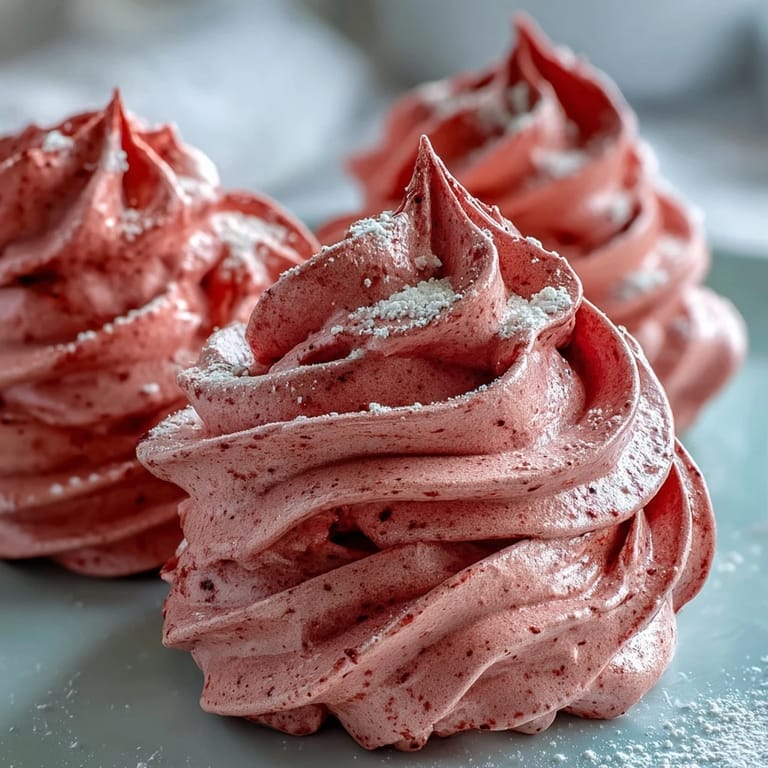
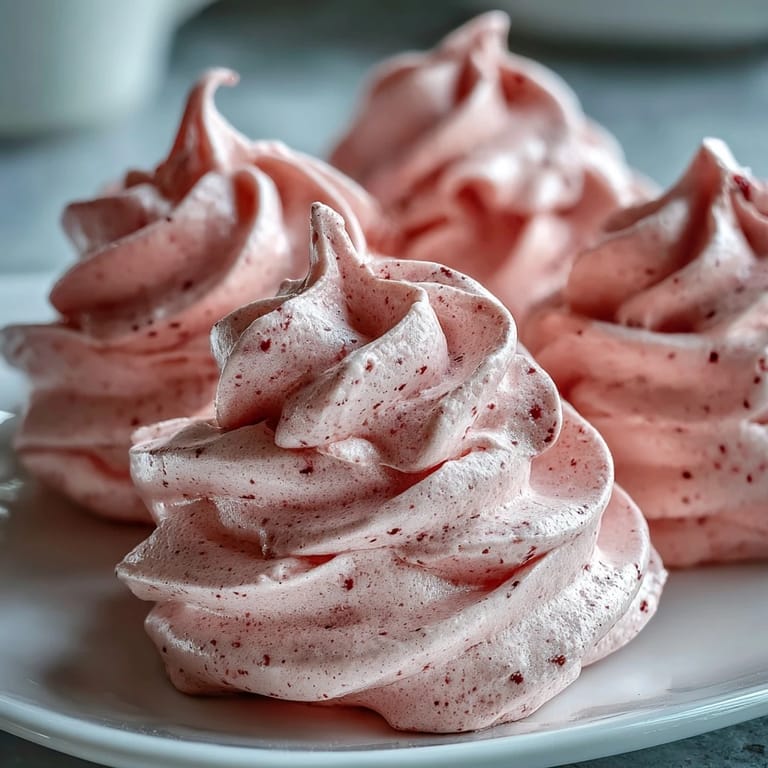
- Gently fold in one tablespoon of blackcurrant powder using a spatula, using as few strokes as possible—you want visible swirls of color, not uniform purple throughout. This is where restraint actually wins.
- Portion with care:
- Using a spoon or piping bag, scoop or pipe meringues onto your prepared trays, spacing them about an inch apart. If you're piping, use a medium round tip and lift straight up to avoid creating tails.
- Add visual drama:
- Dust the tops of each meringue with the remaining blackcurrant powder for both color pop and an extra hit of flavor.
- Bake low and long:
- Bake for 1 hour 30 minutes until the meringues are crisp, pale, and lift easily from the parchment—they should not brown, and the centers should be slightly marshmallow-like when you first crack into one.
- Cool completely inside the oven:
- Turn off the oven and crack the door open slightly, letting the meringues sit inside for at least an hour as the temperature drops gradually. This prevents them from splitting or becoming grainy as they cool too quickly.
- Store like treasure:
- Once completely cool, transfer to an airtight container—they'll stay crisp for up to two weeks, which means you can make them ahead guilt-free.
 Save
Save There was an evening when I brought these to a potluck hosted by someone who never ate sweets, mostly out of principle. She bit into one almost reluctantly, and I watched her expression shift from skeptical to genuinely charmed. She came back and asked if I could teach her how to make them because she wanted to prove to herself that something could taste this delicate and still satisfy. That's when I realized these meringues do something beyond tasting good—they make people believe again in simple, perfect things.
Why Blackcurrant Powder Transforms Everything
The choice to use blackcurrant powder instead of fresh berries or other flavorings keeps these meringues dry and crisp—fresh fruit introduces moisture that would soften them within hours. Blackcurrant has this sophisticated tartness that doesn't need any other support, almost like it wants you to notice it without distraction. When you taste that flavor against the pure sweetness of meringue, there's a little moment of surprise, a small conversation happening on your tongue between sugar and fruit and crispness.
The Magic of Low, Slow Heat
I used to think lower oven temperatures meant less flavor development, but meringues taught me that slow drying actually preserves more delicacy. The 225°F approach means your meringues stay pale, almost white, with just the blackcurrant dustings adding color. This also means they bake evenly without any edges browning while centers stay soft, which is the hardest balance to strike in most oven-cooked desserts. One cook I know installed an oven thermometer specifically because hers were always finishing too dark, and suddenly everything changed.
Variations and Serving Ideas
The beauty of this base recipe is how adaptable it becomes once you understand the technique. Raspberry powder brings a slightly different tartness, while blueberry feels more mellow and floral. You can also skip the powder entirely and fold in crushed freeze-dried berries, though expect a slightly softer texture from any texture-adding additions. When serving, consider pairing these with whipped cream and fresh berries for a textural story—the shatter of meringue, the soft cloud of cream, the burst of fresh fruit.
- For a more marbled effect, swirl the powder in more deliberately before piping, creating visible ribbons instead of an overall tint.
- If you're entertaining, make these 2-3 days ahead and store them in an airtight container at room temperature to reduce last-minute stress.
- Try serving them alongside a bright lemon curd or a dark chocolate ganache for contrast—the tartness or richness plays beautifully against their delicate sweetness.
 Save
Save These meringues prove that restraint can be as delicious as abundance. Once you've made them once, you'll understand why they're worth repeating.
Recipe FAQ
- → What makes these meringues different from plain ones?
The addition of blackcurrant powder creates stunning purple marble swirls and adds concentrated fruity tang without moisture. Each bite delivers crisp sweetness balanced by vibrant berry essence, making them more visually striking and flavorful than traditional vanilla meringues.
- → Can I use fresh blackcurrants instead of powder?
Fresh blackcurrants contain too much moisture and would cause the meringues to become soft or collapse. Freeze-dried blackcurrant powder provides intense flavor and color without affecting the structure. You can substitute with raspberry, blueberry, or strawberry powder for similar results.
- → How do I know when the meringues are done baking?
Properly baked meringues should be crisp and dry to the touch, easily lifting from the parchment paper without sticking. They shouldn't brown—if you see any color, reduce the oven temperature slightly. The final texture develops during the cooling period inside the oven.
- → Why cool them in the oven with the door ajar?
Cooling slowly inside the oven prevents sudden temperature changes that could cause cracking or collapse. Leaving the door slightly ajar allows gradual heat release while maintaining a dry environment, ensuring the meringues set completely and achieve maximum crispness.
- → How should I store these to keep them crisp?
Store in an airtight container at room temperature, away from humidity and direct sunlight. Properly stored, they'll stay crisp for up to two weeks. Avoid refrigeration, as moisture can soften them. If they do soften slightly, a short 10-minute bake at 200°F can restore crispness.
- → Can I pipe these instead of using a spoon?
Yes, piping creates uniform shapes and professional appearance. Use a piping bag fitted with a star or round tip—star tips create decorative ridges, while round tips make smooth domes. Pipe onto parchment-lined trays, maintaining 1-inch spacing for even air circulation during baking.