 Save
Save My friend Marco brought a container of black currant jam back from a market in Lyon, and I spent an entire afternoon wondering what to do with it. The flavor was so unusual—tart and almost mysterious—that I couldn't just spread it on toast. That evening, standing in my kitchen with the jar in hand, I remembered a panna cotta I'd tasted years ago at a small restaurant in Rome, how the spoon had glided through it like silk. What if I could marry that creamy elegance with this dark, brooding fruit? Three hours later, I had my answer.
I made this for my sister's birthday dinner on a July evening when the heat wouldn't let up, and I remember how she closed her eyes after that first bite, then looked at me like I'd performed some kind of magic. The living room had gone quiet for a moment—that rare thing that happens when food actually stops people from talking. She asked for the recipe before dessert was even finished, and I realized right then that this would become one of those dishes I'd make again and again.
Ingredients
- Heavy cream (2 cups): This is where the luxurious texture comes from, so don't skimp on quality—the better the cream, the silkier your panna cotta will be.
- Whole milk (1/2 cup): It tempers the richness and keeps the texture delicate rather than heavy.
- Granulated sugar (1/2 cup plus 3 tablespoons): Split between the cream base and the black currant layer for balanced sweetness that lets the fruit's tartness shine through.
- Powdered gelatin (1 1/2 teaspoons): The secret to that perfect wobble—not too firm, not too soft, just right.
- Cold water (2 tablespoons plus 1 tablespoon): The cold water blooms the gelatin and prevents lumps, so don't use warm water here.
- Pure vanilla extract (1 teaspoon): A single teaspoon transforms the base from plain cream into something with depth.
- Fresh or frozen black currants (1 cup): Frozen works beautifully if fresh ones are hard to find, and they release their flavor just as readily.
- Black currant jam or preserves (1/3 cup, optional): For the glaze, it adds a glossy finish and one more layer of flavor.
Tired of Takeout? 🥡
Get 10 meals you can make faster than delivery arrives. Seriously.
One email. No spam. Unsubscribe anytime.
Instructions
- Bloom your gelatin like you're waking it up:
- Sprinkle the gelatin over cold water in a small bowl and let it sit for 5 minutes—it'll look granular and slightly swollen, which is exactly what you want. This step keeps lumps from forming later.
- Heat the cream mixture gently:
- Combine the heavy cream, milk, and sugar in a medium saucepan and warm it over medium heat, stirring just enough to dissolve the sugar. You're looking for steam rising, not a rolling boil—boiling breaks down the cream's structure and ruins the silky texture.
- Dissolve the gelatin into warmth:
- Remove the pan from heat, add your bloomed gelatin and vanilla, and whisk until the gelatin disappears completely with no grainy bits remaining. The warmth of the cream melts it instantly.
- Cook the black currants down:
- In a separate small saucepan, combine the currants, 3 tablespoons sugar, and 2 tablespoons water, then simmer over medium heat for 5 to 7 minutes. You'll hear them pop and hiss as they burst—that's when you know they're releasing their flavor.
- Strain and press like you mean it:
- Pour the mixture through a fine-mesh sieve set over a bowl, using the back of a spoon to press the berries and extract every drop of liquid and pulp. The solids can go straight to the compost.
- Marry the two mixtures together:
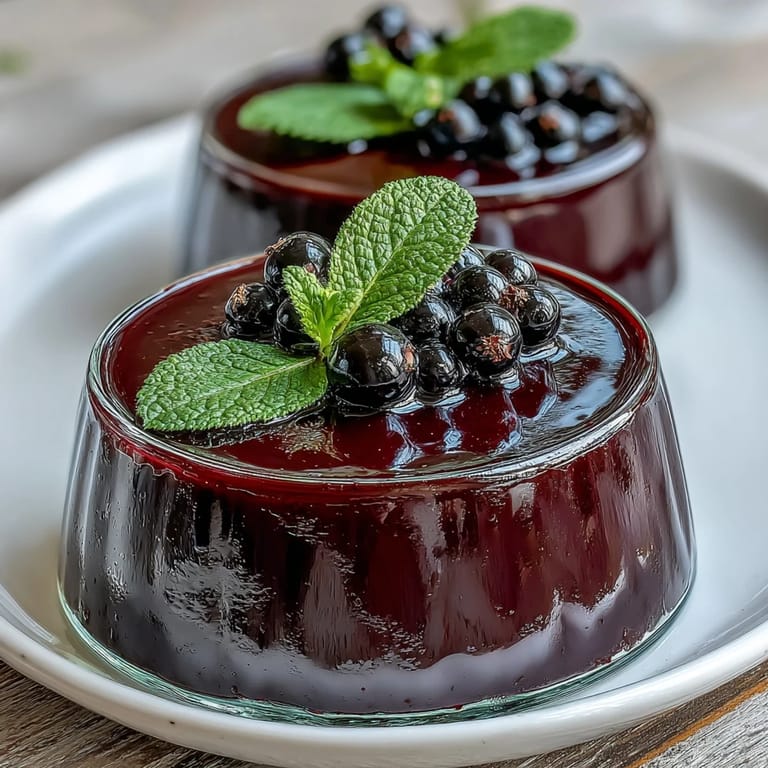
- Whisk the strained black currant puree into the warm cream mixture until no streaks remain and the color is uniform. This is where the magic happens—the cream turns from pale ivory to a deep mauve.
- Pour and cool with patience:
- Divide the mixture among 4 lightly greased ramekins or dessert glasses, let them cool to room temperature on the counter, then slide them into the refrigerator for at least 4 hours. The longer they chill, the more set and perfect they'll be.
- Add the glaze for drama (optional):
- If you're using the jam glaze, warm the jam with 1 tablespoon water in a small saucepan until it's melted and smooth, then let it cool slightly before spooning a thin layer over each panna cotta. This step adds shine and an extra hit of fruit flavor.
 Save
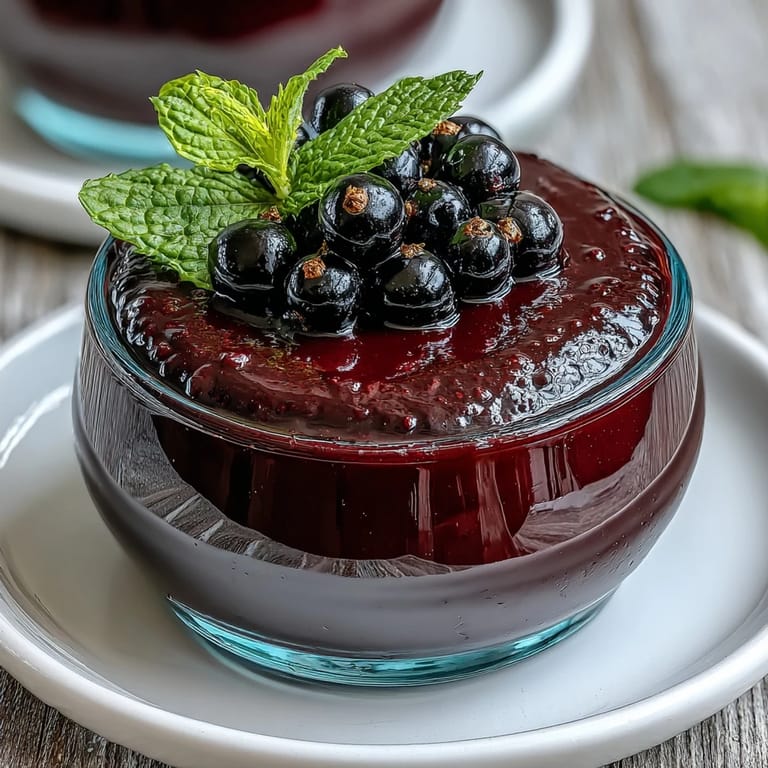
Save There's a moment when you unmold or spoon into a dessert glass and see that deep purple-mauve color catch the light that reminds you why you love cooking. It's not about complexity or effort—it's about transformation, taking simple ingredients and making something that tastes like it belongs in a fancy restaurant.
Choosing Your Black Currants
Black currants have this incredible tartness that makes people pause for a second—it's not the familiarity of strawberry or raspberry, which is exactly why I love them. If you can't find them fresh, frozen ones are honestly just as good, sometimes better because they're picked at peak ripeness. I've also had success swapping in blackberries or blueberries when currants disappeared from my market, though the flavor profile shifts slightly toward earthiness rather than that bright, almost wine-like tang.
The Texture of Perfect Panna Cotta
That famous wobble—the way a properly set panna cotta moves on the spoon without collapsing—comes down to respecting the gelatin. Too much and it becomes rubbery, too little and you have sweet cream soup. The measurement I've given is the sweet spot, and I learned it through trial and error, including one version that wiggled like it was alive. The cream base needs to cool fully before chilling, which sounds counterintuitive, but it helps the gelatin set evenly throughout.
Serving and Pairing Ideas
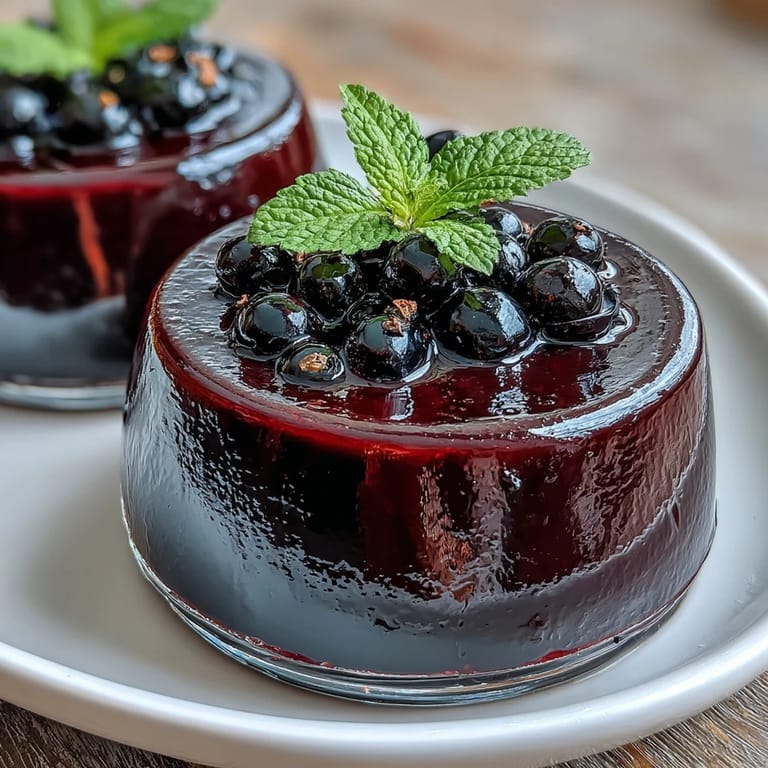
I serve mine with a dollop of whipped cream and a scattered handful of fresh black currants on top, partly for looks and partly because that extra burst of tartness against the creamy sweetness is absolutely necessary. You could also add a crisp almond biscuit on the side or drizzle with a tiny bit of honey. A glass of Moscato d'Asti or Prosecco alongside is non-negotiable—the bubbles and slight sweetness play perfectly against the panna cotta's richness.
- Make it a day ahead if you're cooking for guests, which takes the stress out of entertaining.
- If your ramekins are going straight to the table, choose beautiful ones because presentation matters as much as taste here.
- For a more intense purple color, add a single drop of natural purple food coloring to the cream mixture, though it's beautiful without it.
 Save
Save This dessert has become my answer to the question of what to make when I want to impress without stress. It sits quietly in the refrigerator doing all the work while you attend to other things, and when you bring it to the table, it feels like you've done something far more complicated than you actually have.
Recipe FAQ
- → Can I make black currant panna cotta ahead of time?
Yes, this dessert is perfect for preparing in advance. You can make it up to 2 days before serving. Keep it covered in the refrigerator until you're ready to serve. Add the optional glaze just before serving for the best presentation.
- → What can I substitute for black currants?
If fresh or frozen black currants aren't available, you can use blackberries, blueberries, or even raspberries for a different flavor profile. The tartness level will vary slightly—black currants have a unique acidic tang that blackberries come closest to matching.
- → Why didn't my panna cotta set properly?
The most common issue is not letting the gelatin bloom long enough or not dissolving it completely. Ensure the gelatin sits in cold water for at least 5 minutes to bloom. When adding it to the warm cream, whisk thoroughly until no granules remain. Avoid boiling the cream mixture, as high heat can break down the gelatin's setting ability.
- → Can I use agar agar instead of gelatin?
Yes, agar agar works as a vegetarian alternative. Use about 1 teaspoon of powdered agar agar for every teaspoon of gelatin called for in the recipe. Note that the texture will be slightly firmer and less creamy than traditional gelatin-based panna cotta.
- → Should I grease the ramekins?
Lightly grease the ramekins only if you plan to unmold the panna cotta onto plates. A thin coating of neutral oil helps release cleanly. If serving directly in dessert glasses, greasing isn't necessary and may leave an oily residue on the presentation.
- → What wine pairs well with this dessert?
The tart berry flavors complement sweeter sparkling wines beautifully. Moscato d'Asti, Prosecco, or a late-harvest Riesling balance the richness of the cream while enhancing the black currant notes. For a non-alcoholic option, try sparkling water with a splash of currant juice.