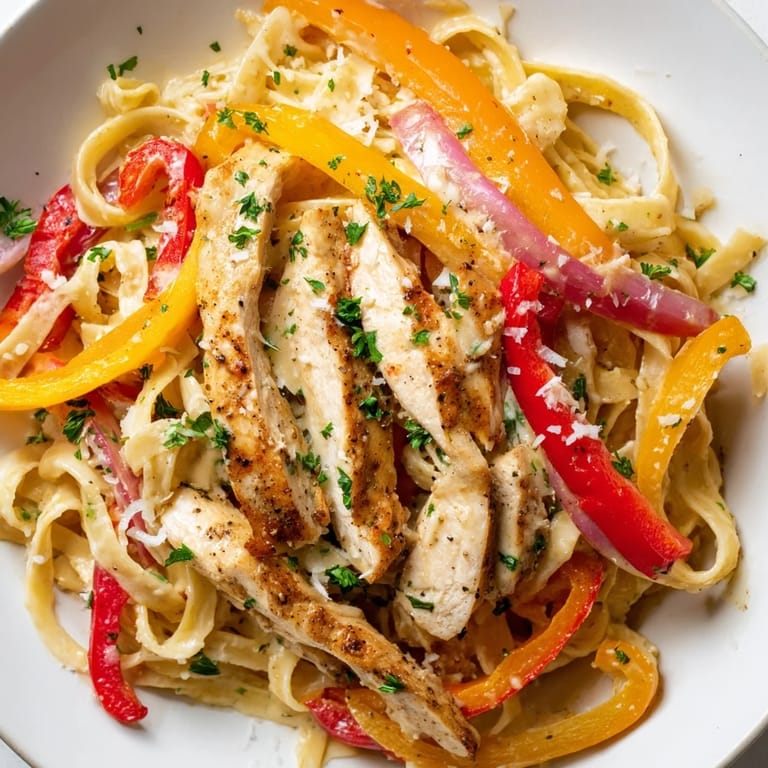
 Save
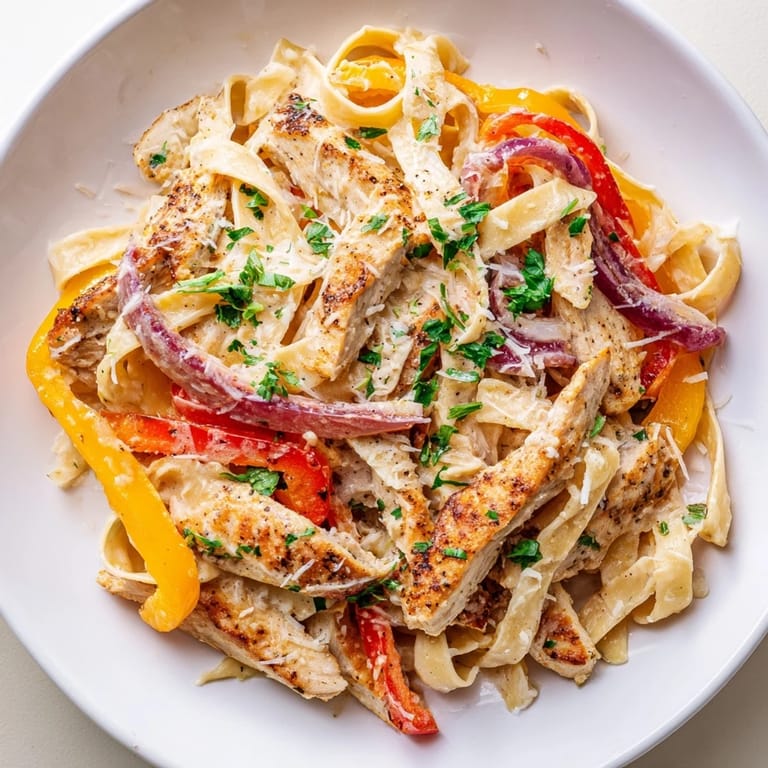
Save There's a moment in every cook's life when a dish just clicks, and for me, it was a humid Tuesday night when I threw together what I thought would be a quick weeknight pasta. My neighbor had brought over fresh bell peppers from her garden, and I had some chicken thawing on the counter. That evening, I discovered that Cajun spices and cream sauce together create this almost magical alchemy—bold enough to feel special, simple enough to make on a Tuesday. Now it's the dish people ask me to make when they need comforting, and honestly, I've stopped apologizing for how easy it is.
I'll never forget cooking this for my sister the week she moved into her first apartment with a kitchen that barely fit two people. We stood elbow-to-elbow at her tiny stove, and she tasted it straight from the spoon, eyes wide, and said, "You made this on purpose?" Sometimes the simplest meals become the most meaningful memories, especially when shared in spaces filled with new beginnings.
Ingredients
- Boneless, skinless chicken breasts: Slice them into strips while they're cold—it's easier and more even. Two large breasts give you tender pieces that cook through quickly without drying out.
- Cajun seasoning: This is where the personality lives, so don't skimp. I learned the hard way that a light hand makes it timid; one and a half tablespoons coats the chicken with enough spice to make you feel it.
- Penne or fettuccine pasta: Either works, but penne cups the sauce beautifully. Cook it just short of al dente since it'll finish cooking in the cream sauce.
- Red and yellow bell peppers: The colors matter as much as the flavor—they brighten the plate and add a subtle sweetness against the spice.
- Red onion: It's softer than yellow onion and adds a hint of sweetness that balances the heat.
- Garlic: Mince it fine so it distributes evenly and dissolves into the sauce.
- Heavy cream: Full-fat only—don't try to lighten this one. The cream is essential to the richness.
- Chicken broth: It keeps the sauce pourable and prevents it from becoming too dense.
- Parmesan cheese: Freshly grated changes everything. Pre-grated versions have additives that can make the sauce grainy.
Tired of Takeout? 🥡
Get 10 meals you can make faster than delivery arrives. Seriously.
One email. No spam. Unsubscribe anytime.
Instructions
- Boil the pasta to just before done:
- Salt the water generously—it should taste like the sea. Cook until you can bend a piece with your thumbnail but still feel slight resistance. Reserve a mug of that starchy water before draining, because you'll need it later to adjust the sauce's consistency.
- Season and sear the chicken:
- Coat every strip of chicken in Cajun seasoning until it's visibly coated. When your oil shimmers in the skillet, lay the chicken down—you'll hear that satisfying sizzle. Don't move it for a few minutes; let it develop a golden crust before flipping.
- Build the sauce base:
- Melt butter in the same skillet (all those browned bits are flavor gold), then add your peppers, onions, and garlic. The kitchen will smell incredible within moments. Sauté until the vegetables are soft and the onions turn translucent.
- Combine cream and broth:
- Pour in the cream and broth slowly while stirring, scraping the pan bottom as you go. Let it simmer gently for a couple of minutes until it thickens slightly and takes on a velvety texture.
- Melt in the cheese:
- Turn the heat low before adding Parmesan—high heat can make it clump and separate. Stir constantly until the cheese melts completely and the sauce becomes silky.
- Bring it all together:
- Add the pasta and chicken back to the skillet, then drizzle in reserved pasta water a little at a time until the sauce reaches the consistency you love. Toss everything to coat, taste, and adjust salt and pepper.
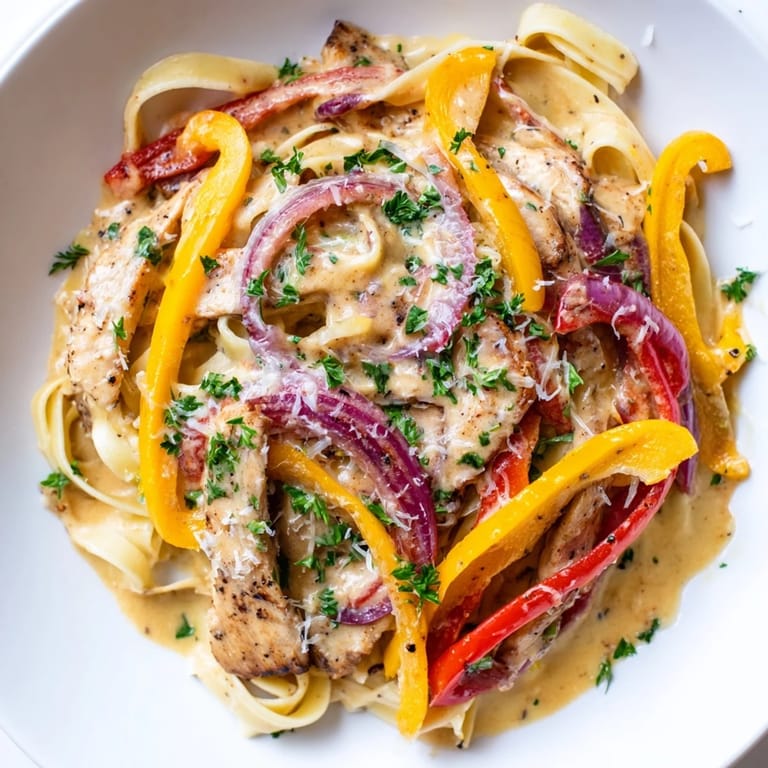 Save
Save There's something about watching someone taste this dish for the first time and seeing them pause, fork suspended, as they register the heat and the creaminess and the garlic all at once. It's the kind of food that doesn't need apologies or explanations—it just delivers.
The Spice Factor
Cajun seasoning carries a reputation for heat, but it's really about complexity—paprika, cayenne, garlic powder, and onion creating layers that build rather than burn. The cream sauce mellows the spice into something approachable, which is why even people who claim they don't like spicy food often love this dish. I once made this for someone who said they had a low spice tolerance, and they went back for seconds. The key is that the heat arrives with flavor, not aggression.
Timing and Temperature Control
Everything here cooks in roughly the same window—about 25 minutes—which means you can have dinner on the table in under 40 minutes total. The secret is medium-high heat for the chicken to develop color, medium for the vegetables to soften without browning, and low for the cream sauce to thicken without breaking. Rushing temperature or skipping steps is where things fall apart. I learned this the first time I cranked the heat, trying to speed things along, and ended up with a broken sauce I had to start over.
Make It Your Own
This recipe is forgiving enough to improvise with, which is part of why I return to it. Mushrooms and sun-dried tomatoes can replace some of the peppers, or a handful of spinach stirred in at the end adds earthiness. Shrimp works beautifully if you want to shift from chicken. The cream sauce is the constant—everything else is flexible.
- If the sauce seems too thick, thin it with a splash of pasta water or broth rather than cream.
- For deeper flavor, cook the chicken in batches so it browns properly rather than steaming in its own moisture.
- Freshly cracked black pepper makes a visible difference in the final plate.
 Save
Save This is the kind of dish that fills your house with warmth and your stomach with satisfaction, which feels like enough on a Tuesday night. Make it, share it, and watch it become one of those recipes people remember.
Recipe FAQ
- → What type of chicken works best for this dish?
Boneless, skinless chicken breasts sliced into strips are ideal for even cooking and coating with seasoning.
- → Can I substitute the pasta used?
Penne or fettuccine both work well, but feel free to use any preferred pasta shape that holds sauce.
- → How do I achieve the right cream sauce consistency?
Simmer the cream with broth, then add Parmesan and stir gently until melted and smooth, adjusting with reserved pasta water as needed.
- → Are there variations to the vegetables included?
Red and yellow bell peppers with red onion provide color and sweetness, but you can add or swap other mild vegetables as desired.
- → Can this dish be made spicier?
Yes, add a pinch of cayenne pepper or choose a spicier Cajun seasoning blend to increase heat.