 Save
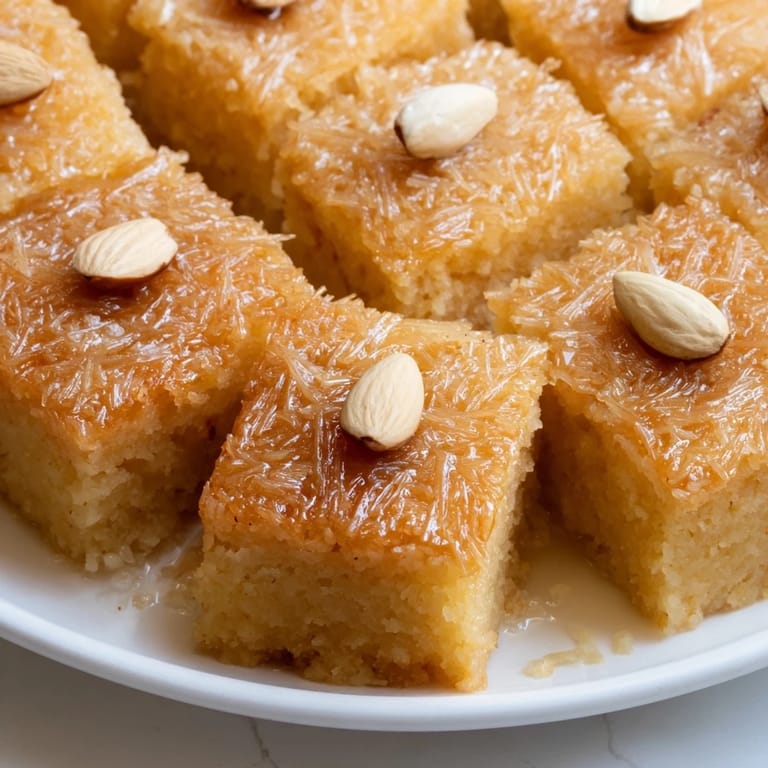
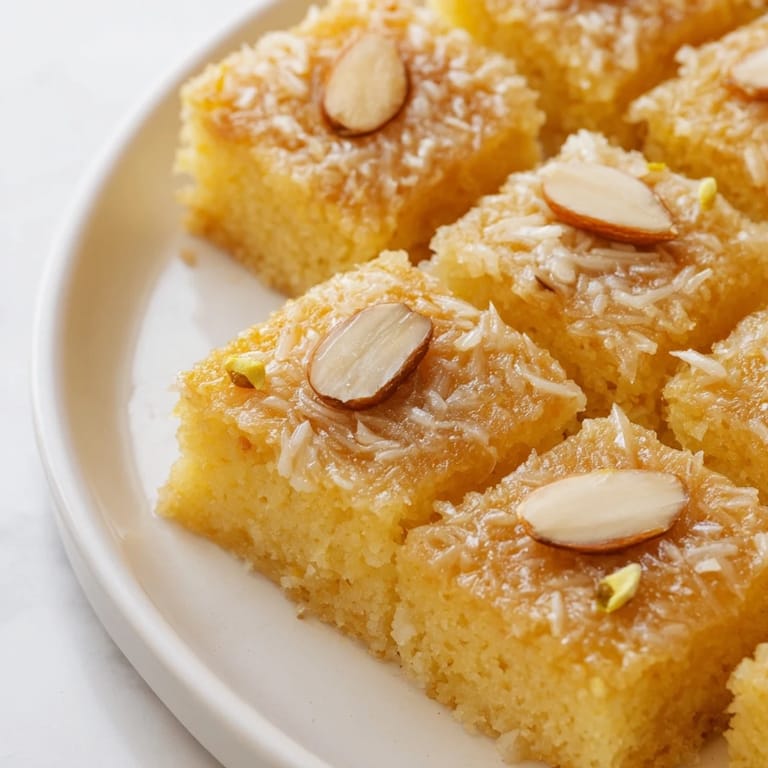
Save The first time I bit into basbousa at my neighbor's kitchen, I didn't expect the contrast—that almost-crispy exterior giving way to a tender, coconut-sweetness that seemed to melt on my tongue. She'd just pulled it from the oven, still warm, and poured the syrup over it while it was hot, and the whole thing seemed to drink it in like it was made for that exact moment. That's when I understood why this humble Egyptian dessert shows up at every celebration, every gathering, every quiet afternoon tea. Now when I make it, I chase that same magic she showed me.
I made this for a friend who grew up in Cairo, and watching her face as she took that first bite—the way her eyes closed for a second—told me everything. She said it reminded her of her grandmother's version, which is the highest compliment in any kitchen. Since then, whenever I need to bring something to a gathering, this is what I reach for because it always brings people back to the table for another piece.
Ingredients
- Fine semolina: This is the backbone of basbousa—don't use coarse semolina or you'll end up with a grainy texture instead of that tender crumb.
- Granulated sugar: Two cups total, split between the batter and syrup; it dissolves into everything and keeps the cake moist from the inside out.
- Desiccated coconut (unsweetened): The sweetened version will make your basbousa cloyingly sweet, trust me on this one.
- Plain yogurt: This is the secret to moisture; it's what keeps the cake tender even after days in the pantry.
- Unsalted butter or ghee: Melted, and the ghee version tastes even richer if you can get it.
- Baking powder: Just enough to give the cake a gentle lift without making it cakey.
- Vanilla extract: A small touch that rounds out the coconut flavor without announcing itself.
- Salt: A quarter teaspoon balances the sweetness so it doesn't feel one-dimensional.
- Whole blanched almonds: These sit in the center of each piece and stay slightly chewy; pistachios work beautifully too.
- Rose water or orange blossom water (for syrup): Optional but transforms the syrup from simple to something that tastes like memory.
- Lemon juice (for syrup): Just enough to cut the sweetness and keep the syrup from tasting one-note.
Tired of Takeout? 🥡
Get 10 meals you can make faster than delivery arrives. Seriously.
One email. No spam. Unsubscribe anytime.
Instructions
- Set your stage:
- Preheat the oven to 350°F (180°C) and grease your 9x9 inch pan with butter or a bit of tahini. You want it well-greased so the edges don't stick.
- Build the dry base:
- In a large bowl, whisk together the semolina, sugar, coconut, baking powder, and salt until everything is evenly combined and there are no lumps hiding in the corners.
- Bring it together:
- Pour in the yogurt, melted butter, and vanilla extract, then stir with a spatula or wooden spoon until you have a thick, cohesive batter that holds together but isn't pourable.
- Score and place:
- Spread the batter into your pan and smooth it out, then use a sharp knife to score it into 12 squares or diamonds—cut all the way through to the bottom. Place one almond in the center of each piece; it's a small moment that makes the final dessert look intentional.
- Bake until golden:
- Bake for 30 to 35 minutes until the top is golden brown and a toothpick inserted in the center comes out clean. The edges will pull slightly away from the pan.
- While it bakes, make the syrup:
- In a saucepan, combine 1 cup sugar, three-quarters cup water, and the lemon juice over medium heat. Stir until the sugar dissolves, then let it simmer for 8 to 10 minutes until it thickens just slightly—it should coat the back of a spoon but still flow. Remove from heat and stir in the rose or orange blossom water if you're using it, then let it cool to room temperature.
- The crucial moment:
- As soon as the basbousa comes out of the oven, pour the cooled syrup evenly over the hot cake. This is the magic—the hot cake drinks in the cold syrup and becomes impossibly moist.
- Cool and serve:
- Let the whole thing cool completely, then re-cut along the scored lines with a sharp knife to separate the pieces, and serve with tea or coffee.
 Save
Save There's something almost meditative about making basbousa—the way the batter comes together, the quiet moment of arranging almonds on top, the smell of it baking that fills your whole kitchen with something warm and promising. Every time I pull it from the oven and watch the syrup soak in, I think about all the homes and tables where this same scene has played out for generations.
The Texture Magic
The genius of basbousa is that it's crispy on the outside and soft in the middle, and that balance comes from the yogurt in the batter and the syrup at the end. The moisture stays locked in, so a piece from day one tastes just as good as a piece from day four, which makes this the perfect make-ahead dessert for when you need something that doesn't demand last-minute assembly.
Variations That Work
I've made this with half the yogurt swapped for sour cream and the richness becomes almost decadent; I've also tried it with pistachios instead of almonds and the flavor shifted in a way that felt fresh and slightly less traditionally sweet. You can play with the floral notes in the syrup too—some days I skip the rose water entirely and just use lemon, and it tastes bright instead of perfumed.
Serving and Storage
This dessert genuinely shines served at room temperature with mint tea or a small cup of strong Turkish coffee, which is how I first had it and how I'll always make it. The slight bitterness of the coffee cuts through the sweetness in a way that makes you want another piece immediately.
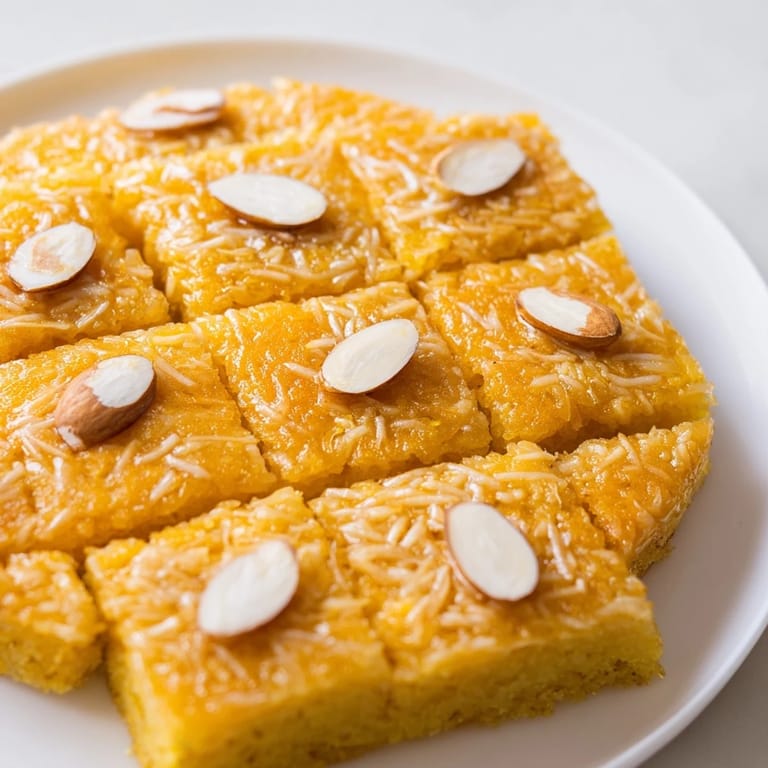
- Store basbousa covered at room temperature for up to five days; it actually improves slightly as it sits and absorbs more syrup.
- You can make the batter the night before and bake it the next day, which takes some of the rush out of entertaining.
- If it somehow dries out, a light brush of syrup or honey over the top brings it back to life.
 Save
Save Make this for someone you want to impress or for yourself on a quiet afternoon when you deserve something that tastes like care. It's that kind of dessert.
Recipe FAQ
- → What gives Basbousa its moist texture?
The combination of yogurt and melted butter in the batter helps create Basbousa's moist and tender crumb.
- → Can I substitute almonds with other nuts?
Yes, pistachios or walnuts can be used as a garnish for a different flavor and crunch.
- → How is the fragrant syrup prepared and used?
The syrup is simmered with sugar, water, and lemon juice, optionally infused with rose or orange blossom water, then poured hot over the baked cake to soak in.
- → Is it possible to enhance the coconut flavor further?
Sprinkling extra desiccated coconut on top before baking intensifies the coconut aroma and taste.
- → What are ideal accompaniments for this dessert?
Basbousa pairs wonderfully with mint tea or Turkish coffee, highlighting its sweet and rich profile.