 Save
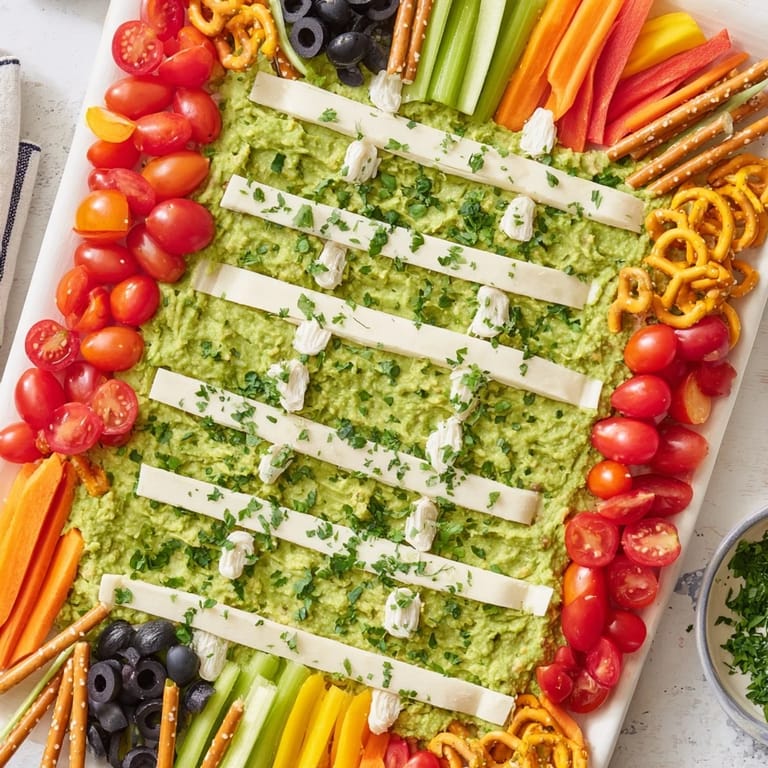
Save I'll never forget the Sunday when my neighbor challenged me to bring something that would make everyone forget about the boring veggie platter that usually shows up to game day gatherings. That's when it clicked—why not turn the snack board itself into the main event? I spent that afternoon arranging guacamole like grass, laying cheese strips as yard lines, and suddenly our living room didn't just smell like game day, it looked like one too. My friends walked in, stopped dead in their tracks, and before kickoff even started, we were already gathered around the board like it was the most important play of the season.
I still remember my nephew pointing at the board and saying, 'It's too pretty to eat,' before immediately grabbing a handful of chips and diving in anyway. That moment right there—when something you made brings people actual joy before they even taste it—that's when you know you've nailed it.
Ingredients
- Guacamole: This is your field, so choose good avocados or don't make it from scratch—store-bought works beautifully and saves you from brown guac disasters. The smooth base is what makes everything else pop visually.
- Fresh parsley or cilantro: This isn't just decoration; it's the texture and freshness that keeps people wanting to go back for more. Chop it finer than you think you need to.
- Mozzarella string cheese or white cheddar: Cut these into thin, even strips for clean yard lines. The contrast against the green is what makes this thing actually look like a football field.
- Sour cream: Keep this on hand if you want perfectly straight lines piped like a pro. It's optional but makes a real difference if you're aiming for that football field aesthetic.
- Salsa and hummus or black bean dip: These are your end zones, and they should taste different from each other to keep people exploring the board.
- Tortilla chips: Go for sturdy ones that won't shatter in half when you dip. Thick chips are your friend here.
- Mini pretzels, carrots, celery, bell peppers, cherry tomatoes, olives, and pickles: Mix textures and colors. The variety is what makes people say, 'Wow, there's so much here.'
- Chives and shredded cheddar: These final touches add little bursts of color and flavor that make it feel intentional and finished.
Tired of Takeout? 🥡
Get 10 meals you can make faster than delivery arrives. Seriously.
One email. No spam. Unsubscribe anytime.
Instructions
- Build Your Field Base:
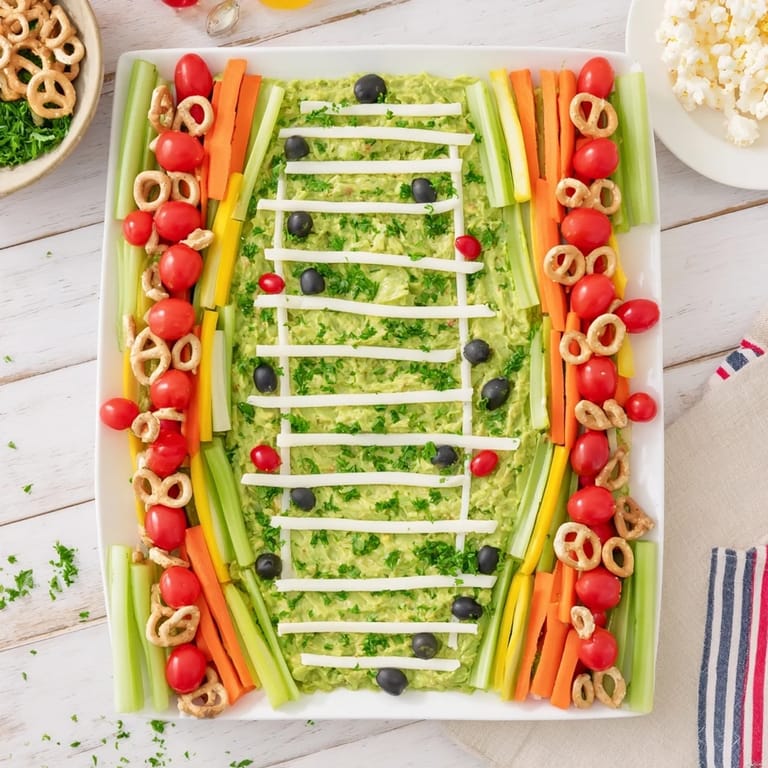
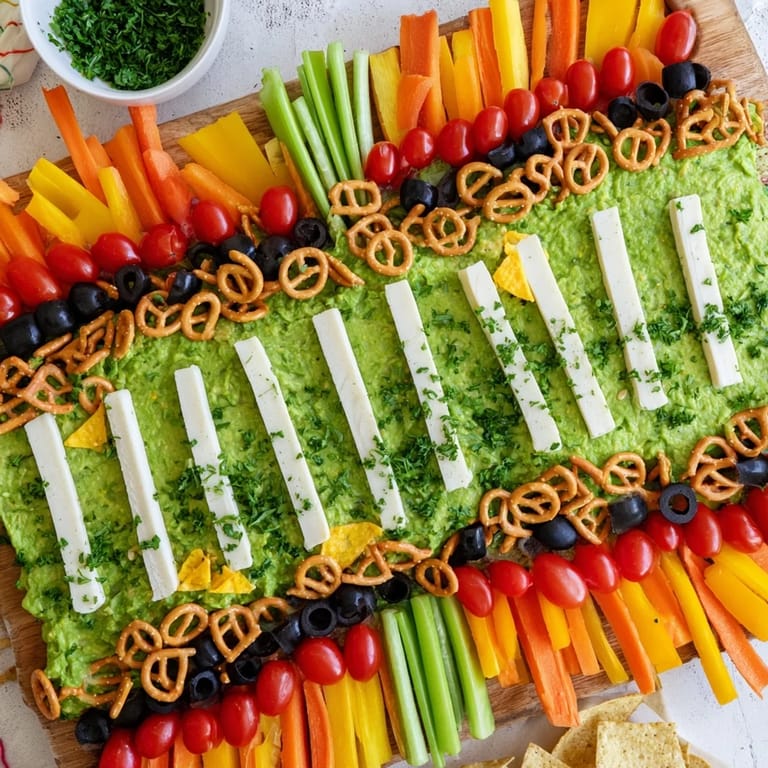
- Grab your largest rectangular board or tray—this is the foundation. Spread the guacamole across the center in one large rectangle, like you're painting a football field onto a canvas. Use a spatula to smooth it out so it's even. This takes a minute, but it matters because it's your green turf.
- Add the Grass Texture:
- Sprinkle your chopped parsley or cilantro all over that guacamole. Don't hold back—you want it to look like someone actually mowed that field. The green deepens, the texture catches the light, and suddenly it looks expensive.
- Create the Yard Lines:
- Here's where it gets fun. If you want precision, fill a small piping bag or even a zip-top bag with sour cream, snip the tiniest corner, and pipe straight lines across your field like you're marking the actual yards. If you're feeling looser about it, just lay those white cheese strips across in parallel lines. Either way, step back and admire what you've created because it's starting to look real.
- Define the End Zones:
- At each short end of the board, create two distinct zones. Spread salsa in one corner and hummus or black bean dip in the other. These are your touchdown zones, and they should look intentional and inviting.
- Arrange Your Players:
- Now for the fun part—the snacks are your team. Arrange the tortilla chips in rows, cluster the pretzels, create little vegetable arrangements along the sides. Think of it like you're choreographing where everything goes so the board reads like a real field, with clear sections and movement.
- Final Garnish and Serve:
- Sprinkle chives, add extra shredded cheddar in the corners, or arrange those cherry tomatoes like little footballs if the mood strikes. Do this right before people arrive so everything is fresh and vibrant. Set out small plates and napkins and watch people lose their minds.
 Save
Save What surprised me most was how this board became a conversation starter. People weren't just eating; they were talking about which end zone to hit first, debating whether the pretzels or chips were better dippers, and generally treating the whole thing like it mattered. That's when I realized this isn't really about the food—it's about making people feel like you put thought into them.
Making It Your Own
The beauty of this board is that it's totally customizable based on who's coming over and what you have on hand. Want to make it more substantial for a crowd that's hungry? Add cheese cubes, mini sandwich sliders, or even some cured meats along the sides. Going completely vegan? Swap in plant-based cheese and make sure your dips are dairy-free—it works just as well and honestly looks just as good. The field itself is flexible; if guacamole isn't your thing, spinach hummus or even a really good pesto works as your green base. Some people I know use ranch dip mixed with herbs for a creamier field. The point is, you're not locked into anything. This is your board, your rules.
The Visual Strategy
Here's something I learned by trial and error: contrast is everything. The green field against white cheese lines is what makes this work. If you're doing a salsa end zone, the red pops perfectly against the green. The darker hummus or black bean dip on the other end creates balance. When you're arranging the chips and vegetables, think about color placement. Those bright orange carrots, red bell peppers, and cherry tomatoes? They're not just healthy; they're strategic visual elements that make the whole thing sing. It's like you're painting with food, and the best boards are the ones where you can actually see the intention.
Timing and Logistics
The best part about this recipe is that there's no last-minute stress. You can prep everything else earlier in the day—chop your vegetables, pour your dips into serving bowls, cut your cheese. Then thirty minutes before people arrive, you assemble the board, and you're done. You get to actually enjoy the game instead of being stuck in the kitchen. I usually set up the board, give it one final check in the lighting where people will see it, adjust a few things if needed, and then I step back. By the time guests arrive, you're already there waiting for them, which feels so much better than rushing out of the kitchen looking frazzled.
- Prep all your ingredients earlier in the day and store them in the fridge in separate containers
- Assemble the board no more than thirty minutes before serving to keep everything fresh and vibrant
- If you're serving this at a watch party, set it up on a table where it's visible but not in the way of the TV
 Save
Save At the end of the day, this board isn't about being perfect or Instagram-worthy. It's about showing up for people with something that makes them smile before they even take a bite. Make it, enjoy the game, and let people dig in.
Recipe FAQ
- → How do I create the green turf effect?
Spread guacamole evenly on a large board and sprinkle chopped parsley or cilantro for texture and vibrant green color.
- → What can I use to make the yard lines?
Thin strips of mozzarella string cheese or white cheddar work well, or use sour cream piped carefully for precise lines.
- → Are there vegan-friendly dip alternatives?
Yes, substitute guacamole with spinach hummus or pesto, and use plant-based cheeses to keep it vegan-friendly.
- → How should the end zones be arranged?
Spread salsa on one end and hummus or black bean dip on the opposite end of the board for distinct zones.
- → What snacks pair best alongside the dip board?
Tortilla chips, mini pretzels, baby carrots, celery sticks, bell peppers, cherry tomatoes, olives, and pickles complement the dips nicely.
- → Can I prepare this in advance?
It's best to assemble just before serving to maintain freshness and vibrant colors of ingredients.