 Save
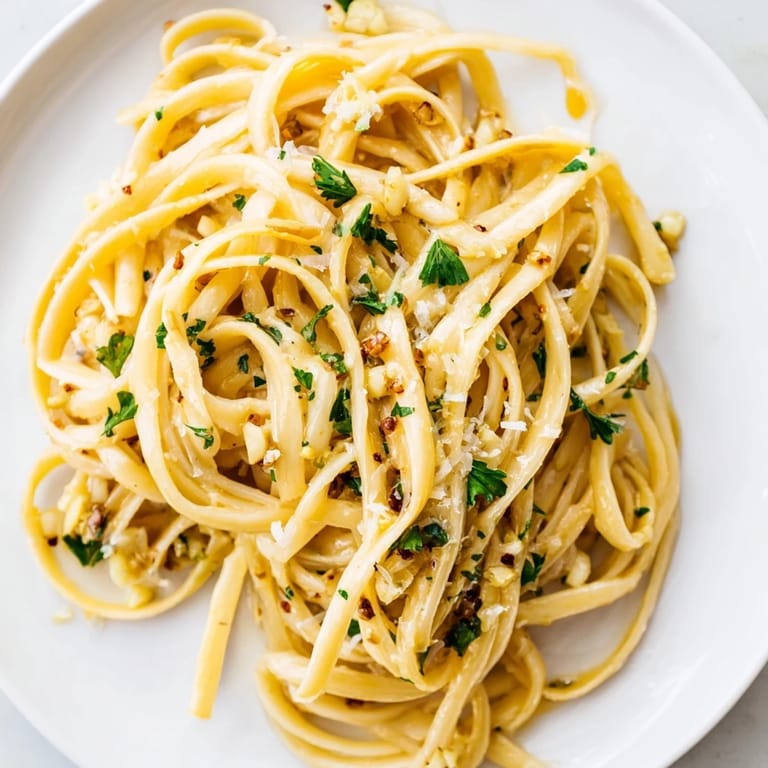
Save There's a Thursday evening when I realized I was making this dish all wrong. I stood in my kitchen with a half-empty bottle of wine and three hungry friends arriving in twenty minutes, staring at a block of butter on the counter like it held the answer. That night, I stopped overthinking and let the garlic do the talking, its warmth filling the whole apartment before the pasta even hit the pan. Something shifted when I tasted it—no cream, no complicated technique, just butter and garlic speaking for themselves. Now it's become my emergency meal, the one I make when I want to prove that simple really does mean better.
I made this for my sister once when she came home exhausted from work, and she ate it straight from the pan while sitting on my kitchen counter. She didn't say much, just kept twirling more onto her fork, and that's when I knew it wasn't just me being biased.
Ingredients
- Linguine (400g): The thinner strands catch the butter better than thicker pasta, creating little pools of golden sauce in every bite.
- Unsalted butter (80g): Use good butter—the kind with a slightly sweet, almost nutty taste—because it's essentially your whole dish and deserves to shine.
- Garlic cloves (6 large, minced): Don't use pre-minced garlic here; the fresh cloves release a completely different flavor when you crush them yourself.
- Crushed red pepper flakes (1/4 tsp): Optional, but a tiny pinch adds a whisper of heat that makes your mouth remember the dish long after dinner.
- Lemon zest (from 1 lemon): This seems small, but it's the secret that makes people ask what you did differently.
- Sea salt and black pepper: Fresh cracked pepper makes an actual difference here—pre-ground loses its punch too quickly.
- Fresh flat-leaf parsley (30g): Chop it by hand if you can, right before serving, so the flavor stays bright and alive.
- Parmesan cheese (40g, grated): Grate it fresh if possible; the pre-shredded kind has anti-caking agents that make it clumpy in hot pasta.
- Lemon wedges: Serve these alongside so everyone can adjust the brightness to their taste.
Tired of Takeout? 🥡
Get 10 meals you can make faster than delivery arrives. Seriously.
One email. No spam. Unsubscribe anytime.
Instructions
- Boil the water right:
- Fill a large pot with water and salt it generously—it should taste like the sea. Bring it to a rolling boil before adding pasta so the linguine cooks evenly and doesn't stick. While the pasta cooks, don't walk away; you'll want to start on the garlic butter in a couple of minutes.
- Build the sauce with patience:
- Melt the butter over medium heat and watch it closely so it doesn't brown. Add your minced garlic and let it sizzle gently for just a minute or two until the smell hits you—that's your signal it's ready, not brown.
- Marry the pasta and sauce:
- Drain your pasta, but save that starchy water first. Toss the hot linguine directly into the skillet with the garlic butter and add the pasta water a little at a time, stirring constantly. This starchy liquid is what creates that silky coating you can't get any other way.
- Season and finish:
- Taste as you go, adding salt and pepper slowly because you can always add more but can't take it back. Stir in the fresh parsley at the very end so it stays vibrant and fragrant.
- Serve immediately:
- Plate it right away while everything is still hot and steaming. The dish is best the moment it leaves the pan, so don't let it sit around waiting.
 Save
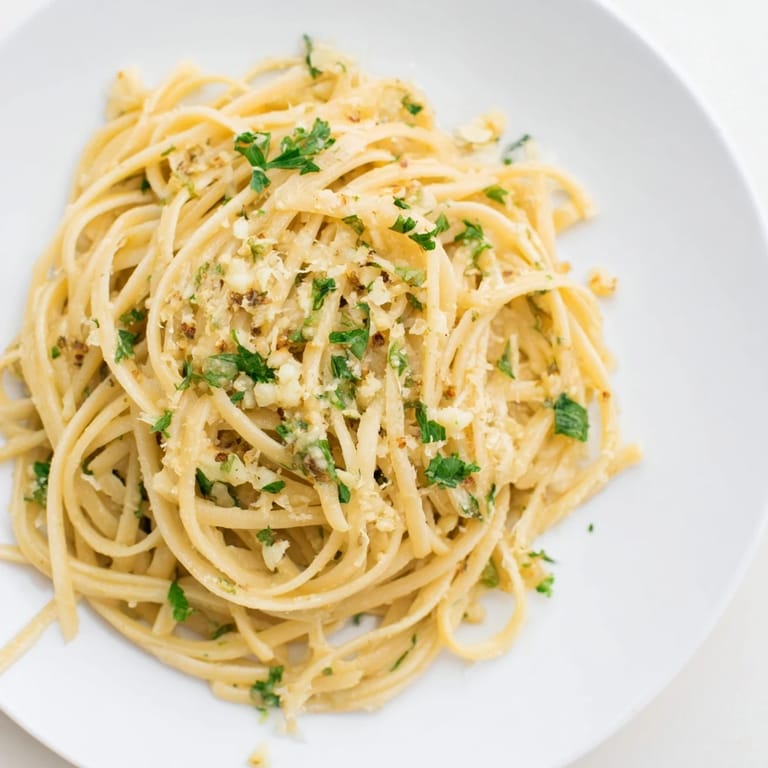
Save One winter evening, my neighbor smelled this cooking through our shared wall and showed up at my door with curiosity and no shame. We ended up eating together at my tiny table, and she's been asking for the recipe every few months since.
The Garlic Question
Fresh garlic is non-negotiable in this recipe because it's the entire personality of the dish. I've learned that six cloves might sound like a lot, but the gentle cooking mellows the garlic into something sweet and almost caramel-like rather than sharp and biting. If you're nervous, start with four cloves your first time and work up from there based on what you like.
Making It Your Own
This recipe is a blank canvas that welcomes additions without complaint. I've tossed in sautéed mushrooms, wilted spinach, cooked shrimp, even crispy breadcrumbs when I wanted texture. The butter and garlic base is strong enough to hold these additions without getting lost, which is why this dish never feels boring even when you make it twice in one week.
Timing and Temperature
The biggest mistake I see people make is cooking the garlic too fast or too hot. Medium heat is your friend here—it gives the garlic time to release all its flavor without the edges turning dark and bitter. You're looking for that moment when the kitchen fills with garlic smell and the cloves turn pale golden, which usually takes about ninety seconds.
- Don't skip reserving the pasta water; it's the difference between a dry dish and a silky one.
- Taste the pasta while it's still in the water so you catch the perfect al dente moment, not a second too late.
- Keep everything moving once the pasta hits the skillet so the sauce distributes evenly and nothing sticks.
 Save
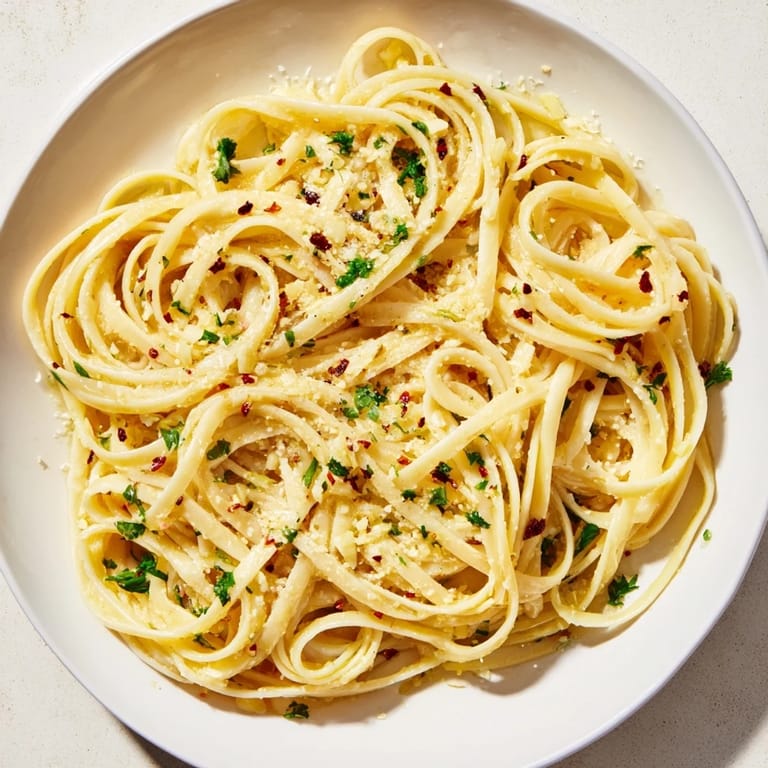
Save This dish taught me that sometimes the best meals are the ones that don't demand much from you, leaving more energy for the people sitting across the table. It's become my love language in pasta form.
Recipe FAQ
- → What type of pasta works best for this dish?
Linguine is preferred for its flat strands that hold the garlic butter sauce well, but similar long pastas like fettuccine or spaghetti are good alternatives.
- → Can I use olive oil instead of butter?
Yes, substituting part or all of the butter with olive oil adds a fruity richness and lowers saturated fat, creating a different but delicious flavor.
- → How do I prevent garlic from burning while sautéing?
Sauté minced garlic over medium heat just until fragrant, about 1-2 minutes, stirring frequently to avoid browning and bitterness.
- → Is it necessary to reserve pasta water for the sauce?
Yes, adding reserved pasta water helps the sauce cling smoothly to the noodles by slightly thinning it and enhancing texture.
- → What herbs complement the garlic butter sauce?
Fresh flat-leaf parsley is ideal for its bright, clean flavor, but basil or chives can also add delightful herbal notes.