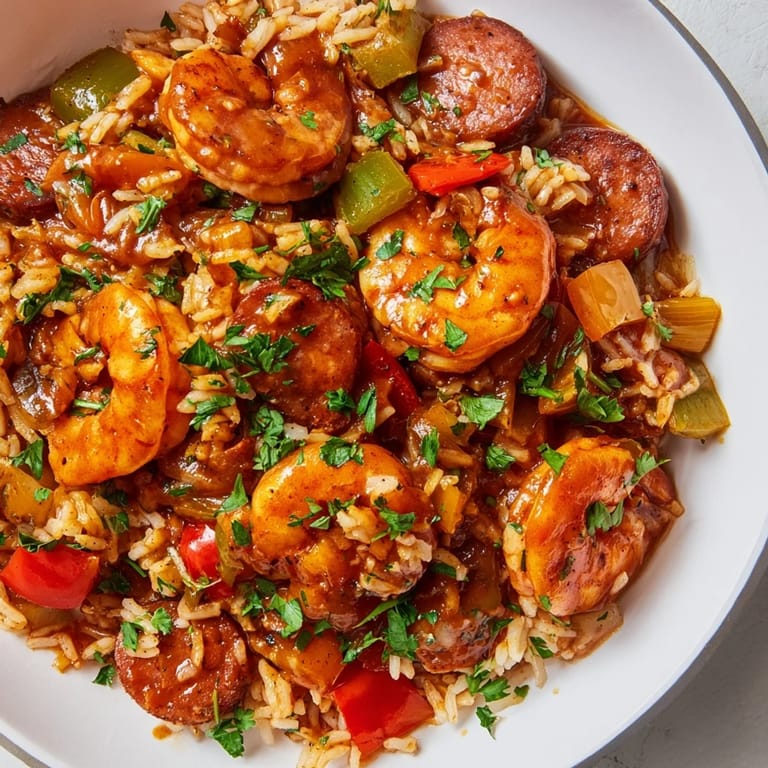
 Save
Save My neighbor Marcus showed up at my door one Saturday afternoon with a bag of andouille sausage and a story about his Louisiana grandmother's kitchen. He insisted I had to make jambalaya, and not the complicated, fussy kind—just one skillet, everything together, the kind that fills your apartment with smoke and spice before you even sit down to eat. That first attempt, I burned the garlic and somehow added too much salt, but the shrimp still turned pink, the rice absorbed all that Creole magic, and I understood why he wouldn't stop talking about it.
I made this for my coworkers during a potluck, and someone asked if I'd ordered it from a Creole restaurant. The moment they realized it came from my small kitchen with one pan made the whole thing worth it—I caught them sneaking back for seconds when they thought no one was looking.
Ingredients
- Andouille sausage: The smoky backbone of this dish—it needs to be good quality because you can taste it in every bite, so don't settle for the sad grocery store version.
- Large shrimp: They cook fast, so add them near the end or they become rubbery and sad; frozen shrimp work perfectly fine if fresh isn't available.
- Yellow onion, red bell pepper, green bell pepper, and celery: This is the holy trinity of Southern cooking (onion, celery, bell pepper), and they need to actually soften and caramelize a bit, not stay crunchy.
- Garlic: Mince it fresh—don't use the jarred stuff, which tastes like regret and metal in this particular dish.
- Long-grain white rice: Medium or short grain won't work the same way; the rice needs room to absorb all that liquid without becoming gluey.
- Low-sodium chicken broth: Use actual broth, not bouillon cubes stretched with water, because you want flavor that builds, not something thin and forgettable.
- Diced tomatoes: Canned is absolutely fine here and actually preferred; the juice goes straight into the rice and adds acidity that balances the richness.
- Smoked paprika, thyme, oregano, and cayenne: These are the spice blend that makes it taste like New Orleans and not just like random rice; toast them slightly with the rice to wake them up.
- Salt and black pepper: Taste as you go because the sausage and broth already have salt hiding in them.
- Olive oil: Two tablespoons total seems light, but it's enough when you're cooking in stages and letting things brown rather than steam.
- Fresh parsley: This is your last-minute brightness, the thing that says you didn't just dump everything in and forget it.
Tired of Takeout? 🥡
Get 10 meals you can make faster than delivery arrives. Seriously.
One email. No spam. Unsubscribe anytime.
Instructions
- Brown the sausage first:
- Heat a tablespoon of olive oil in a large skillet over medium-high heat and let the sausage slices get dark and crispy at the edges, about 3–4 minutes. This is where flavor lives, so don't rush it or stir constantly; let them actually touch the hot pan.
- Build your base with the holy trinity:
- Add the remaining oil and cook the onion, peppers, and celery until they're soft and the onion turns translucent, maybe 4–5 minutes. Add the garlic and let it bloom for just a minute—this is when your kitchen starts to smell like someone who knows what they're doing.
- Toast the rice with spices:
- Stir the rice directly into the hot vegetables along with all the spices—paprika, thyme, oregano, cayenne, pepper, and salt—and cook it for a minute while stirring so every grain gets coated and the spices wake up. You'll smell the difference immediately.
- Add liquid and return the sausage:
- Pour in the tomatoes with their juice and the chicken broth, stir well to combine, and bring everything to a simmer. This is where it becomes a cohesive dish instead of separate ingredients.
- Let it simmer covered:
- Lower the heat to low, cover the skillet, and let it cook for 20 minutes without peeking too much—the rice needs undisturbed time to absorb the liquid and become tender.
- Crown it with shrimp:
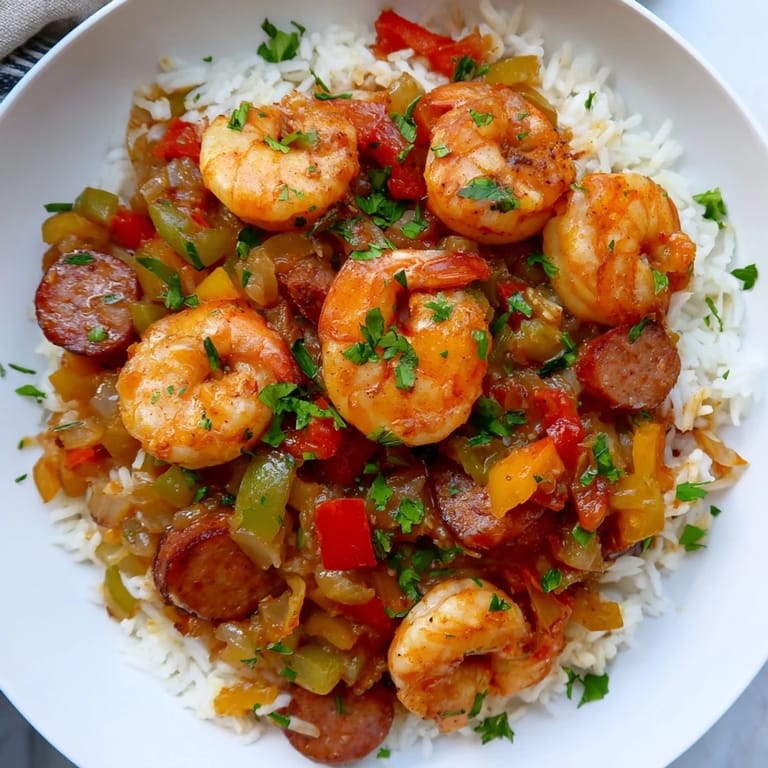
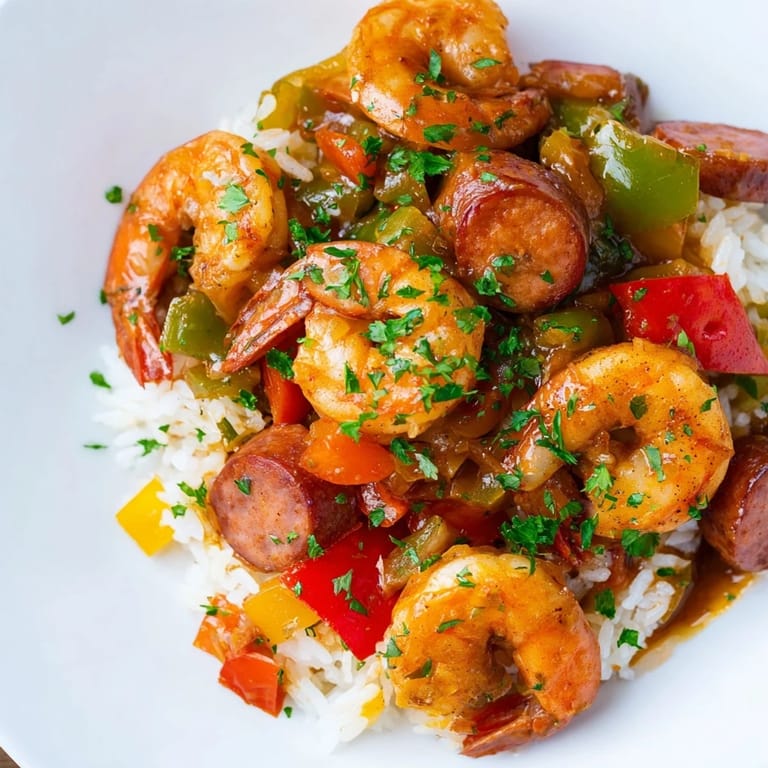
- Arrange the shrimp on top of the rice mixture like you're decorating something precious, cover again, and cook for 5–7 minutes until they turn pink and opaque. The residual steam is enough to cook them through without making them tough.
- Finish and serve:
- Fluff everything gently with a fork, scatter the fresh parsley over the top, and serve immediately while the warmth still radiates from the skillet and the steam is still rising.
 Save
Save The first time someone told me this tasted like home, even though it wasn't their home, I realized that food isn't just about feeding people—it's about giving them a moment where everything feels right and warm and exactly what they needed that day.
The Creole Spirit
Creole cooking is about layering flavors and textures, about using what's on hand and making it sing, about cooking with both precision and instinct at the same time. This jambalaya captures that philosophy in its simplest form—every element matters, every step builds on the last, and the result tastes like it took you hours when really you've been standing at the stove for less than an hour.
Variations and Swaps
This recipe is built on a foundation strong enough to handle changes without falling apart. Some nights I skip the shrimp entirely and double the sausage because that's what's in my freezer; other times I add chicken thighs if I'm feeding more people or want something heartier. The spice blend is your playground—cayenne is adjustable based on who's eating and how much heat they can handle, and if you're in a hurry, a good Cajun seasoning blend handles most of the work for you.
Serving and Storing
Jambalaya is one of those rare dishes that improves over time because the flavors continue to meld and deepen as it sits in the fridge. Serve it immediately with crusty bread and a cold Sauvignon Blanc, or store it covered for up to three days and reheat it gently with a splash of extra broth if it's gotten dry.
- Leftover jambalaya works perfectly cold straight from the container the next day at lunch.
- You can freeze it for up to two months, though the shrimp texture suffers slightly—consider cooking without shrimp and adding fresh shrimp when you reheat.
- If you're making this for guests, prep your vegetables the night before so you can move quickly and stay calm while cooking.
 Save
Save This jambalaya is the kind of dish that makes people ask for your recipe, and then they come back months later to tell you they made it for someone they love. That's the real magic here.
Recipe FAQ
- → Can I substitute the shrimp with chicken?
Yes, chicken can replace shrimp for a different protein option without changing the cooking method.
- → How do I add extra heat to the dish?
Increase cayenne pepper or serve with hot sauce to enhance spiciness.
- → What type of sausage works best?
Andouille or smoked sausage provides the smoky flavor essential to the dish.
- → Can I use Cajun seasoning instead of individual spices?
Yes, Cajun seasoning is a convenient substitute for the blend of paprika, thyme, oregano, and cayenne.
- → Is this dish suitable for dairy-free diets?
Yes, the ingredients used are dairy-free, aligning well with dairy-free dietary needs.