 Save
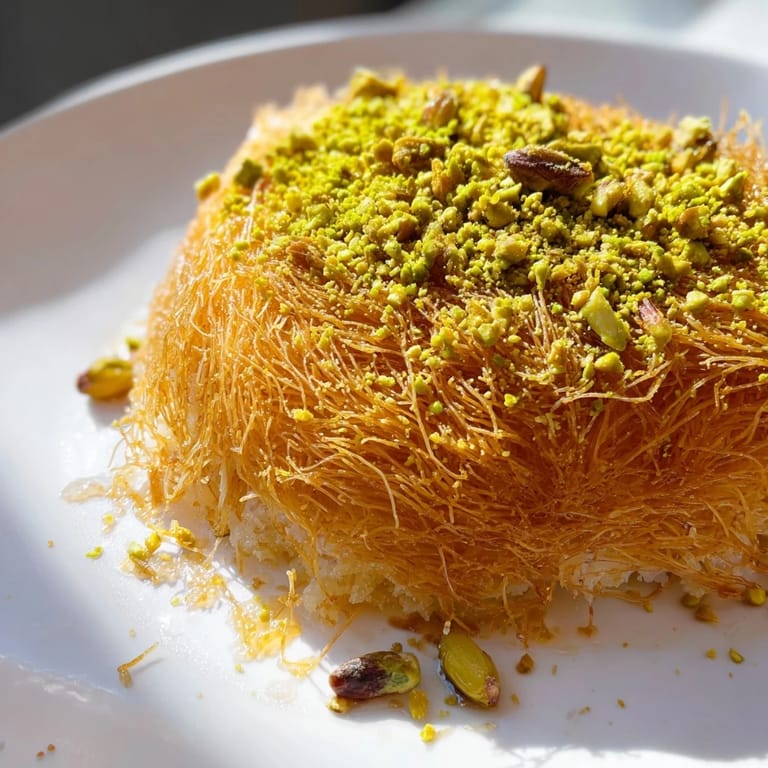
Save The first time I watched my grandmother pull a golden knafeh from her oven, the kitchen filled with a warmth that had nothing to do with the heat. She'd been making this Lebanese treasure for decades, and the way her hands moved through each step felt like a conversation with the dough itself. Years later, I finally understood that this dessert isn't about perfection—it's about that moment when crispy phyllo gives way to stretchy, warm cheese, and suddenly everyone at the table stops talking.
I remember bringing this to a dinner party on a Tuesday night, nervous because knafeh felt too fancy for my kitchen. But the moment someone bit through that crackling top and the warm cheese began to stretch, the whole room went quiet in that specific way that only happens when food tastes like home. That's when I realized knafeh isn't complicated—it's just honest.
Ingredients
- Akawi cheese: This is the heart of knafeh, with a melting point higher than mozzarella, so it stretches without becoming a puddle—400 grams, soaked and drained well.
- Ricotta cheese: Adds lightness and richness, 200 grams, mixed with the Akawi.
- Kataifi pastry: Those delicate shredded strands that crisp up like golden threads—250 grams, thawed but still separated.
- Unsalted butter: Melted and patient, coating every strand so the whole thing turns amber and shatters when you bite it—100 grams.
- Granulated sugar: 250 grams combined with water to build the syrup that soaks into warmth.
- Water: 180 ml, the base for syrup that shouldn't be too thick.
- Lemon juice: One tablespoon cuts through richness and keeps the syrup from cloying.
- Orange blossom water: This is the secret—one tablespoon that transforms everything into something that tastes like tradition.
- Rose water: One tablespoon of pure floral elegance, but use a careful hand because a little goes such a long way.
- Pistachios: Two tablespoons, finely chopped, for the finish that makes people ask what that green is.
- Honey: Optional but worthwhile, one tablespoon drizzled warm over warm cheese.
Tired of Takeout? 🥡
Get 10 meals you can make faster than delivery arrives. Seriously.
One email. No spam. Unsubscribe anytime.
Instructions
- Prepare your space:
- Heat your oven to 180°C (350°F). Grease your 23-centimeter baking dish so generously that the knafeh will want to leave it.
- Soak and ready the cheese:
- Akawi needs soaking—hours or overnight, changing water every hour to coax out salt. When it's finally ready, pat it dry and shred or slice it thin. Mix it with ricotta in a bowl and set it aside, letting those two cheeses get to know each other.
- Coat the pastry:
- Pour melted butter over your kataifi and mix gently, as if you're brushing someone's hair—every strand should shine with butter but stay separate enough to crisp later.
- Build the foundation:
- Spread half your buttered kataifi into the baking dish, press it down to form a base that holds firm, and try not to compress it so much that it won't crisp.
- Add the filling:
- Spread your cheese mixture in an even layer, knowing that every bit of this warm, stretchy moment depends on even distribution.
- Crown it:
- Top with the remaining kataifi, pressing down gently but not aggressively—you want structure, not density.
- Bake into gold:
- Slide it into the oven for 30 to 35 minutes until the top turns a deep golden brown and the edges smell like butter and possibility. You'll know it's ready when you can smell the cheese beginning to move inside.
- Make the syrup:
- While knafeh bakes, combine sugar, water, and lemon juice in a saucepan. Bring to a boil, then let it simmer for 8 to 10 minutes until it thickens just slightly. Remove from heat and stir in orange blossom and rose water, then let it cool while you finish.
- The inversion:
- This is the moment that feels brave—remove knafeh from the oven and flip it onto a serving platter in one confident motion. The pastry that was on top is now on the bottom, golden and ready.
- Soak it down:
- Pour half your cooled syrup over the hot knafeh while it's still steaming—the contrast between hot and cool, crispy and soaked, is where the magic lives.
- Finish and serve:
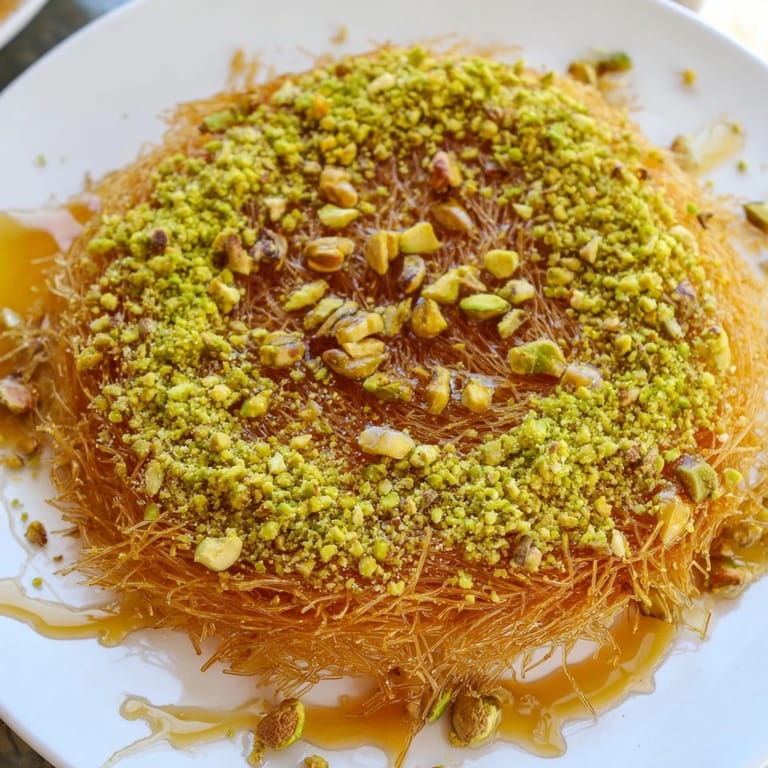
- Scatter pistachios over the top and drizzle with honey if you're using it. Serve warm, with extra syrup on the side for those who want one more touch of floral sweetness.
 Save
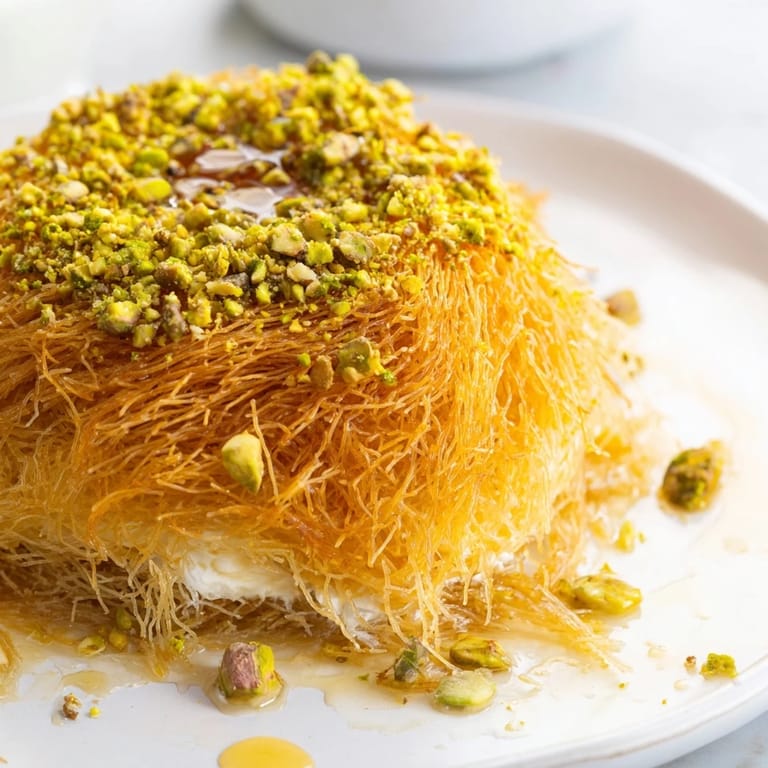
Save There's a moment, maybe thirty seconds after you invert the knafeh, when the whole thing could go either way. But if you've pressed gently and baked long enough, it releases from the pan like a secret being kept. That's the moment I understood why my grandmother made this—not for the applause, but for that brief instant when everyone tastes that you cared enough to learn.
The Syrup, Understood
The syrup is what separates knafeh from a simply cheesy pastry. When you add orange blossom and rose water, you're not just flavoring sugar—you're invoking something ancient and beautiful. I learned this by making the syrup first without the flowers, thinking I'd save steps, and the result was technically correct but soulless. Now I always make the full syrup, because those floral notes are what make someone close their eyes when they eat it.
Cheese Selection and Soaking
Akawi cheese is worth seeking out if you can—Middle Eastern markets, specialty stores, or online sources that know what they're doing. If you absolutely can't find it, low-moisture mozzarella works, though you'll need to drain it even more carefully and watch it closely in the oven. The soaking step isn't negotiable; it's how you transform a salty cheese into one that plays well with others. I've tried rushing it, and the result tastes like you skipped a step, because you did.
Variations and Moments
Some nights I broil the knafeh for just a minute or two after baking to deepen the color and shatter—it's risky but worth it if you pay attention. Some versions skip rose water entirely, letting orange blossom be the only floral note. And on nights when I want something less traditional, I've drizzled warm honey over the pistachios, letting it pool in the curves.
- If your knafeh seems soft after baking, a quick broil (one to two minutes, watched carefully) will crisp the top without burning it.
- Pair this with Turkish coffee or mint tea, never with water alone—the ceremony matters as much as the dessert.
- Leftover knafeh reheats beautifully, though it's never quite as good as the first warm bite.
 Save
Save Make this when you want to remind yourself or someone else that good food is built from patience and presence, not complexity. It's the kind of dessert that becomes a tradition after one bite.