 Save
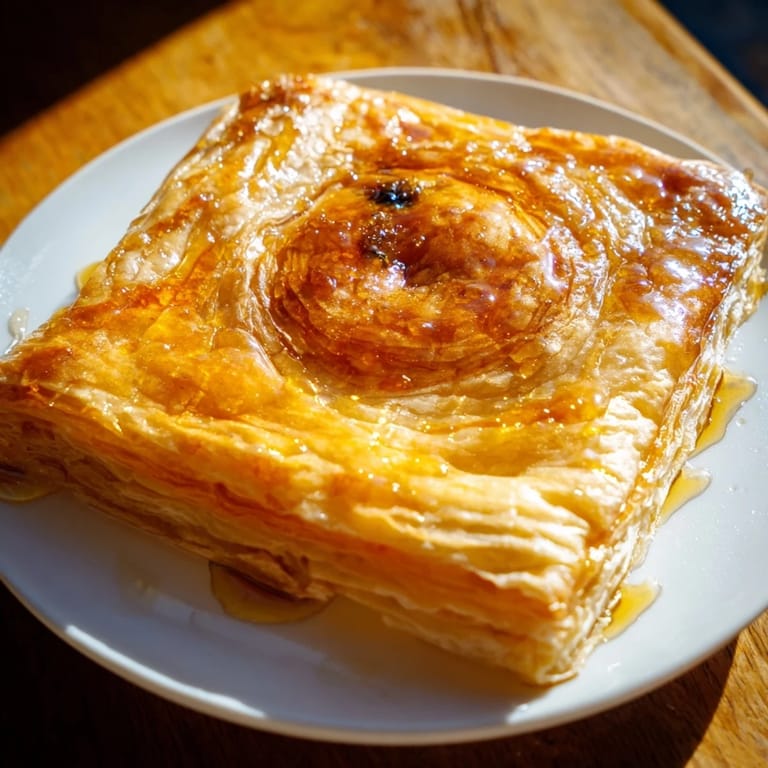
Save The first time I tasted msemen, I was sitting on a low cushion in a Marrakech kitchen while steam rose from a communal platter. My host's grandmother was already on her third one, honey dripping down her wrists without a care, and she kept pressing another warm square into my hands. The crackle was audible—that distinctive sound of pastry that's been coaxed into submission through folding and frying. I knew then I had to learn to make it.
Years later, I made msemen for my partner on a quiet Sunday morning, and they came into the kitchen drawn by the smell of butter and caramelizing semolina. We ended up eating them straight from the skillet while still steaming, laughing because the honey was all over the kitchen table. It's become our breakfast of last resort when we want something that feels special but only takes fifty minutes from start to finish.
Ingredients
- All-purpose flour (2 cups): This is your structure; it develops gluten that makes the dough elastic enough to stretch thin without tearing.
- Fine semolina (1 cup plus 1/4 cup for filling): Semolina adds tooth and prevents the dough from sticking, while also creating that signature golden crust when it fries.
- Warm water (1 1/4 cups): Warm water activates the dough and helps it relax; add slowly because humidity in your kitchen matters more than the recipe ever admits.
- Instant yeast (1 tsp, optional): This lifts the pastry slightly for an airier crumb, but traditional versions skip it entirely—your choice.
- Vegetable oil (1/2 cup plus extra): Use a neutral oil that can handle the heat without smoking; this is where flavor takes a backseat to function.
- Unsalted butter (1/4 cup, melted): Brush it generously between folds—this is what creates those shattered layers everyone asks about.
- Honey (for serving): Warm it gently so it drizzles without pooling; cold honey is the enemy of texture.
- Salt (1 tsp) and sugar (1 tsp): Together they balance the richness of butter and oil, keeping the pastry from tasting one-note.
Tired of Takeout? 🥡
Get 10 meals you can make faster than delivery arrives. Seriously.
One email. No spam. Unsubscribe anytime.
Instructions
- Mix and knead your foundation:
- Combine flour, semolina, salt, sugar, and yeast in a large bowl, then add warm water gradually while mixing. The dough should feel soft and slightly sticky—not dry, not wet. Knead for ten minutes until it becomes smooth and elastic, almost satiny under your hands. Let it rest covered for fifteen minutes while you take a breath.
- Portion into even balls:
- Divide the dough into eight equal pieces and roll each into a tight ball. Oil your work surface and hands generously; the oil is your friend here, not your enemy.
- Stretch into translucent thinness:
- Take one ball and, using oiled hands, gently flatten and stretch it outward in all directions until you can almost see light through it. This takes patience—you're not wrestling the dough, you're coaxing it. It should be nearly transparent, like a delicate veil.
- Fold with butter and semolina:
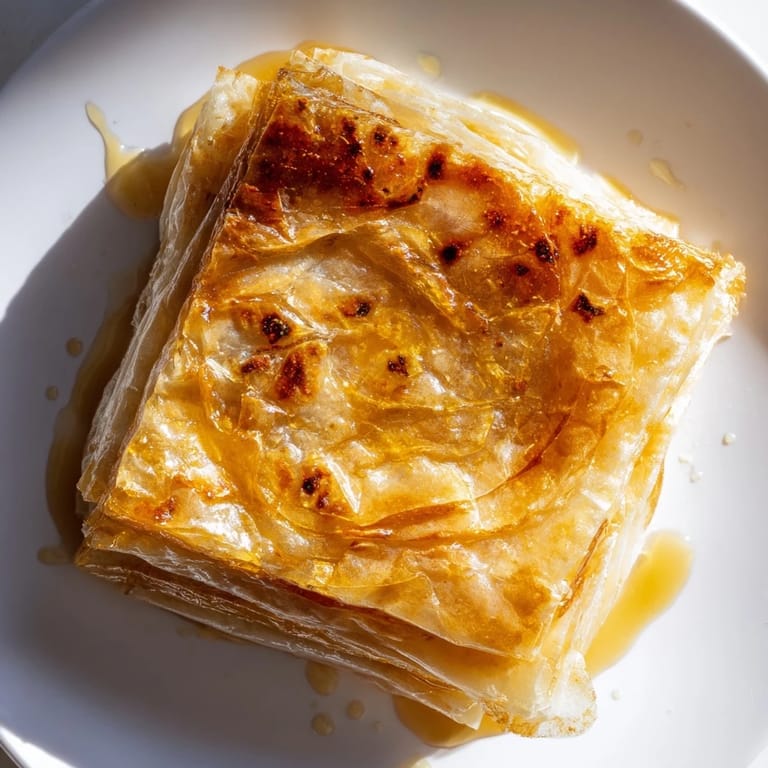
- Brush your thin circle with melted butter and sprinkle semolina all over. Fold one corner toward the center, brush again, sprinkle again. Continue folding the other corners inward, creating a rough square, building layers as you go. This is the magic: each fold traps butter and semolina between sheets of dough.
- Rest before the pan:
- Let your folded squares rest for five minutes while you heat your skillet. This small pause lets the gluten relax and prevents shrinking during frying.
- Fry to golden perfection:
- Heat a non-stick skillet over medium heat with a light brush of oil. Place a square in the pan and gently flatten it with a spatula to about one-quarter inch thick. Fry for two to three minutes per side until the surface turns deep golden and sounds crisp when you tap it with your spatula. The second side always fries faster because the pan has retained more heat.
- Drain and serve immediately:
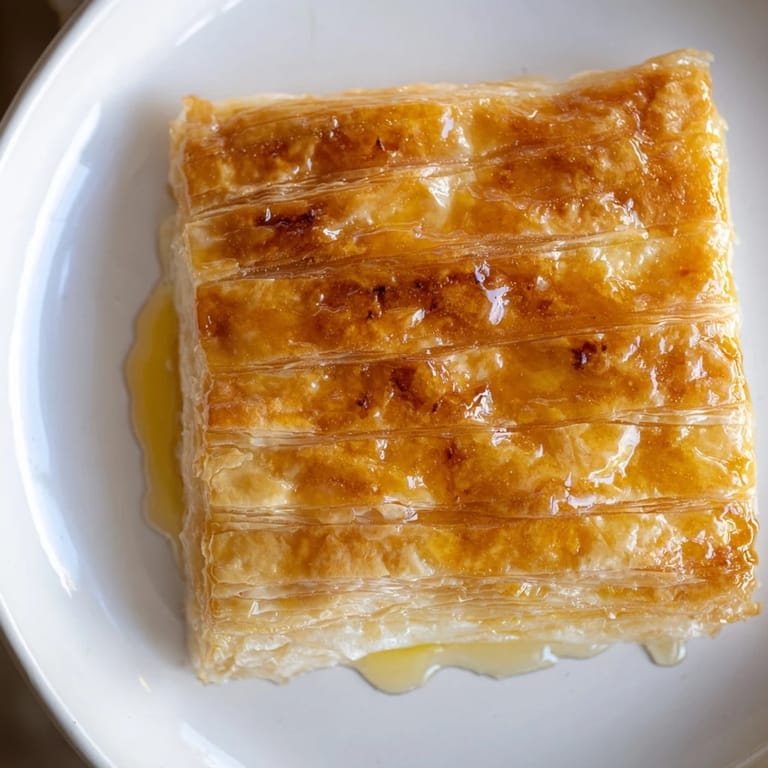
- Transfer to a paper towel briefly if needed, but don't let them sit—serve them warm with honey while the contrast between crispy and tender is still at its peak.
 Save
Save I remember my friend's grandmother in Fez telling me that msemen is less about recipe and more about listening to what the dough is telling you. At first I thought she was being poetic, but after making it dozens of times, I understand: the dough's hydration changes with the weather, your hands warm it differently than mine do, and the real recipe lives in those small adjustments. It's why no two batches are identical, and why that's exactly as it should be.
The Art of the Stretch
Stretching dough to translucent thinness is genuinely easier than it sounds once you stop being afraid of it. The key is working with oiled hands and moving slowly around the edges of the circle, coaxing rather than pulling. If you tear it, you haven't failed—press it back together, add a little more butter and semolina, and fold anyway. The cracks get sealed by neighboring layers and nobody will ever know.
Oil Temperature and Patience
Medium heat feels impossibly slow when you're watching oil shimmer around pastry, but it's non-negotiable. A skillet that's too hot will scorch the outside before the folded layers inside have a chance to separate and crisp. The sound tells you what you need: a steady sizzle, not an aggressive roar. Listen more than you watch, and flip when one side stops sounding loud and starts sounding golden.
Variations and Companions
Once you master the basic technique, msemen opens itself to riffs and improvisations. I've made versions brushed with orange blossom water before frying, others with a pinch of cinnamon folded between layers, and one memorable batch where I added crushed pistachios to the semolina. They're all legitimate. Serve them with honey if you want tradition, but also consider them alongside amlou (that haunting almond-honey-argan oil paste), soft cheese, or even just flaked sea salt if you're in a savory mood.
 Save
Save Msemen taught me that the best recipes are the ones people come back to not because they're complicated, but because they deliver a moment of texture and comfort that feels impossible to recreate. Once you've made it twice, it becomes muscle memory, and then it becomes the thing you make when you want someone to feel cared for.
Recipe FAQ
- → What gives Msemen its flaky texture?
The flakiness comes from folding the dough with melted butter and fine semolina between layers before frying, creating crispy, tender folds.
- → Can I make Msemen dough without yeast?
Yes, yeast is optional and helps lighten the texture, but you can omit it for a slightly denser pastry without affecting flavor much.
- → What type of pan is best for cooking Msemen?
A non-stick skillet or griddle with light oil is ideal to achieve even frying and prevent sticking while developing a golden crust.
- → How should Msemen be served for best taste?
Serve warm, drizzled generously with honey or alongside almond-honey spread (amlou) or fresh jam for enhanced flavor.
- → Are there variations to the basic Msemen dough?
Yes, some add cinnamon or orange blossom water to the dough for aromatic notes, and variations exist across different North African regions.