 Save
Save The first time I made baghrir, I was standing in a small kitchen in Marrakech, watching my neighbor's hands move through the batter with such ease that it seemed like choreography. She never measured anything, just knew by feel when the yeast had done its work, when the batter had the right consistency to create those impossibly delicate holes that would catch the honey. I came home determined to recreate that magic, and after a few attempts—and one lumpy disaster—I finally understood the rhythm of it. Now, every time I make these spongy pancakes, I'm back in that kitchen, learning.
I made these for a group of friends on a Sunday morning, and watching their faces when they bit into that warm, pillowy baghrir dripping with honey-butter was everything. One friend actually closed her eyes, and another asked for the recipe before she'd even finished the first one. It became our tradition after that—baghrir Sunday whenever someone needed comfort food that didn't feel heavy.
Ingredients
- Fine semolina: This is what gives baghrir its signature tender crumb and slight sweetness—don't skip it or use coarse semolina, it changes everything.
- All-purpose flour: Balances the semolina and helps create that delicate structure without making it tough.
- Warm water: The temperature matters here; too cold and the yeast won't activate properly, too hot and it dies.
- Active dry yeast: The real secret to those honeycomb holes—it creates tiny bubbles as it ferments, and you need to give it time to work.
- Baking powder: This adds extra lift and ensures the holes stay open instead of collapsing.
- Granulated sugar: A small amount feeds the yeast and adds subtle sweetness to the batter itself.
- Salt: Just enough to balance everything without being noticeable.
- Unsalted butter and honey: The traditional finish—warm, melted together, and poured generously over every warm crepe.
Tired of Takeout? 🥡
Get 10 meals you can make faster than delivery arrives. Seriously.
One email. No spam. Unsubscribe anytime.
Instructions
- Mix your dry foundation:
- Combine the semolina, flour, sugar, yeast, baking powder, and salt in a large bowl. These ingredients are doing important work together—the yeast will create lift, the baking powder will ensure it stays light, and the semolina will give you that distinctive tender bite.
- Build the batter slowly:
- Add the warm water gradually while whisking, breaking up any lumps as you go. The batter should be smooth and pourable, almost like thick pancake batter, not thick like dough.
- Let it rest and rise:
- Cover the bowl loosely and leave it at room temperature for 30 minutes. You'll start to see tiny bubbles forming on the surface—that's the yeast doing its job, creating the promise of those honeycomb holes.
- Heat your pan with intention:
- Place a nonstick skillet or crepe pan over medium heat and let it warm for a minute or two. Do not grease it; baghrir doesn't need it and oil will prevent the holes from forming properly.
- Pour and let it spread:
- Using a ladle or measuring cup, pour about ¼ cup of batter into the center of the hot pan. Let it sit for a moment, then give it a gentle swirl to spread it into a thin, even layer—think of it like a crepe, not a pancake.
- Watch for the magic moment:
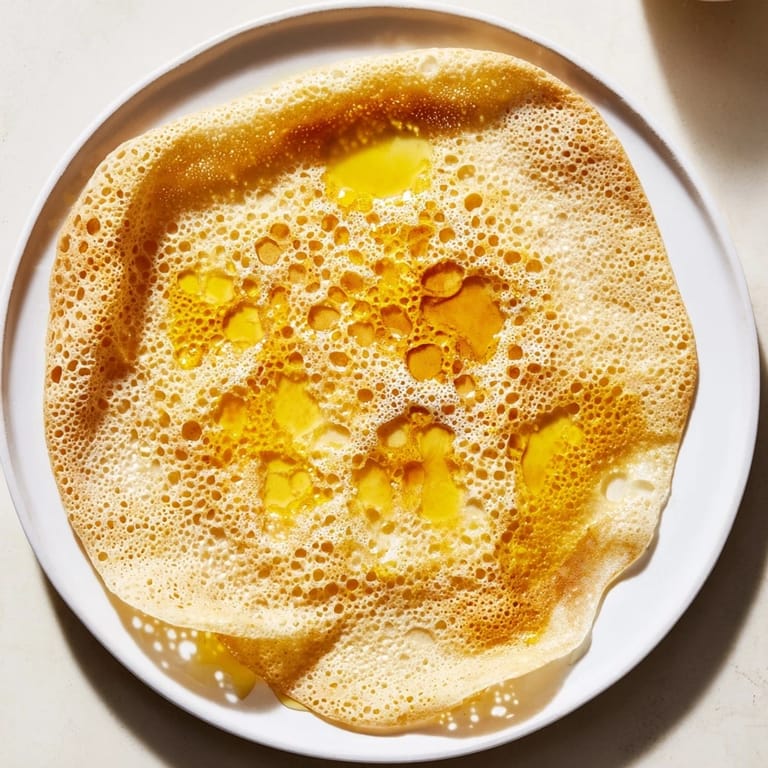
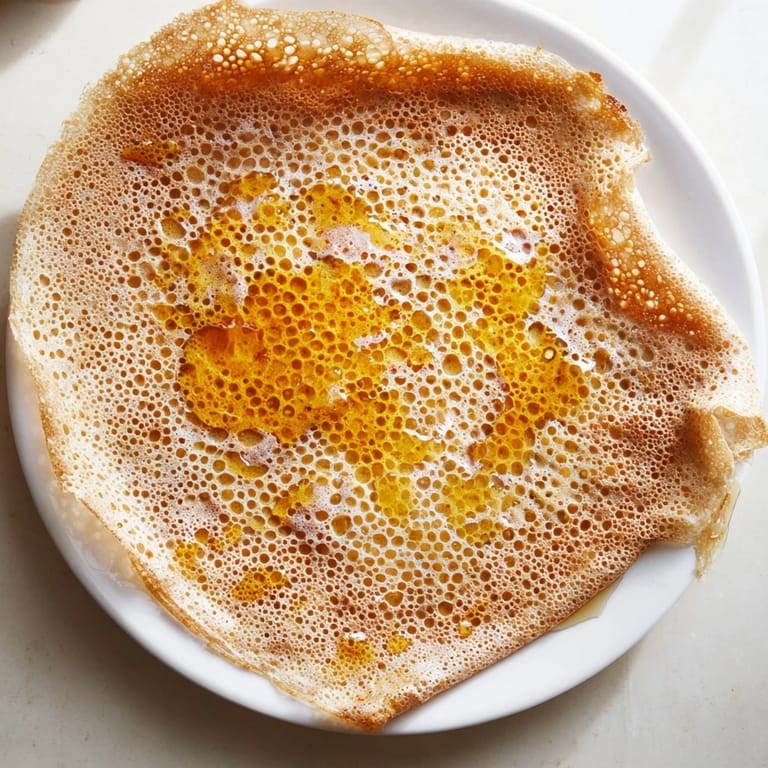
- You'll see the surface begin to bubble and dry out after about 2 to 3 minutes. The holes are forming where the yeast bubbles reached the surface and burst. When the top looks dry and you can see the honeycomb pattern clearly, it's done—never flip it.
- Build your stack:
- Slide the finished baghrir onto a plate and keep it warm while you cook the rest, stirring the batter occasionally so it doesn't settle.
- Warm the honey-butter finish:
- In a small saucepan over low heat, melt the butter and honey together until they're combined and fragrant. Don't let it get too hot.
- Serve immediately:
- Arrange warm baghrir on a plate and drizzle generously with the warm honey-butter mixture, letting it pool in all those beautiful holes.
 Save
Save There's something almost meditative about watching these cook, seeing those holes appear across the surface like lace. A friend once told me that baghrir reminds her of intentionality, how patience and the right conditions create something you couldn't force, and I think about that every time I make them.
The Story Behind the Holes
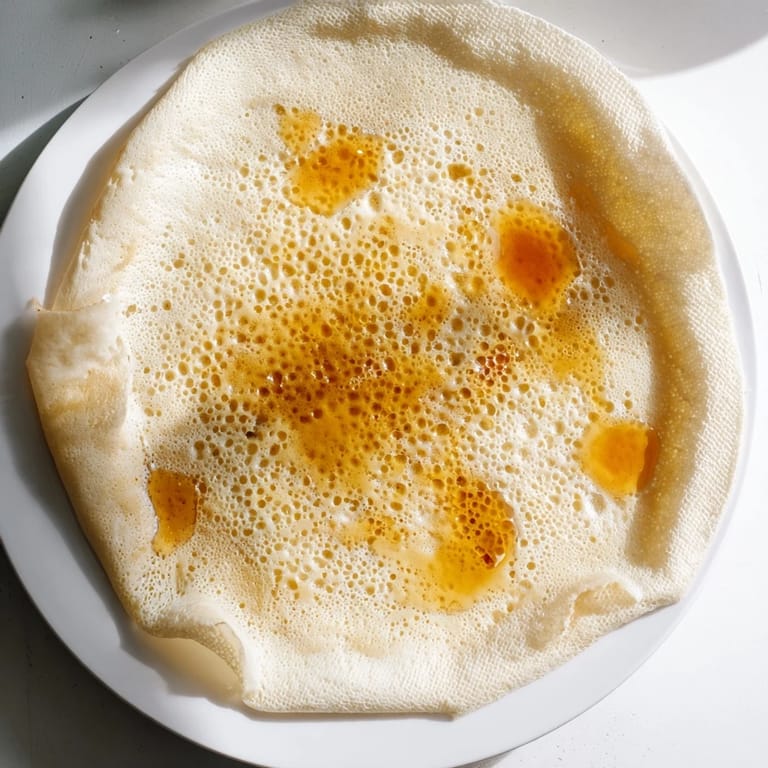
The honeycomb texture isn't decoration—it's functional. Those holes aren't just beautiful; they're what makes baghrir absorb the honey-butter mixture perfectly, soaking it all up instead of letting it slide off the sides. Every time I make these, I'm reminded that the best things often have a purpose beyond what you first notice, both in cooking and in life.
Temperature and Timing
The warm water temperature is genuinely important here. I once used water that was still steaming, thinking it would help, and the yeast died before it could do anything useful. Since then, I test it the way my neighbor taught me—a drop on your inner wrist should feel warm but not hot, like bathwater. The resting time matters just as much; I've tried to rush it, and the crepes came out thin and tough instead of tender and bubbly.
Serving and Variations
Baghrir is best eaten warm, straight from the pan, but I've also reheated them gently in a low oven when I made them ahead for company. The magic doesn't disappear, just needs a moment to wake back up. Some people dust theirs with cinnamon or serve them with almond butter and honey instead of just butter. The foundation is always the same, but like many traditional recipes, baghrir welcomes small personal touches.
- Try a sprinkle of toasted almonds or pistachios for crunch and nod to North African tradition.
- A tiny pinch of orange blossom water in the honey-butter creates something entirely different and equally wonderful.
- Fresh berries alongside them add brightness without overwhelming their delicate flavor.
 Save
Save Baghrir is the kind of recipe that teaches you something about patience and trust every time you make it. These tender, honeycomb-textured crepes remind me that the best results often come not from working harder, but from knowing when to step back and let time do the work.
Recipe FAQ
- → What gives Baghrir its signature honeycomb texture?
The unique honeycomb texture forms from the batter resting period combined with semolina and yeast, which creates bubbles that appear as holes when cooked.
- → Can I make Baghrir without yeast?
Yeast is essential for the characteristic bubbles and texture, but some variations may use baking powder alone, though results differ from the traditional lightness.
- → How should Baghrir be cooked for best results?
Cook on a moderate heat without flipping until the top dries and holes form. This ensures the delicate texture and avoids overcooking.
- → What is the ideal serving method for these pancakes?
Serve warm, generously drizzled with melted butter and honey for a rich, sweet finish that complements the spongy base.
- → Can the batter be stored before cooking?
Batter should ideally rest 30 minutes before cooking but is best used fresh for optimal texture. If thickened, add a bit of water to adjust consistency.