 Save
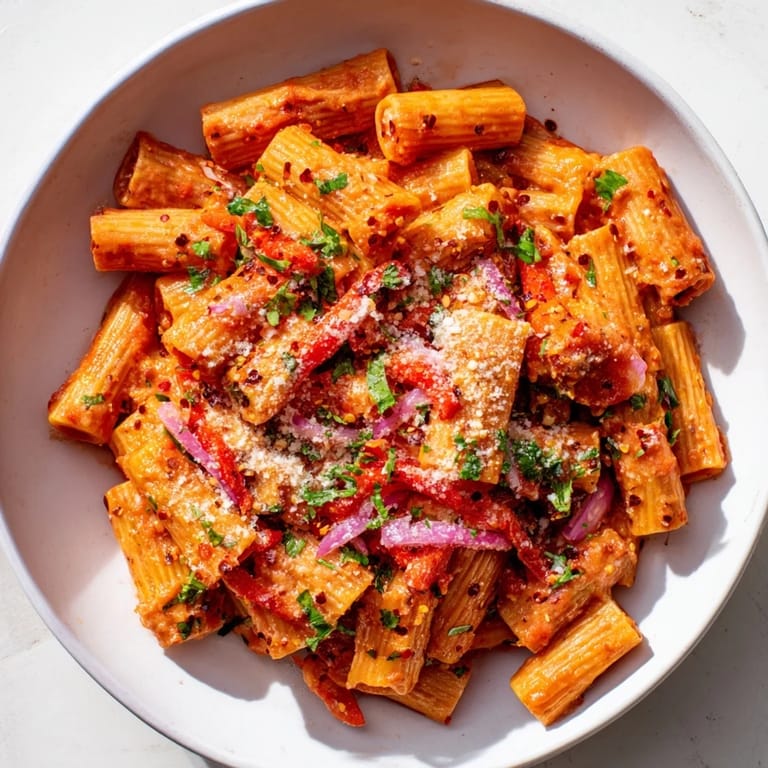
Save There's something about the smell of garlic hitting hot oil that makes you feel like you're actually doing something in the kitchen. I discovered this one-pot diavola pasta on a Tuesday night when I had maybe thirty minutes and a craving for something with real heat. No fancy techniques, no multiple pots cluttering the sink—just one vessel, one match of bold flavors, and the kind of meal that tastes like it took way more effort than it did.
I made this for my partner last week when they came home exhausted, and watching their face light up at that first bite of peppery, garlicky pasta reminded me why simple food is sometimes the best food. They asked for seconds before finishing the first bowl, and that's when I knew this recipe had staying power.
Ingredients
- Penne or rigatoni: These sturdy shapes hold onto the spicy tomato sauce without getting mushy, and they cook directly in the liquid so they absorb maximum flavor.
- Water or vegetable broth: Broth gives a subtle depth if you have it on hand, but water works just fine—the other ingredients carry all the flavor you need.
- Red onion: Finely chop it so it almost melts into the sauce, lending sweetness that balances the heat beautifully.
- Garlic and red bell pepper: Both soften into the sauce and release their aromatics, building the base of what makes this dish come alive.
- Canned diced tomatoes: Their acidity cuts through the richness and provides the backbone sauce that coats every piece of pasta.
- Olive oil: Use good quality if you can—it's not just cooking fat here, it's part of the flavor profile.
- Red pepper flakes: This is your heat control lever; start with one and a half teaspoons and adjust as you go, tasting as you simmer.
- Italian seasoning, smoked paprika, salt, and pepper: These create layers of warmth and complexity without tasting like you dumped a spice jar into the pot.
- Parmesan cheese and fresh herbs: Added at the end to brighten everything up and give the finished dish personality.
Tired of Takeout? 🥡
Get 10 meals you can make faster than delivery arrives. Seriously.
One email. No spam. Unsubscribe anytime.
Instructions
- Build your base:
- Heat the olive oil over medium heat and soften the red onion for a couple of minutes. You're not looking for color here, just for the raw edge to come off and the onion to become translucent.
- Wake up the aromatics:
- Add the garlic and bell pepper, stirring constantly for about two minutes. Your kitchen will smell incredible at this point—that's when you know you're on the right track.
- Bring it all together:
- Add the tomatoes, pasta, your liquid of choice, and all the seasonings at once. Stir everything together so nothing gets stuck to the bottom, then turn up the heat to bring it to a boil.
- Let it finish:
- Once it's boiling, lower the heat to a simmer and leave it mostly alone for twelve to fourteen minutes, stirring occasionally. The pasta will soften, the liquid will reduce, and you'll watch it transform into something cohesive and creamy.
- Finish strong:
- Remove from heat, stir in the Parmesan and lemon zest if you're using it, and taste. This is your moment to adjust the salt or add more heat if it needs it.
 Save
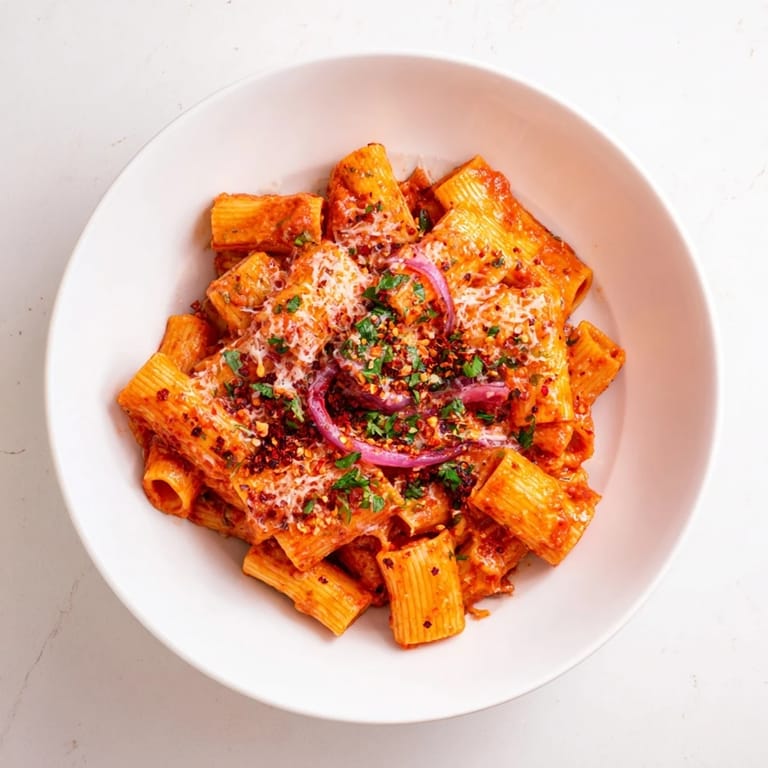
Save I realized halfway through my first bowl that this is the kind of dish that brings people together without any fuss. It's confident but unpretentious, fiery but balanced, and somehow feels both quick to make and substantial enough to satisfy a real hunger.
The Heat Question
Red pepper flakes are a personal choice, and I've learned that everyone's tolerance is different. If you're unsure, start with one teaspoon and taste the sauce before adding the pasta—it's easier to add more heat than to dial it back. Some people layer the heat with both the flakes and the smoked paprika, while others go light on the flakes and just use the paprika for warmth. Trust your own palate here.
One Pot, Endless Variations
What I love most about this recipe is how it adapts. Stir in sliced cooked sausage or shrimp just before serving if you want protein, or use nutritional yeast instead of Parmesan for a vegan version. The framework stays solid no matter what you add, which means you can make it your way every single time.
Serving and Pairing
Serve this hot, straight from the pot, with extra Parmesan scattered on top and fresh basil or parsley if you have it. It pairs beautifully with a crisp white wine like Pinot Grigio—something cold and clean that cuts through the richness and the spice. The lemon zest, if you include it, brightens everything on the plate and makes the whole dish feel a little more elegant than thirty minutes of cooking suggests.
- Grate your own Parmesan if you can; pre-grated cheese doesn't melt quite as smoothly into the hot pasta.
- Don't skip the fresh herbs at the end—they're not just garnish, they're a textural and flavor contrast that completes the dish.
- This keeps well in the refrigerator and actually tastes better the next day when the flavors have had time to mingle.
 Save
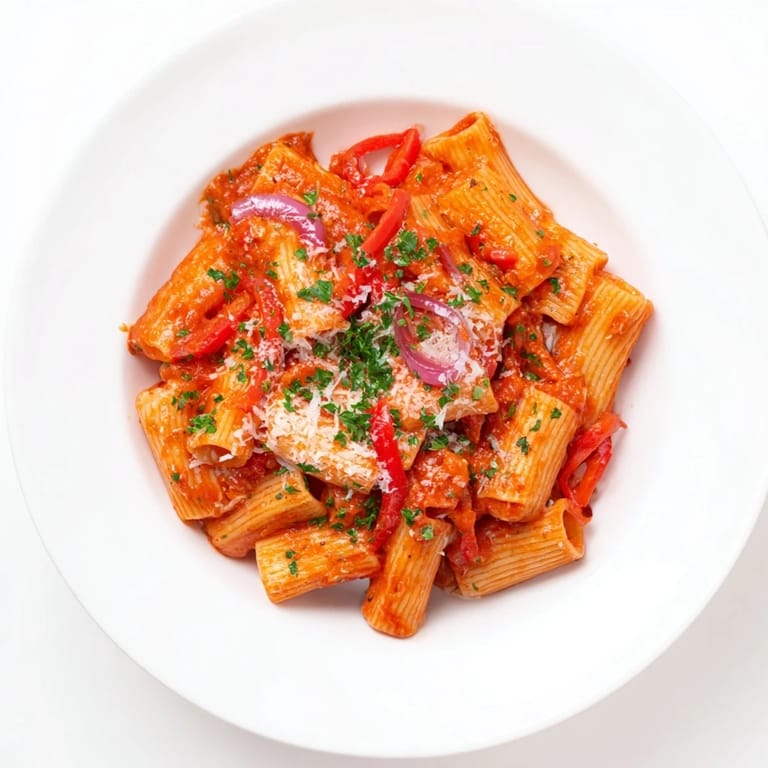
Save This is the kind of meal that reminds you why you cook in the first place. Quick, honest, and absolutely delicious.
Recipe FAQ
- → What pasta types work best for this dish?
Penne or rigatoni hold the sauce well due to their ridges and tubular shape, making them ideal for this preparation.
- → How can I adjust the spiciness level?
Control heat by varying the amount of crushed red pepper flakes; reduce for mild flavor or increase for added kick.
- → Can this be made vegan-friendly?
Yes, swap Parmesan for nutritional yeast or vegan cheese alternatives to maintain flavor without dairy.
- → Is it possible to add protein?
Stir in cooked chicken sausage or sautéed shrimp after cooking to enrich the dish with extra protein.
- → What cooking tools are needed?
A large deep skillet or Dutch oven is essential for even cooking and combining all ingredients in one pot.