 Save
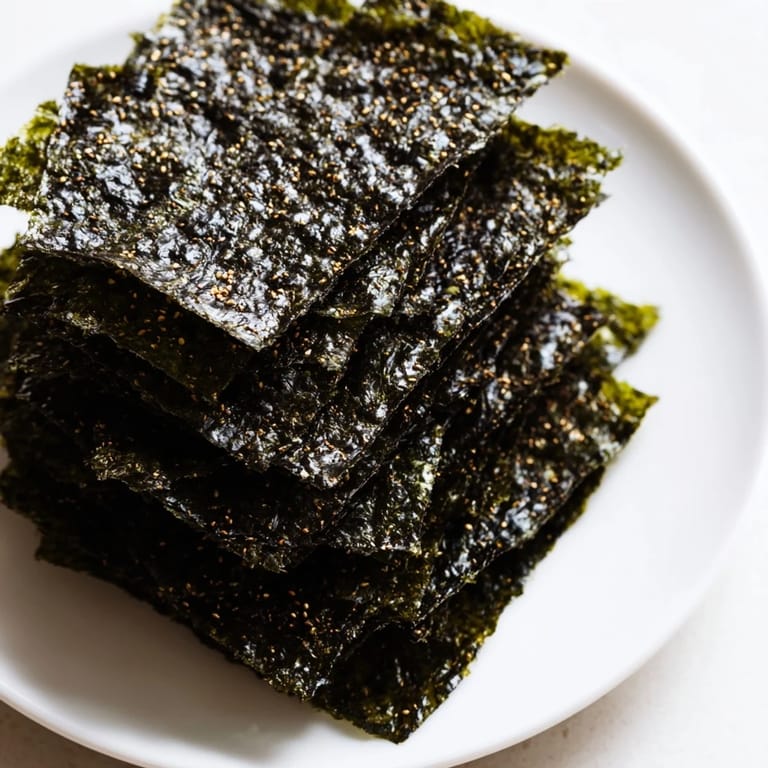
Save My college roommate used to keep packs of nori in her desk drawer, and I thought it was the strangest snack choice until I stole one sheet during a late night study session. Something about that salty, ocean flavor hit me differently than any chip or cracker ever had. Years later, I figured out how to make them properly crispy at home, and now I understand why she was so protective of her stash. The transformation from papery dried sheets to shatteringly crisp chips is honestly kind of magical.
I first made these for a dinner party when someone mentioned they were avoiding grains but missed having something crunchy to nibble on with drinks. The platter disappeared in about four minutes flat, and people were actually hovering around the kitchen waiting for the second batch to come out of the oven. Now I keep sheets of nori in my pantry specifically for emergency snack situations.
Ingredients
- 6 sheets of dried nori seaweed sushi grade: The quality matters here because thinner sheets burn too quickly while thicker ones never get quite crisp enough
- 2 teaspoons toasted sesame oil: This adds a subtle nutty depth that regular oil just cannot replicate, though a neutral oil works in a pinch
- 1/4 teaspoon fine sea salt: Flaky salt tends to fall off the smooth surface, so fine salt adheres better and gives you that perfect salty pop
Tired of Takeout? 🥡
Get 10 meals you can make faster than delivery arrives. Seriously.
One email. No spam. Unsubscribe anytime.
Instructions
- Preheat your oven:
- Set your oven to 300°F and line a baking sheet with parchment paper, making sure it lays completely flat
- Layer the nori sheets:
- Place one sheet shiny side down, brush lightly with oil, sprinkle with salt, then repeat by stacking another sheet on top until you have three pairs
- Cut into pieces:
- Use kitchen scissors to cut each stacked pair into strips or squares, keeping the pieces fairly uniform so they roast evenly
- Arrange and roast:
- Spread pieces in a single layer without overlapping and roast for 6 to 8 minutes until they turn deep green and feel completely dry to the touch
- Cool completely:
- Let them sit on the baking sheet for at least 10 minutes because they keep crisping as they cool and this step is crucial
 Save
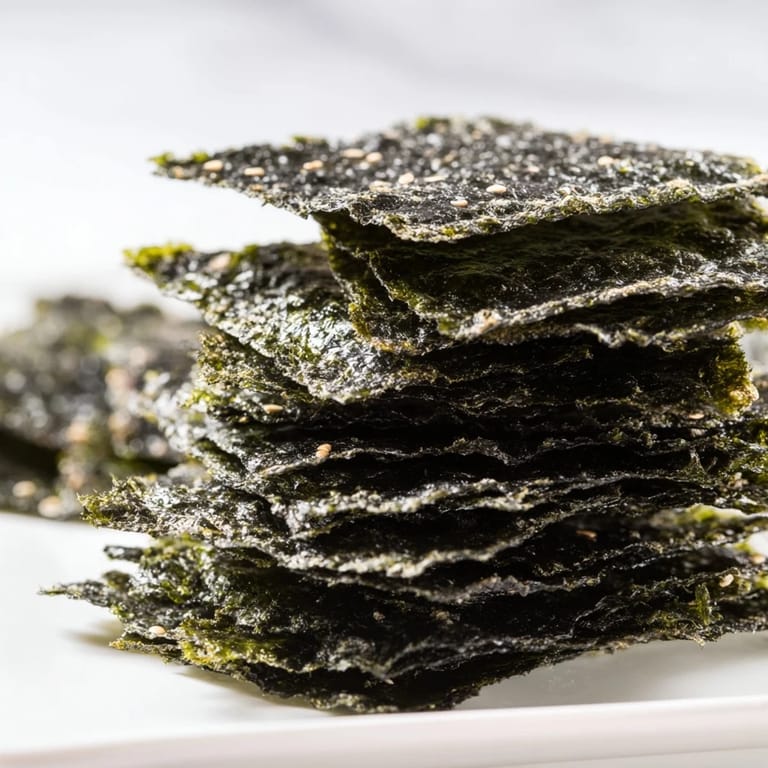
Save My partner now requests these instead of popcorn for movie nights, and I have caught him eating them straight off the cooling rack before they have even fully set up. There is something deeply satisfying about making something so delicious from such humble ingredients.
Flavor Variations
Sometimes I dust these with garlic powder right after they come out of the oven, or sprinkle them with furikake for extra umami punch. A tiny pinch of cayenne mixed into the salt gives them a sneaky heat that keeps people reaching back into the bowl.
Storage Solutions
These lose their crunch faster than you might expect if left out, especially on humid days. I portion them into small glass jars with tight lids rather than one big container, which minimizes how often I open and close each one.
Serving Ideas
Besides eating them straight up, try crumbling these over plain rice or sneaking them into bento boxes for lunch. They also work surprisingly well crumbled over soft scrambled eggs or folded into onigiri.
- Brush the oil very sparingly or the chips will turn out greasy instead of crisp
- Work quickly once you start cutting because the oil makes the sheets fragile and prone to tearing
- If some pieces are still slightly pliable after cooling, pop them back in for just 1 minute
 Save
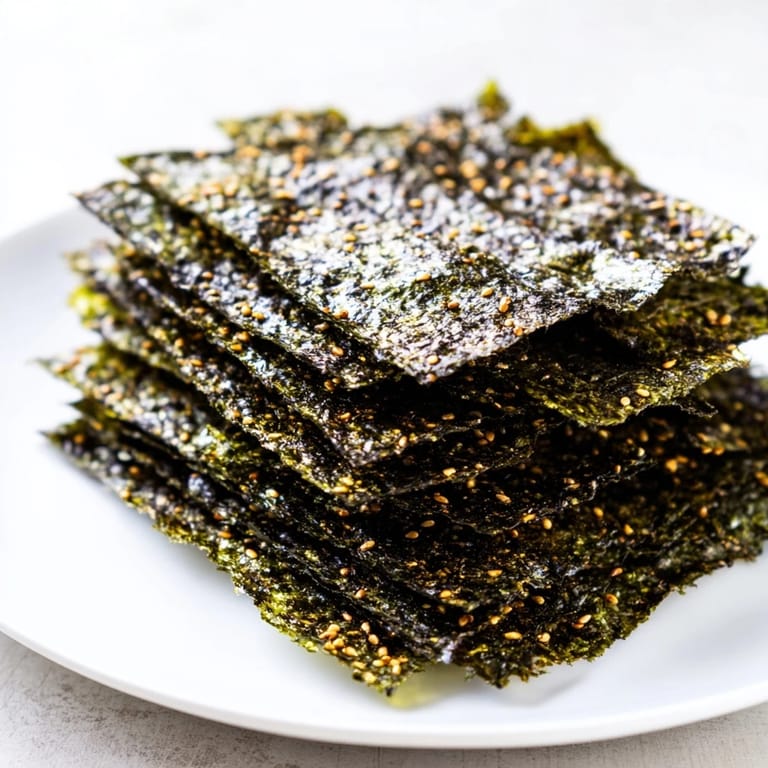
Save These have become my go to contribution to potlucks because they are unexpected yet universally loved. Hope they become a staple in your snack rotation too.
Recipe FAQ
- → How do I keep seaweed chips crispy?
Store cooled chips in an airtight container with a desiccant packet or dry rice to absorb moisture. Keep away from humidity and direct sunlight. Properly stored chips stay crisp for 3-5 days.
- → Can I use regular seaweed snacks instead of nori sheets?
Pre-packaged seaweed snacks are already roasted and seasoned, so they won't work well for this preparation. Use plain, dried sushi-grade nori sheets for the best results and proper crisping.
- → What's the difference between roasted and fried seaweed?
Roasted seaweed chips are oven-baked with minimal oil, resulting in a lighter, crisper texture. Fried versions typically absorb more oil and have a denser, greasier mouthfeel. Oven roasting also allows better control over doneness.
- → Why do my seaweed chips burn quickly?
Seaweed contains natural sugars that caramelize and burn rapidly at high temperatures. Keep the oven at 300°F and watch closely after the 6-minute mark. Chips should turn dark green, not black or brown.
- → Can I air fry seaweed chips instead?
Yes, air fry at 300°F for 2-4 minutes, shaking halfway through. Air fryers work faster due to concentrated heat circulation, so check frequently to prevent burning. Results may be slightly less uniform than oven roasting.