 Save
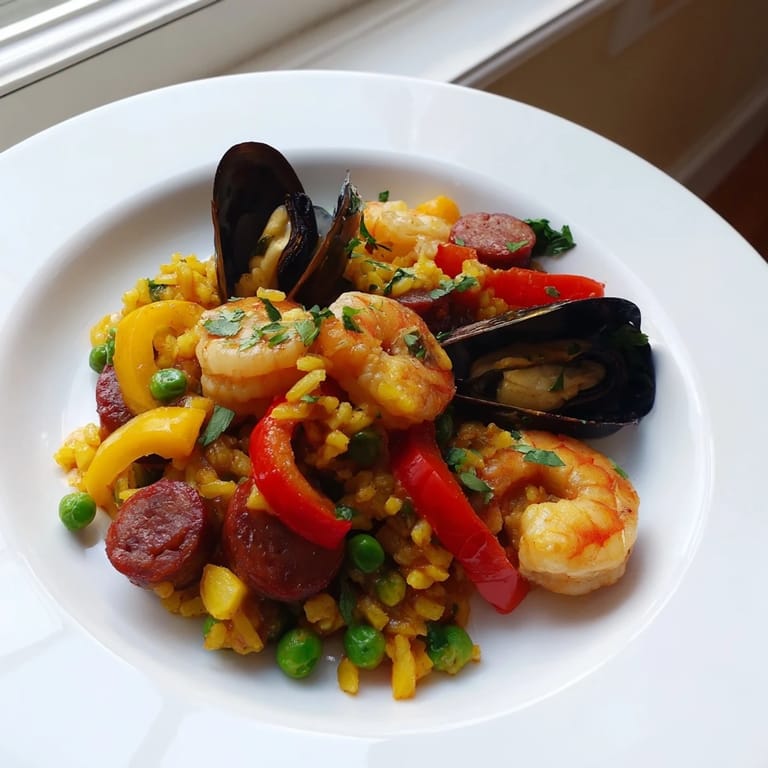
Save The first time I made paella was at a beach house rental where someone had left behind a worn paella pan, and I decided right then that I had to use it. I pulled together whatever seafood I could find at the local market that morning, added some chorizo from a shop I'd passed a dozen times but never entered, and somehow the rice soaked up everything perfectly—golden, fragrant, and alive with saffron. That afternoon, watching my friends' faces as they took their first bites, I understood why this dish feels less like cooking and more like creating an event.
Years later, I made this for a work friend who'd just moved to the city and was homesick for Spain. She closed her eyes while eating and said it tasted exactly like her grandmother's kitchen in Valencia. I've never felt prouder of a pot of rice in my life, and now whenever she asks me to cook, paella is always on the shortlist.
Ingredients
- Chorizo sausage (200 g): Sliced thick enough to brown beautifully—this is where most of your smokiness comes from, so don't skip it.
- Chicken thighs (250 g): More forgiving than breasts, and they stay tender even if you're not watching the clock.
- Large shrimp (250 g): Peeled and deveined saves you ten minutes of frustration, and they cook so quickly you can't overcook them if you're paying attention.
- Mussels (250 g): Cleaned and debearded—ask the fishmonger to do this or expect a brief wrestling match with each one.
- Calamari rings (200 g, optional): They add a chewy, delicate texture if you're feeling adventurous.
- Short-grain paella or Arborio rice (400 g): This rice absorbs liquid without turning mushy, which is the whole point.
- Saffron threads (1/2 tsp): Expensive but essential—those golden strands steeped in warm stock are what make this taste like paella and not just fancy risotto.
- Stock (1 L): Heated before you start so it doesn't cool down the pan when you pour it in.
- Olive oil (2 tbsp): A good one matters here since you taste it directly.
- Onion, bell peppers, garlic, and tomatoes: The soffritto base that builds flavor before the rice even goes in.
- Smoked paprika (1 tsp): Use Spanish pimentón if you can find it—it has a depth regular paprika can't match.
- Bay leaf, salt, pepper: The usual suspects doing their quiet work.
- Fresh parsley and lemon wedges: The finish that brightens everything and makes it look like you know what you're doing.
Tired of Takeout? 🥡
Get 10 meals you can make faster than delivery arrives. Seriously.
One email. No spam. Unsubscribe anytime.
Instructions
- Steep the saffron:
- Pour 3 tablespoons of hot stock over the saffron threads and let them sit while you prep everything else. The threads will release their color and flavor, turning the liquid golden.
- Brown the proteins:
- Heat olive oil in your paella pan over medium heat, then add chorizo and chicken. Let them sit long enough to develop a brown crust—this takes about 5 to 7 minutes and smells incredible.
- Build the soffritto:
- Once the meat is set aside, the pan still has all that flavorful fat. Add onion and bell peppers, let them soften, then stir in garlic and tomatoes. You're creating the aromatic foundation everything else will sit on top of.
- Toast the rice:
- Add the rice to the pan with the smoked paprika and stir it into the vegetables and oil for about a minute. This coats each grain and brings out a subtle toasted flavor that transforms it from plain to intentional.
- Combine and simmer:
- Return the chicken and chorizo, pour in the saffron-infused stock and remaining hot stock, add the bay leaf, season with salt and pepper, and stir gently. Bring it to a boil, then turn the heat down low and let it simmer uncovered for 15 minutes without stirring—this is when the magic happens.
- Add the seafood:
- Nestle shrimp, mussels, and calamari into the rice, scatter peas on top, cover loosely with foil, and cook for another 10 to 12 minutes until everything is cooked through and the mussels have opened.
- Rest and serve:
- Remove from heat, keep it covered for 5 minutes—this lets the rice finish absorbing any remaining liquid. Discard any mussels that didn't open, garnish with parsley and lemon, and bring it to the table while it's still steaming.
 Save
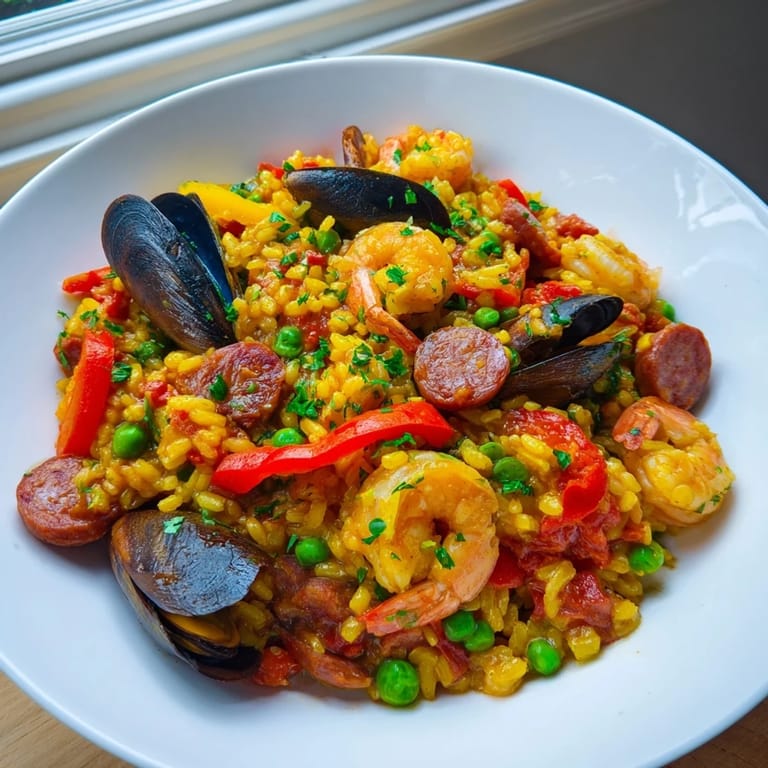
Save There's a moment in every paella when you know it's working: the steam rises with that perfume of saffron and chorizo, and you catch the first whisper of that caramelized rice crackling at the bottom of the pan. That's when you stop checking and just trust that you've done everything right.
The Socarrat: That Golden, Crispy Secret
The socarrat—that thin, caramelized layer of rice clinging to the bottom of the pan—is what separates paella from any other rice dish. Some cooks chase it intentionally by turning up the heat at the very end, listening for a gentle crackling sound. I learned by accident the first time, when I thought I'd ruined everything, only to watch my guests fight over the crispy bits. It's not burnt, it's concentrated flavor, and once you taste it, you'll understand why paella pans are shaped the way they are.
Seafood Swaps and Flexibility
This recipe works beautifully with whatever looks freshest at your market. I've made it with clams instead of mussels, added scallops when I was feeling fancy, and once substituted squid for half the calamari just because I had it on hand. The important thing is that everything you choose cooks quickly and loves the briny, saffron-soaked rice. If seafood isn't your thing, the recipe note about making a vegetarian version with artichokes and chickpeas is genuinely delicious—I've converted skeptics with it.
Wine, Timing, and Setting the Scene
Paella is built for gathering, not for eating alone at your kitchen counter at midnight. Serve it with a crisp Spanish white wine like Albariño, which cuts through the richness and tastes like you actually planned this whole thing. Time your cooking so that everything hits the table while steam is still rising—there's something about a paella at that moment that makes people linger longer and talk louder and enjoy everything more. The preparation takes just over an hour, but the feeling of ease and abundance it creates lasts much longer.
- Start your prep at least 30 minutes before guests arrive so you're calm, not frantic.
- Have all your ingredients prepped and arranged near the stove—paella moves quickly once you start.
- A wooden spoon is your friend; metal can scratch the pan and you'll fuss about it the whole time.
 Save
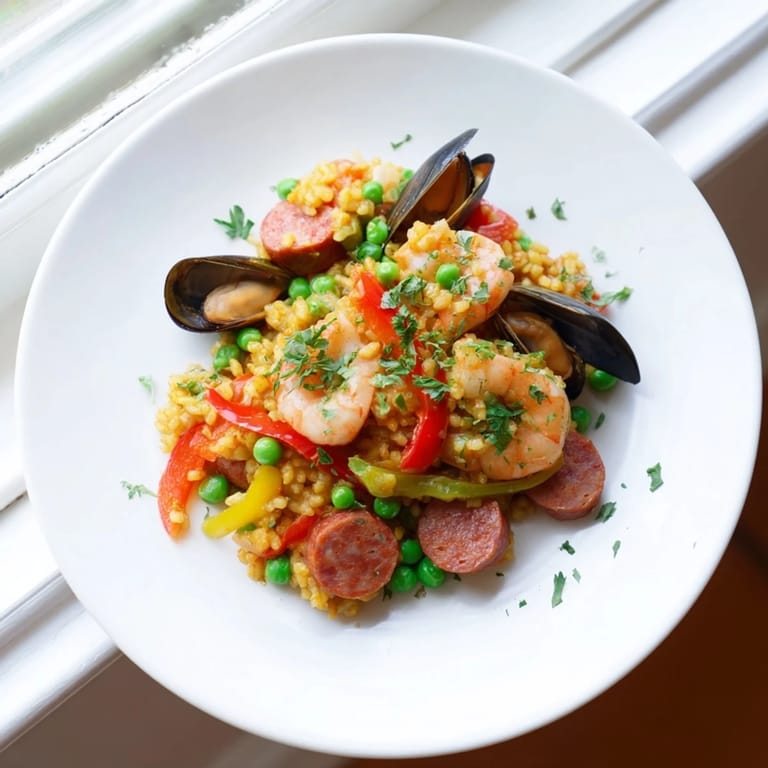
Save Make this paella for people you want to impress or people you want to feed well, because it does both at once. It's the kind of dish that tastes like you've been cooking for hours even though you've barely been paying attention.
Recipe FAQ
- → What type of rice works best for this dish?
Short-grain paella rice or Arborio rice is ideal as it absorbs flavors well while maintaining a tender, slightly firm texture.
- → Can I substitute the saffron with something else?
Saffron adds a unique aroma and color; turmeric can be used as a budget-friendly alternative, though the flavor will differ.
- → How can I ensure the seafood cooks evenly?
Add shellfish like shrimp and mussels towards the end of cooking and cover loosely to allow steaming without overcooking.
- → Is it necessary to avoid stirring during cooking?
Yes, stirring is avoided to encourage formation of the socarrat, a crispy layer at the bottom prized in the dish.
- → What are good garnishes for this meal?
Fresh chopped parsley and lemon wedges provide a refreshing contrast and highlight the rich flavors.