 Save
Save Steam wafted up as I sliced into the just-roasted asparagus for this Buddha Bowl, the kitchen filling with the earthy aroma of spring. There’s something about tossing crisp radishes alongside carrots and sugar snap peas that always feels like an invitation to let the season dictate dinner. The first time I attempted a full Buddha Bowl, I absentmindedly over-pulsed the falafel mixture until it nearly became hummus—I’ve never made that mistake again, and now laugh every time the food processor starts up. Whether you’re after a burst of color on a dreary evening or looking to reset with plant-forward comfort, there’s playful satisfaction in building each layer. Somehow, a zippy lemon-tahini drizzle always brings it all together, even if a little ends up on the counter.
I once made this for a coworker’s springtime potluck, nervously balancing a tray of still-warm bowls in the backseat and fretting over whether the greens would wilt. They didn’t—but I realized, as everyone gathered around, just how inviting a meal can be when you pile it high with all things fresh and vibrant. A friend called the dish a ‘garden celebration’ and truly, nothing tastes more like a season in a bowl.
Ingredients
- Asparagus: Its tender crunch screams spring; toss it with oil right before roasting to keep it bright green.
- Radishes: Roasting mellows their bite—halving them helps them caramelize beautifully.
- Baby carrots: Slicing lengthwise ensures even roasting and a sweet, earthy undertone.
- Sugar snap peas: These add a fantastic snap and stay vibrant—just trim the ends first.
- Olive oil: Don’t skimp; its richness brings out the veggies’ natural sweetness.
- Sea salt & freshly ground black pepper: A little goes a long way for that perfect seasoning.
- Chickpeas: Binds the falafel and delivers protein; I dry them off to help texture.
- Onion & garlic: Tossed in for subtle heat and depth in the falafel.
- Fresh parsley & cilantro: These herbs keep the falafel sprightly—no substitutions for their freshness.
- Ground cumin & coriander: Key for warmth and that signature falafel aroma that fills your kitchen.
- Baking powder: Makes the falafel a little fluffier, texture is everything.
- All-purpose or chickpea flour: Helps the mixture stick—chickpea flour if you’re gluten-free, just as tasty.
- Olive oil (for frying): Crisp golden falafel needs a generous slick in the pan.
- Quinoa (or brown rice): The hearty base; I like to make extra and freeze for quick assembly later.
- Mixed baby greens: Their mildness balances the bold falafel—arugula gives a peppery kick.
- Cherry tomatoes: Halving them means little bursts of juiciness throughout.
- Avocado: Just-ripe slices add creaminess—wait until the last minute to cut so they don’t brown.
- Toasted pumpkin seeds: The crunch you’ll wish you’d added sooner.
- Tahini: The silky backbone of the dressing—stir well if it’s separated before measuring.
- Fresh lemon juice: Brightens the whole bowl; squeeze it fresh for best results.
- Maple syrup: A little sweet note so the dressing sings.
- Water: Thins the dressing—add slowly to get the perfect pourable consistency.
- Salt & minced garlic (for dressing): More zip and depth; that little bit of garlic wakes up the whole dish.
Tired of Takeout? 🥡
Get 10 meals you can make faster than delivery arrives. Seriously.
One email. No spam. Unsubscribe anytime.
Instructions
- Roast the veggies:
- Preheat your oven to 425°F (220°C), line a baking sheet, and toss asparagus, radishes, carrots, and snap peas with olive oil, salt, and pepper. Lay everything out in a single layer, letting them sizzle and brown—turn once halfway through, roasting for 18–20 minutes until edges start to caramelize.
- Make the falafel mix:
- While veggies roast, pop the chickpeas, onion, garlic, parsley, cilantro, cumin, coriander, salt, pepper, and baking powder into a food processor. Pulse until everything’s chunky but holds together when pressed, then blend in flour so the mixture is moist but not sticky.
- Shape and cook falafel:
- Form the mix into 12 small patties. Heat olive oil in a skillet—listen for that gentle sizzle—then fry falafel for about 3–4 minutes on each side, flipping when golden brown, and drain on paper towels.
- Whisk up the lemon tahini dressing:
- In a small bowl, whisk together tahini, lemon juice, maple syrup, water, salt, and minced garlic until smooth; add a splash more water to thin if needed.
- Assemble the bowls:
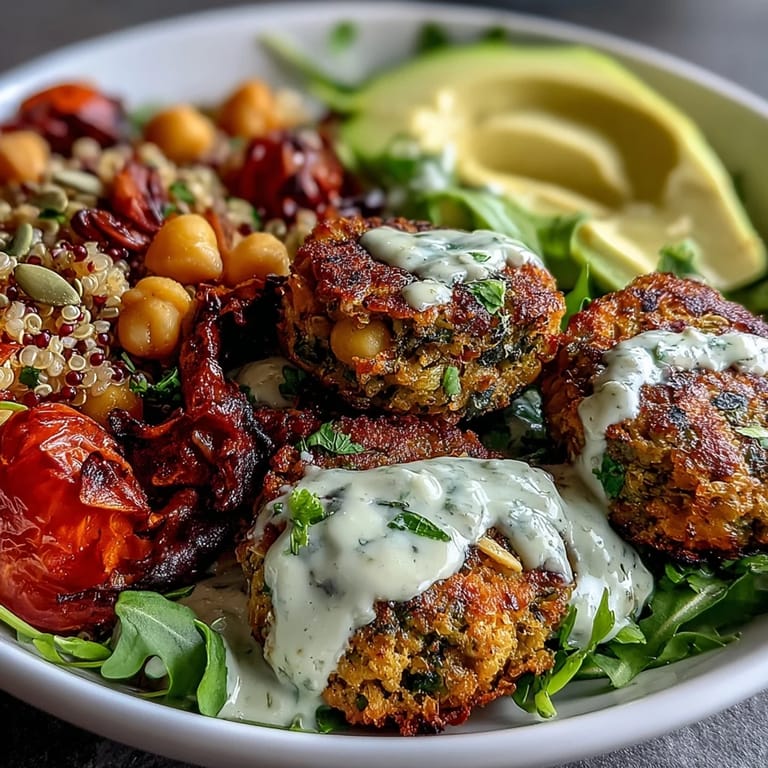
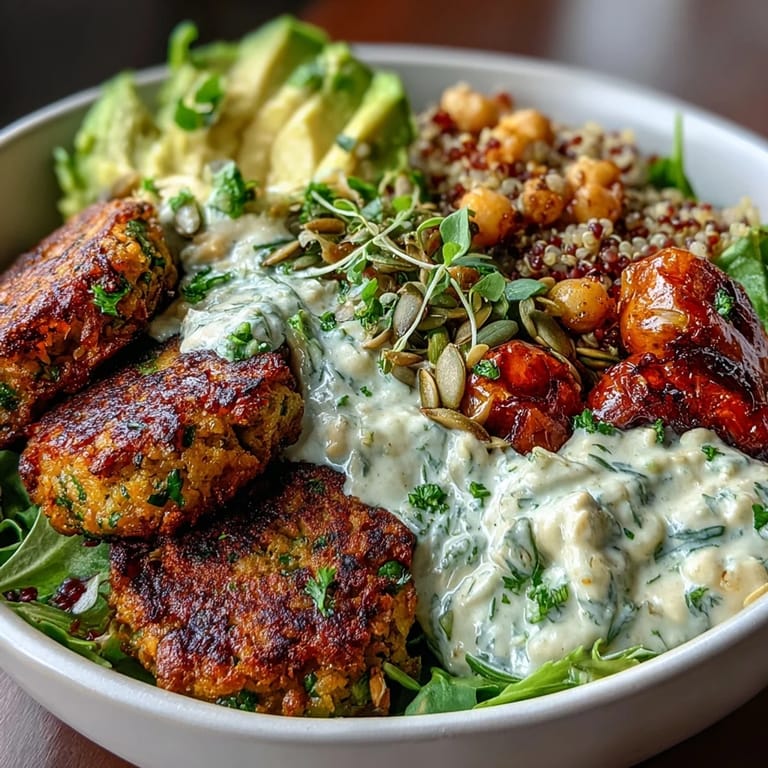
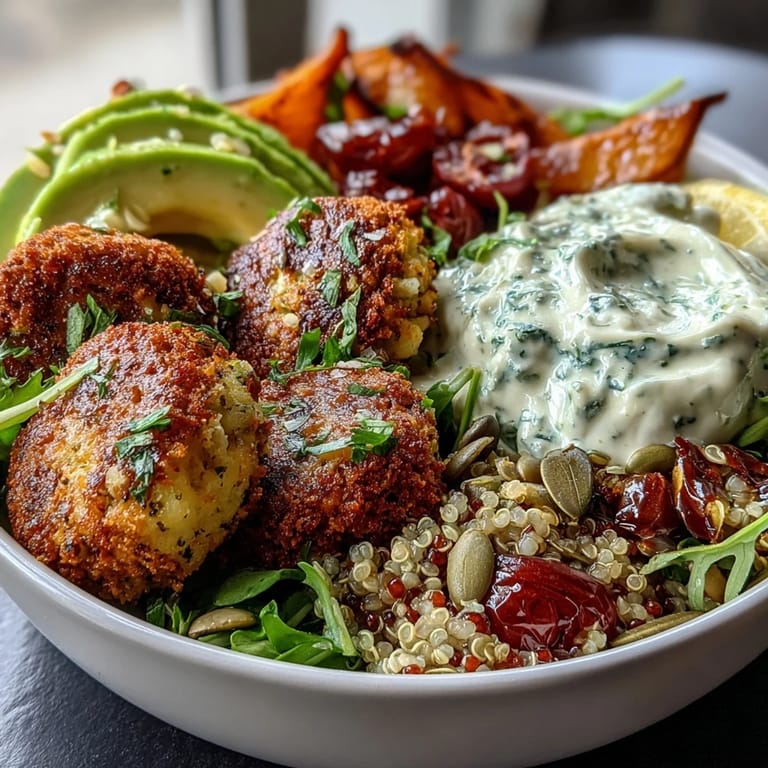
- Layer quinoa at the base of four bowls, pile on mixed baby greens, scatter over the roasted veggies, then nestle in the falafel, tomatoes, avocado slices, and pumpkin seeds. Drizzle with the zesty tahini dressing—don’t be shy—and serve while everything’s still fresh and warm.
 Save
Save 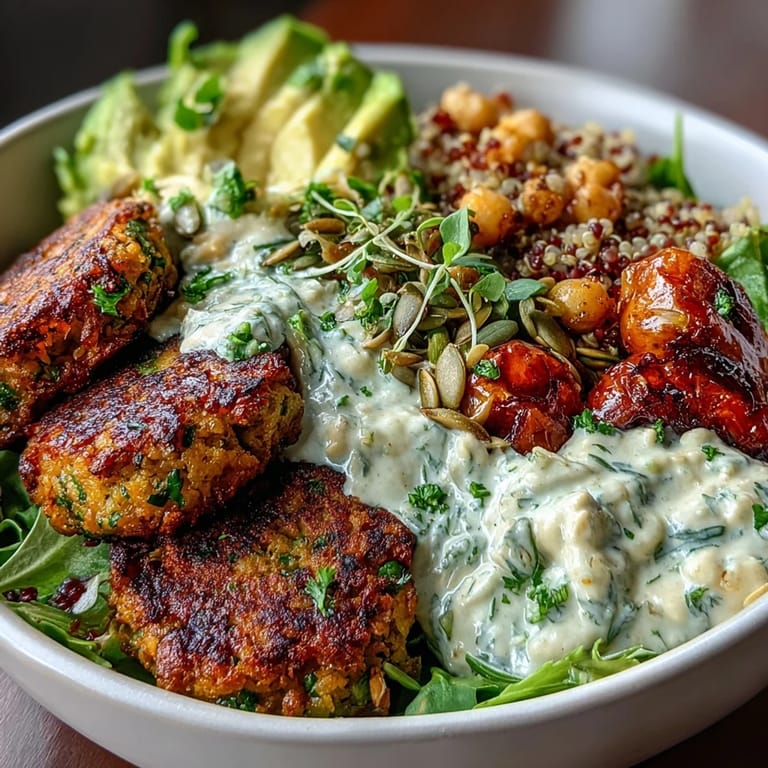 Save
Save There’s a quiet sort of joy in watching friends customize their bowls, choosing their own balance of falafel and greens, each drizzle of dressing met with little satisfied sighs. That’s when I realized a meal can truly feel like a shared canvas, especially when it brings a burst of color and crunch to the table.
Small Touches That Make It Shine
Tossing pumpkin seeds in a dry pan for just a minute while you prep everything else wakes up their nutty flavor—I catch myself sneaking a few before they ever make it to the bowl. Toasted seeds, freshly chopped herbs, and that last hit of lemon all add brightness without fuss. Even sliding the falafel straight from the pan onto the serving platter, you’ll catch a wave of grateful faces anticipating dinner.
Easy Swaps & Fresh Ideas
If you’re missing an ingredient or want to explore, swap in whatever fresh veggies are at their peak, or change up the grain base for something you have on hand. Leftover roasted sweet potatoes or grilled zucchini make for a playful twist. I sometimes sprinkle crushed red pepper on top when I’m craving extra heat—there are no strict rules here.
How to Prep Ahead for Busy Weeks
I’ve found that making a double batch of falafel is a game-changer—freeze half before cooking, and you’re halfway to another easy meal. The lemon-tahini dressing holds well in the fridge for days, intensifying in flavor as it waits for your next bowl. Quinoa prepped early makes assembly lightning-fast.
- Always slice avocado at the last minute for peak freshness.
- Store components separately for best texture and to avoid sogginess.
- Roast extra veggies—they’re delicious tucked into wraps or salads all week.
 Save
Save  Save
Save May your kitchen always be filled with good company and bowls bright enough to make the season feel new. Happy cooking!
Recipe FAQ
- → How do I make the falafel gluten-free?
Use chickpea flour instead of all-purpose flour and ensure any breadcrumbs or additives are certified gluten-free. The chickpea flour helps bind the mixture while keeping the texture tender.
- → What vegetables can I swap in for spring produce?
Substitute seasonal vegetables like cauliflower florets, zucchini, baby beets, or roasted Brussels sprouts. Aim for a mix of textures—crisp, tender, and slightly caramelized—for balance.
- → How can I get extra-crispy falafel?
Press the mixture well before shaping, chill the formed patties for 20 minutes, and use hot oil in a skillet. Avoid overcrowding and turn only when a golden crust forms to retain crispness.
- → What's the best way to store leftovers?
Store components separately: refrigerate falafel and roasted vegetables in airtight containers for up to 3 days, and keep greens and avocado chilled separately. Dress the bowls just before serving.
- → How do I adjust the lemon-tahini dressing consistency?
Whisk in water a teaspoon at a time until the dressing reaches a pourable consistency. Warm the tahini briefly or add a splash of warm water to help it loosen smoothly if it thickens.
- → What protein additions pair well with this bowl?
Marinated baked tofu, grilled tempeh, or a sprinkle of hemp seeds boost protein without overpowering the lemon-tahini flavors. For extra richness, add a few roasted chickpeas.