 Save
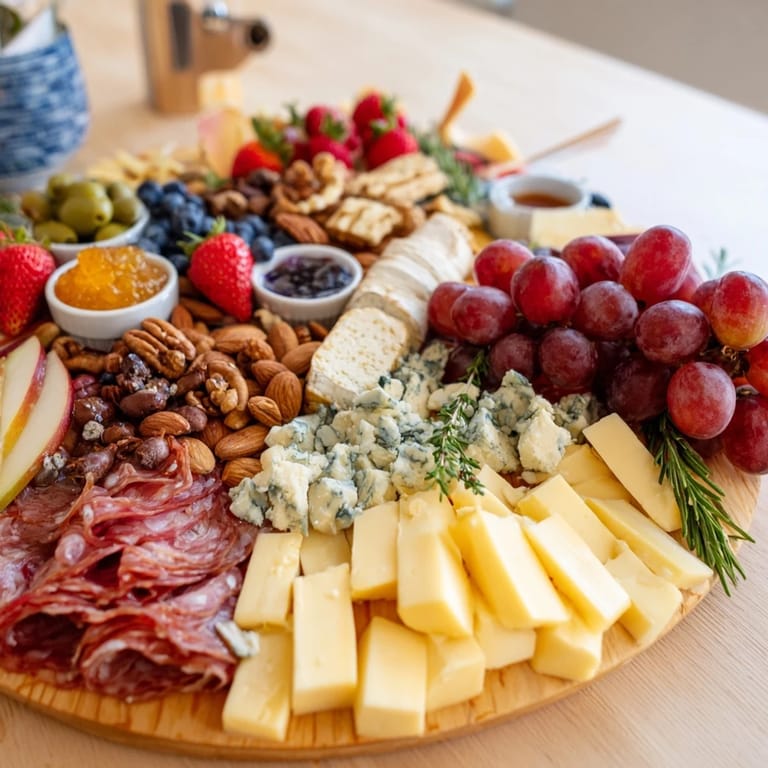
Save I discovered the magic of the waterfall grazing board at a dinner party where everything went delightfully wrong. The host had prepped an elaborate arrangement on a marble slab positioned carelessly at the table's edge, and as guests arrived, things began tumbling onto the tablecloth below—not catastrophically, but in this gorgeous, intentional-looking cascade that somehow made the whole spread feel more generous and alive. Everyone crowded around laughing, reaching for both the board and the artfully "fallen" elements, and I realized this wasn't a mistake at all; it was actually brilliant theater. Now whenever I build one, I think of that moment and lean into the drama deliberately.
My favorite time to make this is right before people arrive, when the kitchen is quiet and I get to arrange each element like I'm composing a small artwork. There's something meditative about layering the cheeses, watching how the honey catches the light in the small bowl, positioning a few walnuts so they look like they're mid-tumble. By the time my friends walk in, I'm calm and ready to host, and they're immediately enchanted by what's waiting for them.
Ingredients
- Brie, sliced (150g): The softness of this cheese means it drapes beautifully and looks lush cascading over the edge—let it warm to room temperature slightly so it has that inviting, creamy appearance.
- Aged Cheddar, cubed (150g): Sharp aged cheddar holds its shape and provides visual texture with its golden hue; the tanginess balances all the sweet elements.
- Blue cheese, crumbled (100g): A small amount packs serious flavor and adds striking visual contrast with its veining; don't overshadow the board with too much.
- Goat cheese, sliced (100g): The tang and slight tanginess make it a flavor anchor, and thin slices layer elegantly.
- Prosciutto (100g): Let it drape casually in loose folds—when it's handled gently, it becomes part of the flowing aesthetic.
- Salami, sliced (100g): Choose a quality variety with good color; the circles stack neatly and add visual rhythm.
- Red grapes, small clusters (1 cup): Keep them in tiny clusters so they naturally cascade and roll slightly when guests reach for them.
- Strawberries, halved (1 cup): The bright red is essential for visual pop; halve them just before assembly so they stay fresh and glossy.
- Blueberries (1/2 cup): Their small size means they nestle into gaps and can tumble realistically over the edge.
- Pear, thinly sliced (1): Slice just before serving and toss gently with lemon juice to prevent browning; the pale color creates a soft contrast.
- Dried apricots (1/2 cup): Their golden color and chewy texture add visual warmth and a subtle sweetness that plays well with aged cheeses.
- Dried figs, halved (1/2 cup): These are rich and elegant; halving them shows off their interior and makes them easier to eat.
- Almonds (1/3 cup): Raw or lightly toasted, they add crunch and a sophisticated visual element.
- Walnuts (1/3 cup): Position a few strategically to look like they're rolling; their irregular shape adds natural movement to the design.
- Baguette, sliced and toasted (1): Toast until just crispy so pieces stay sturdy enough to lean at angles without breaking; some can lean dramatically off the edge.
- Assorted crackers (150g): Mix shapes and textures; vary how you position them—some vertical, some horizontal, some stacked for height.
- Honey (1/4 cup): Drizzle a little down the cascade path and place the rest in a small bowl; it catches light and signals sweetness to come.
- Fig jam (1/4 cup): Position this in a ramekin so it acts as an anchor point visually and practically.
- Mixed olives (1/4 cup): Scatter some across the board and let a few roll toward the table edge as if they're part of the flow.
- Fresh herbs—rosemary and thyme: Tuck sprigs throughout for fragrance and to soften the arrangement; they photograph beautifully too.
Tired of Takeout? 🥡
Get 10 meals you can make faster than delivery arrives. Seriously.
One email. No spam. Unsubscribe anytime.
Instructions
- Set your stage:
- Choose a board large enough to let things spill gracefully—I use a 24-inch wooden or marble piece positioned so one edge hangs slightly over the table. The slight overhang is everything; it signals to guests that overflow is intentional.
- Create the anchor with cheeses:
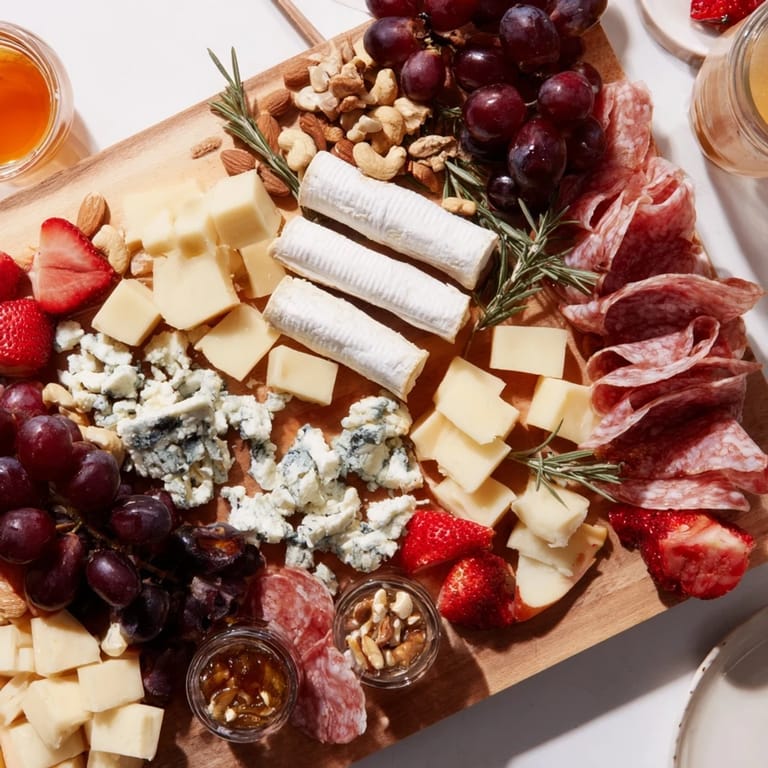
- Arrange sliced brie in overlapping layers right at the edge, letting each piece extend just past the boundary. The soft cheese will catch light and look abundantly creamy; follow with cubed cheddar positioned so the colors harmonize, then scatter your blue cheese and goat cheese slices so they seem to be tumbling down. Work in gentle waves rather than neat rows—chaos reads as generosity.
- Drape and layer the cured meats:
- Fold prosciutto gently and nestle it between cheeses, letting some pieces hang slightly over the edge like fabric. Layer salami in loose circles beside it; the translucent quality of good prosciutto against the deeper tones of salami creates visual interest. Don't tuck everything away—let some drape onto the table.
- Cascade the fresh fruit:
- Position grape clusters so they nestle into gaps but a few roll slightly onto the table below. Scatter strawberry halves with their cut sides visible for brightness, tuck blueberries into small spaces, and fan pear slices so they create soft, pale lines through the arrangement. Fresh fruit can move, so position it confidently and let gravity be your design partner.
- Fill gaps with dried fruits and nuts:
- Tuck apricots and figs into crevices, letting some sit visibly on top and others peek out. Scatter almonds and walnuts across both board and table; position a few walnuts so they appear mid-tumble. These add texture and suggest abundance without overwhelming the fresh elements.
- Add crackers and bread at varied angles:
- Lean toasted baguette slices at angles as if they're falling; stack a few crackers for height variation. Place some horizontally and others nearly vertical; this variation feels dynamic. A few pieces should extend clearly past the board's edge onto the table.
- Position your condiments as focal points:
- Place honey in a small bowl slightly off-center, with a tiny drizzle running down toward the table edge. Position fig jam in its own ramekin and scatter a few olives around it, letting some roll. These items anchor the arrangement and give guests clear starting points.
- Finish with fresh herbs:
- Tuck sprigs of rosemary and thyme throughout for fragrance and color; they soften hard edges and make the whole thing feel garden-fresh.
- Serve with confidence:
- Bring the board to the table and encourage guests to reach for both board and table elements; the beauty is in the intermingling.
 Save
Save There was a moment at a recent gathering when my mother-in-law reached for a walnut that had rolled onto the tablecloth, smiled at the audacity of the whole thing, and said this made entertaining feel like play instead of performance. That's when I understood—the waterfall board isn't about impressing anyone; it's about creating permission for abundance and joy to spill over.
Building Visual Harmony
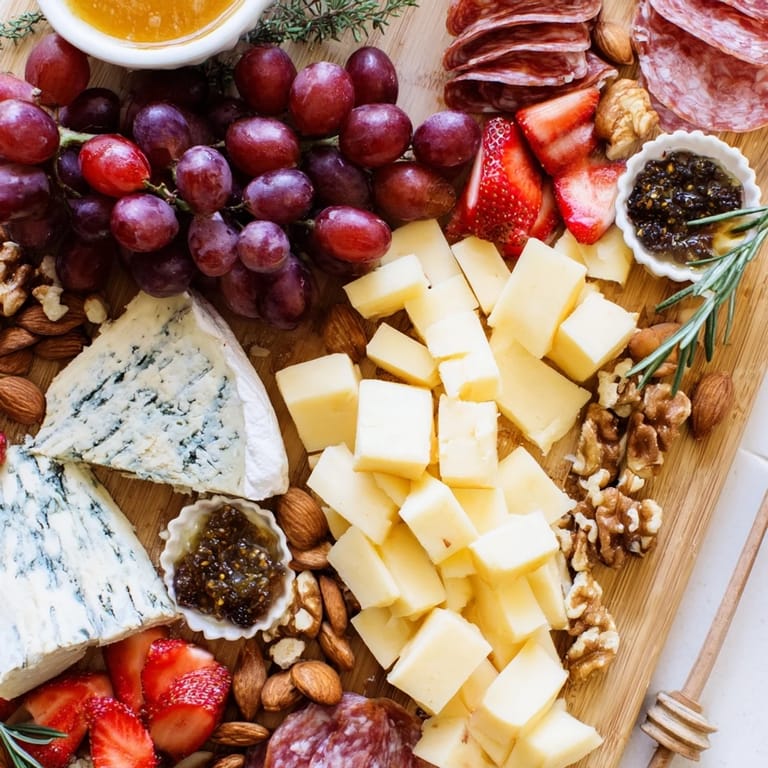
The secret to a stunning waterfall board is color blocking and contrast. Group your cheeses together so their white, orange, and blue tones build a focal point, then let fruits scatter across and down as counterpoints. I think of it like a landscape: the cheese is the cliff face, the fruits are the water flowing, and the nuts and crackers are the mist and spray. Position darker elements (walnuts, olives, aged cheddar) lower to ground the design visually, and lighter elements (brie, pear, almonds) higher to create an airy feeling.
Timing and Temperature
Remove cheeses from the refrigerator about 30 minutes before assembly so they're at their most appealing texture—brie becomes creamy and soft, cheddar loses its waxy coldness, and goat cheese becomes luscious. Toasted bread should cool to room temperature so it's sturdy enough to position at angles. The board itself should be at room temperature too, which actually helps items stay in place slightly better than a cold surface.
Customizing for Your Crowd
The beauty of this board is its flexibility. If you're serving vegetarians, simply omit the cured meats and add an extra cheese or two; no one will notice what's missing because everything's so abundant. For a vegan version, swap in high-quality plant-based cheeses and add roasted chickpeas for crunch. I've added candied pecans, dark chocolate pieces, and even fresh herbs like basil or mint depending on the season and mood. The fundamental architecture stays the same; you're just swapping the ingredients.
- Chocolate pieces and candied nuts create an elegantly sweet variation that works beautifully for afternoon gatherings.
- In summer, add fresh herbs like basil and mint to brighten everything; in fall, lean toward spiced nuts and darker dried fruits.
- Always have a backup small bowl of something crunchy at the end of the table in case the cascade needs replenishing mid-party.
 Save
Save This board has become my signature move for entertaining—not because it requires any real cooking skill, but because it transforms the simplest gathering into something memorable and generous-spirited. Every time someone reaches for an ingredient tumbling onto the tablecloth, I know I've done something right.
Recipe FAQ
- → What cheeses work best for this grazing board?
Soft cheeses like Brie and goat cheese pair well with aged options like Cheddar and flavorful Blue cheese to provide a variety of textures and tastes.
- → Can this board be made vegetarian-friendly?
Omit the cured meats and consider adding extra nuts, dried fruits, or plant-based cheese alternatives to maintain abundance and flavor balance.
- → How do you create the cascading waterfall effect?
Arrange ingredients so some layers and pieces extend beyond the board's edge, allowing fruits, nuts, and crackers to spill gently onto the table below.
- → What accompaniments enhance the flavors on this board?
Small bowls of honey, fig jam, and a mix of olives complement the cheeses and meats while fresh herbs add aroma and visual appeal.
- → How should the board be served for best presentation?
Place the board near a table edge with space below to showcase fallen elements, encouraging guests to sample from the layered spread and cascading additions.
- → Are there suggested beverage pairings?
Light white wines or sparkling rosé complement the mix of creamy cheeses, cured meats, and fruity components beautifully.