 Save
Save My aunt brought a casserole dish of candied yams to Thanksgiving one year, and I watched my uncle skip the turkey entirely to pile his plate high with them. That moment made me realize candied yams didn't have to be that cloying, one-note sweetness I remembered from childhood potlucks. When I started experimenting with brown butter and fresh sage a few years later, the whole thing clicked into place—suddenly it felt less like a dessert masquerading as a vegetable and more like something genuinely worth fighting over at the dinner table.
The first time I made this for my partner's family, I was nervous about the brown butter step—I'd burned it before and wasn't confident I'd nail the nutty stage this time. But standing there with the saucepan, watching the butter foam and shift from yellow to golden, then catching that toasty aroma, it clicked. When I added the sage and the kitchen filled with that herbal earthiness, I knew this was going to be different from every candied yam dish they'd ever had.
Ingredients
- Yams (sweet potatoes): Three pounds peeled and sliced into rounds creates even cooking—uniform thickness is your friend here, and peeling them raw rather than cooked makes it so much easier.
- Unsalted butter: The full stick is essential; this is where the nutty, aromatic magic happens, so don't skimp or substitute.
- Fresh sage leaves: Ten leaves chopped fine, and please use fresh if you possibly can—dried sage tastes dusty in comparison and you'll miss the brightness.
- Light brown sugar: Half a cup packed down gives you that molasses depth without the heaviness of dark sugar.
- Pure maple syrup: A quarter cup of the real thing—the quality matters because this is a starring ingredient, not a background note.
- Fresh orange juice: Squeezed is genuinely better here; it adds acidity that balances the sweetness and brings the whole glaze into focus.
- Cinnamon and nutmeg: These warm spices are measured in quarter and half teaspoons—small amounts that you actually taste rather than a heavy hand that overpowers.
- Kosher salt: A quarter teaspoon cuts through the sweetness and makes every flavor sharper and more real.
- Vanilla extract: One teaspoon rounds out the glaze with a subtle warmth that ties everything together.
Tired of Takeout? 🥡
Get 10 meals you can make faster than delivery arrives. Seriously.
One email. No spam. Unsubscribe anytime.
Instructions
- Heat your oven and prep your dish:
- Set the oven to 375°F and grease a 9x13-inch baking dish lightly—this is your canvas for the next hour. Arrange your yam rounds in a single layer, not overlapping, so they'll cook evenly and soak up the glaze.
- Brown that butter until it's golden and fragrant:
- In a medium saucepan over medium heat, melt the butter and then keep swirling it—don't walk away—until it shifts from pale yellow to amber and smells toasty and nutty, about 3 to 4 minutes. The moment it looks right, add the chopped sage and let it cook for just 30 seconds so the herb releases its oils into the butter.
- Whisk together your glaze:
- Remove the pan from heat and whisk in the brown sugar, maple syrup, orange juice, cinnamon, nutmeg, salt, and vanilla until everything is smooth and combined. This is where all your flavors become one cohesive, silky glaze.
- Pour and coat:
- Pour this glaze over the yams and toss gently so each round gets coated in that brown butter-sage mixture. Cover the dish tightly with foil—you want steam to stay in and help soften the yams.
- First bake covered:
- Bake for 30 minutes covered so the yams start to tender and the flavors meld together. When you pull it out, the dish will smell incredible.
- Finish uncovered to caramelize:
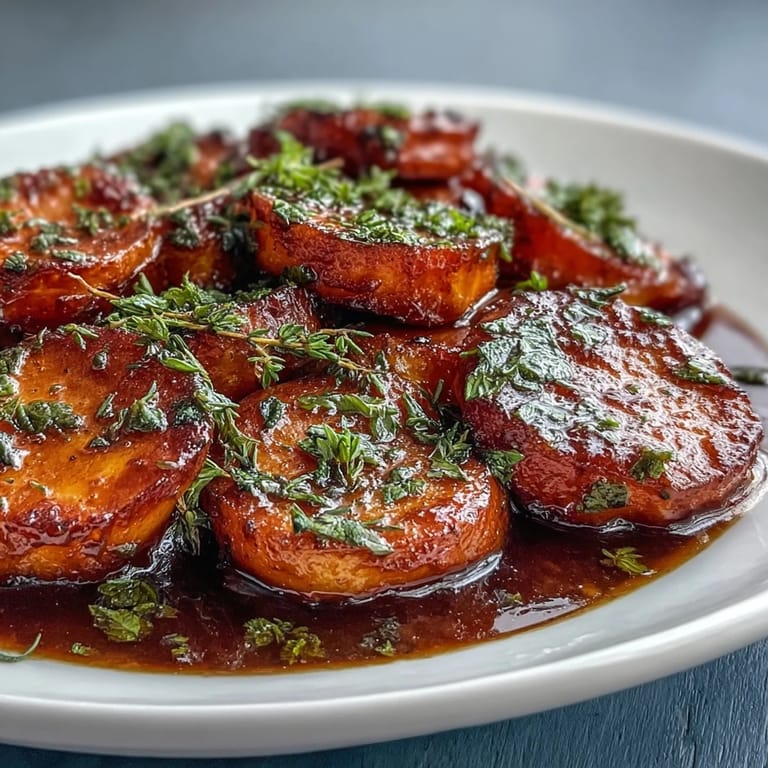
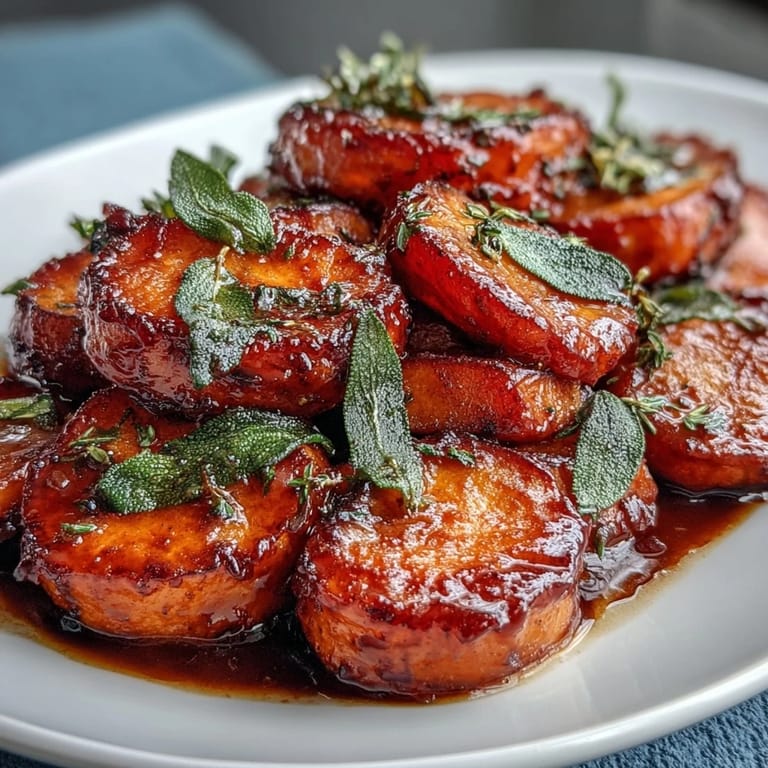
- Remove the foil, baste the yams with all the pan juices, and bake uncovered for another 15 minutes so the glaze thickens and the tops catch a little color. You're looking for yams that are fork-tender and a glaze that coats a spoon.
- Rest before serving:
- Let it sit for 5 minutes after it comes out of the oven—this lets everything settle and makes serving cleaner. Garnish with extra fresh sage if you want a little visual flourish.
 Save
Save There's a moment near the end of baking when the house smells like caramelized brown sugar and sage and orange, and suddenly this side dish feels like the whole reason Thanksgiving exists. It's when someone asks what's in it and you get to say brown butter and fresh sage, watching their expression shift from skeptical to genuinely interested.
Why Brown Butter Changes Everything
Regular melted butter is fine, but brown butter is where the depth lives. When you heat butter past melting, the milk solids separate and toast, creating that nutty, complex flavor that sounds fancy but happens in your own kitchen over a few minutes. The sage amplifies this—rather than competing, it harmonizes, so together they feel intentional rather than thrown-together.
The Orange Juice Secret
Fresh orange juice might seem like an odd choice in a yam dish, but it's the acidity that saves this from tasting cloying. It brightens the sweetness and keeps the glaze from feeling heavy, and when it bakes down, the citrus becomes subtle—you taste it as a lifting sensation rather than a distinct flavor. Boxed juice will work if you're in a pinch, but fresh squeezed genuinely changes the finish.
Making It Your Own
This recipe is sturdy enough to handle your preferences without falling apart. Pecans or walnuts toasted and scattered over the top add texture and richness, while honey swaps in beautifully for maple syrup if that's what you have. The base is solid, so trust it and then make it yours.
- Toasted pecans sprinkled over the finished dish add crunch and a buttery complement to the sage.
- Honey works as a one-to-one swap for maple syrup if you prefer its flavor or have it on hand.
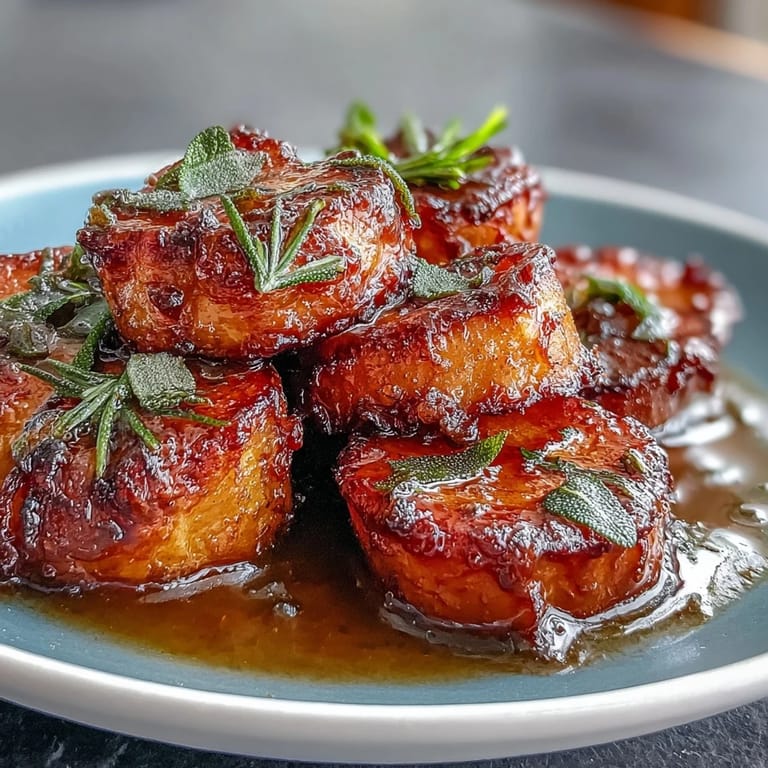
- A fresh sage leaf placed on top of each yam round before baking makes an elegant presentation.
 Save
Save This dish deserves a place at your table, whether it's Thanksgiving or any dinner where you want something that feels a little more thoughtful than expected. Brown butter and sage do that for you.
Recipe FAQ
- → What is the purpose of browning the butter?
Browning the butter develops a nutty aroma and deepens the flavor, enriching the glaze coating the yams.
- → Can I substitute fresh sage with dried sage?
Fresh sage offers a brighter, more aromatic quality, but dried sage can be used in smaller amounts if fresh is unavailable.
- → How do I achieve a thicker glaze on the yams?
Baste the yams midway through baking and finish uncovered to allow the glaze to reduce and become thick and syrupy.
- → Are there alternative sweeteners that can be used in the glaze?
Honey can replace maple syrup for a slightly different sweetness and flavor profile.
- → What texture should the yams have when done?
They should be tender when pierced with a fork, with a caramelized and slightly sticky glaze coating the surface.