 Save
Save I discovered ribollita on a chilly Florence evening, tucked into a trattoria where the kitchen was visible and chaotic and wonderful. The owner's grandmother was stirring an enormous pot of this soup, and she caught me staring, so she ladled a bowl into my hands with a knowing smile. It was nothing fancy—just beans and vegetables and bread—but it tasted like someone had bottled the entire Tuscan countryside and served it steaming. Years later, I finally understood what made it so magnetic: the way day-old sourdough softens into the broth while the croutons stay defiantly crisp, and how kale transforms from tough and bitter into something almost sweet.
My first attempt was for a dinner party where I was trying too hard to impress, and I almost ruined it by overthinking every step. Then my neighbor wandered in, took one spoon of broth, and said, "Stop fussing, it's already beautiful." She was right—there's a freedom in this soup, a rustic generosity that doesn't demand perfection. Since that night, I've made it dozens of times, and each version tells a story: the time I added extra fennel because I had it on hand, the autumn I used homemade broth and swore I'd never go back, the night someone asked for seconds before finishing their first bowl.
Ingredients
- Extra-virgin olive oil: Use a good one—this is Tuscan food, and the oil carries as much weight as the beans; I keep a bottle I genuinely love for drizzling at the end.
- Yellow onion, carrots, and celery: This soffritto is your flavor foundation, so take your time with it and let it turn golden and sweet.
- Garlic: Fresh, minced, and fragrant—add it after the soffritto so it doesn't burn and turn bitter.
- Fennel bulb: Optional, but it whispers anise notes that make people ask what your secret is.
- Zucchini: Adds body without heaviness; small or medium works best.
- Tuscan kale (cavolo nero): Heartier than curly kale and designed for long cooking; if you can't find it, lacinato kale or even hearty chard works beautifully.
- Yukon gold potato: Waxy enough to hold its shape but soft enough to help thicken the broth naturally.
- Diced tomatoes: Canned is your friend here—they're picked at peak ripeness and packed with juice.
- Cannellini beans: Creamy, mild, and traditional; drain and rinse them to remove excess sodium and starch.
- Vegetable broth: The backbone of everything, so taste it first and choose one you'd actually drink.
- Bay leaf, thyme, and oregano: Dried herbs work perfectly and infuse gently as the soup simmers.
- Red pepper flakes: Optional but recommended—a whisper of heat wakes everything up.
- Day-old sourdough bread: The real magic; day-old means it won't disintegrate, and sourdough has the tang and structure to survive toasting and rubbing with garlic.
- Parmigiano-Reggiano: Use the real thing if you can; it adds a salty umami depth that melts into the hot broth.
Tired of Takeout? 🥡
Get 10 meals you can make faster than delivery arrives. Seriously.
One email. No spam. Unsubscribe anytime.
Instructions
- Build your soffritto foundation:
- Warm the olive oil in your Dutch oven and add the diced onion, carrot, celery, and fennel if you're using it. Let them soften together for 8 to 10 minutes, stirring occasionally—you're looking for a golden sweetness, not color. The kitchen will smell incredible.
- Bloom the garlic:
- Stir in your minced garlic and cook for just a minute until it stops being raw and starts being fragrant. This is the moment where everything comes alive.
- Add the vegetables:
- Toss in the zucchini, potato, and chopped kale, stirring gently so everything is coated in oil. Cook for 3 to 4 minutes, letting the kale begin to soften and the potato start to release its starch.
- Pour in the soul:
- Add the canned tomatoes with all their juices, the drained beans, and the vegetable broth. Drop in the bay leaf and scatter in the thyme, oregano, and red pepper flakes if you like heat. Season generously with salt and pepper—don't be shy here.
- Let it simmer:
- Bring everything to a boil, then lower the heat and let it simmer gently, uncovered, for 35 to 40 minutes. Stir occasionally and taste as you go. About halfway through, grab the back of your spoon and partially mash some of the beans and potato against the side of the pot—you're creating creaminess and body without making it a puree.
- Toast the croutons:
- While the soup simmers, cut your day-old sourdough into rough 1-inch cubes and toss them with olive oil. Spread them on a baking sheet and slide into a 400°F oven for 10 to 12 minutes, turning once, until they're golden and the edges are crisp. While they're still warm, rub both sides with the cut side of a halved garlic clove—the warmth helps the garlic bloom into the bread.
- Finish and serve:
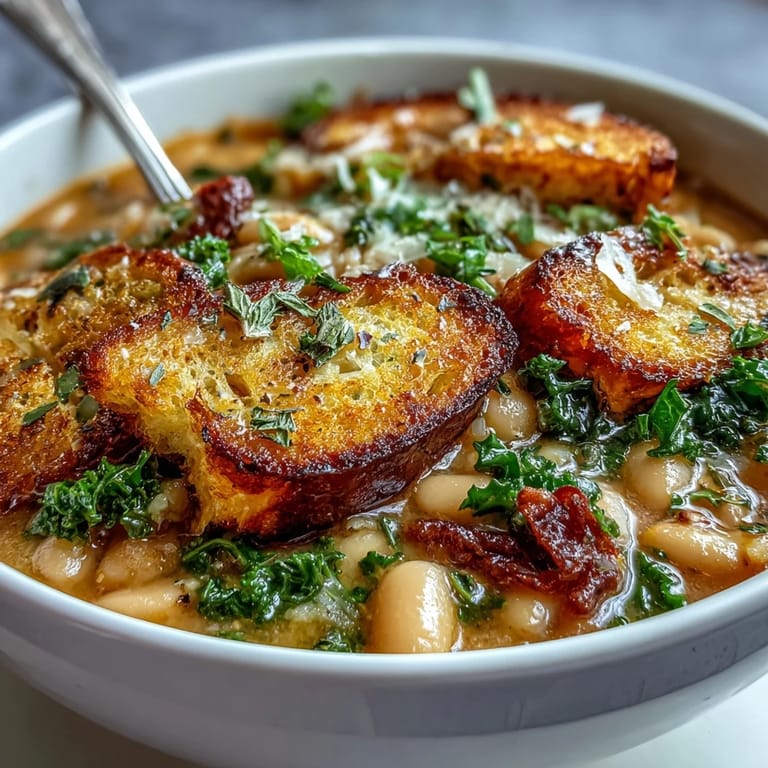
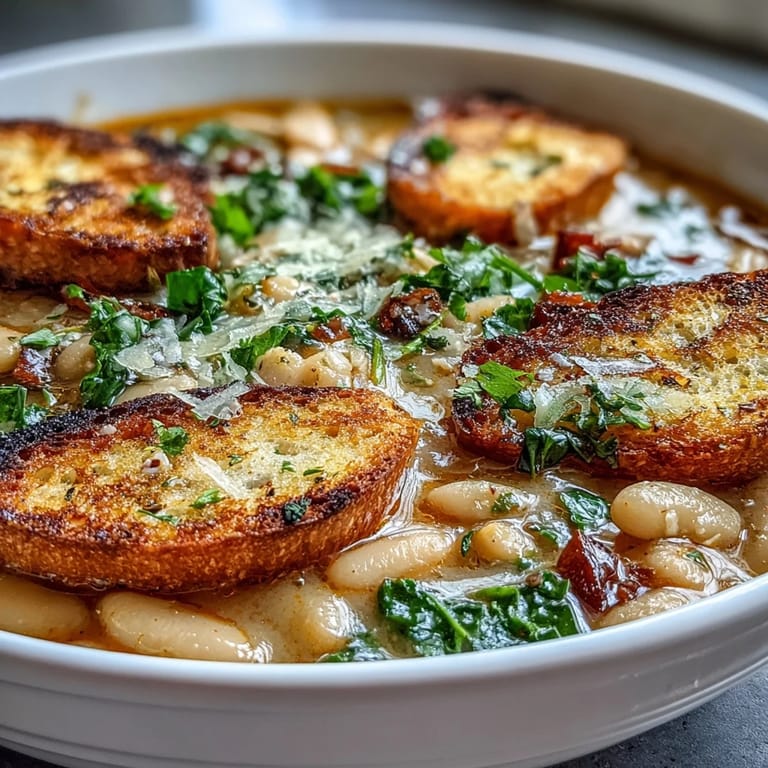
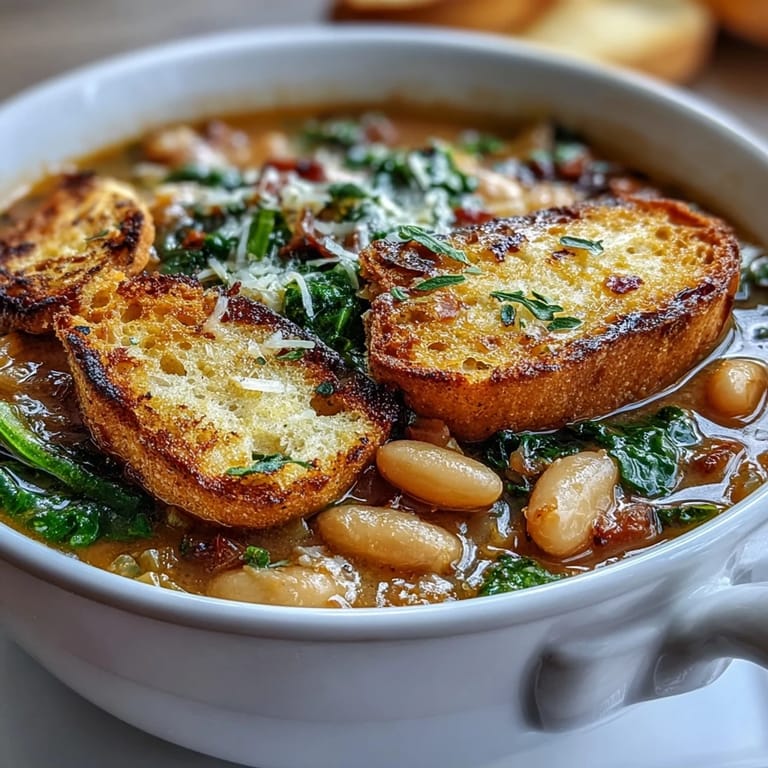
- Fish out the bay leaf from the soup and taste once more, adjusting the salt, pepper, or a squeeze of lemon if you think it needs brightness. Ladle the soup into bowls and crown each one with a generous handful of warm croutons, a drizzle of your best olive oil, and shavings of Parmigiano-Reggiano if you have it.
 Save
Save There was a moment last winter when my kids came home from school complaining about everything, and I set this soup in front of them with a bowl of warm croutons on the side. They ate without talking, which never happens, and I realized this soup had that rare power—it didn't just feed them, it reset something. That's what Tuscan food does at its best: it makes you slow down and notice what's in front of you.
The Magic of Day-Old Bread
I used to throw away stale bread until I understood that it's not ruined—it's transformed. The crust on day-old sourdough is thicker and more serious, and the crumb has lost enough moisture that it can brown and crisp instead of absorb and turn soggy. When you rub warm croutons with garlic, the heat opens the bread's surface, and the garlic practically dissolves into it. This is why supermarket soft white bread will never work here; it needs structure and character. I now intentionally buy sourdough a day ahead, and my freezer always has a bag of bread cubes waiting for soup emergencies.
Why This Soup Tastes Better Tomorrow
Ribollita is one of those rare dishes that improves with time, the way flavors deepen and marry overnight in the refrigerator. The bean texture becomes almost custardy, the kale mellows into something almost sweet, and the broth tastes less like individual components and more like a unified whole. The name itself comes from 'reboiling'—it's traditionally a way to reinvigorate yesterday's leftover soup by heating it gently with fresh sourdough stirred straight in. If you're serving this for a dinner party, consider making it the day before and simply reheating and preparing fresh croutons just before serving.
Variations and Personal Discoveries
Every cook who makes ribollita eventually makes it their own, and that's exactly how it should be. My mother-in-law adds a parmesan rind to the pot as it simmers, which creates a savory depth that's almost undetectable but somehow essential; she fishes it out before serving, but the magic stays behind. I've experimented with swapping kale for Swiss chard or spinach, and while it's slightly different, it's equally delicious. A friend who's vegan serves hers with crusty bread rubbed with garlic instead of cheese, and it's just as satisfying. The soup tolerates substitutions gracefully because it's built on a foundation of technique, not a rigid ingredient list.
- Try stirring in a parmesan rind as the soup simmers, then remove before serving for a whisper of umami depth.
- Add a squeeze of fresh lemon juice at the very end if the broth tastes flat—brightness is your secret finishing touch.
- Make extra croutons because everyone will want more than you anticipated, and they're equally good as a snack.
 Save
Save This soup isn't a recipe you master once and then leave behind—it's a technique you refine every time you make it, learning your own preferences and the way your kitchen's stove behaves. That's the quiet beauty of Tuscan cooking: it trusts you to show up with good ingredients and an open mind, and the rest happens between your hands and the pot.
Recipe FAQ
- → What type of beans are best for this dish?
Cannellini beans provide a creamy texture and mild flavor that complements the vegetable medley and herbs perfectly.
- → Can I substitute kale with other greens?
Yes, Swiss chard or spinach can be used as alternatives to kale for a different but still vibrant green component.
- → How should I prepare the sourdough croutons?
Toss cubed day-old sourdough bread with olive oil, bake until golden and crisp, then rub with garlic for extra flavor.
- → Is there a way to make the broth richer?
Adding a parmesan rind during simmering can deepen the broth’s flavor; remove it before serving.
- → What are good pairings for this Italian soup?
A glass of Chianti or crusty bread complements the hearty and rustic nature of the dish beautifully.
- → How can this dish be adapted for vegan diets?
Omit the grated cheese or replace it with a vegan alternative to keep it plant-based.