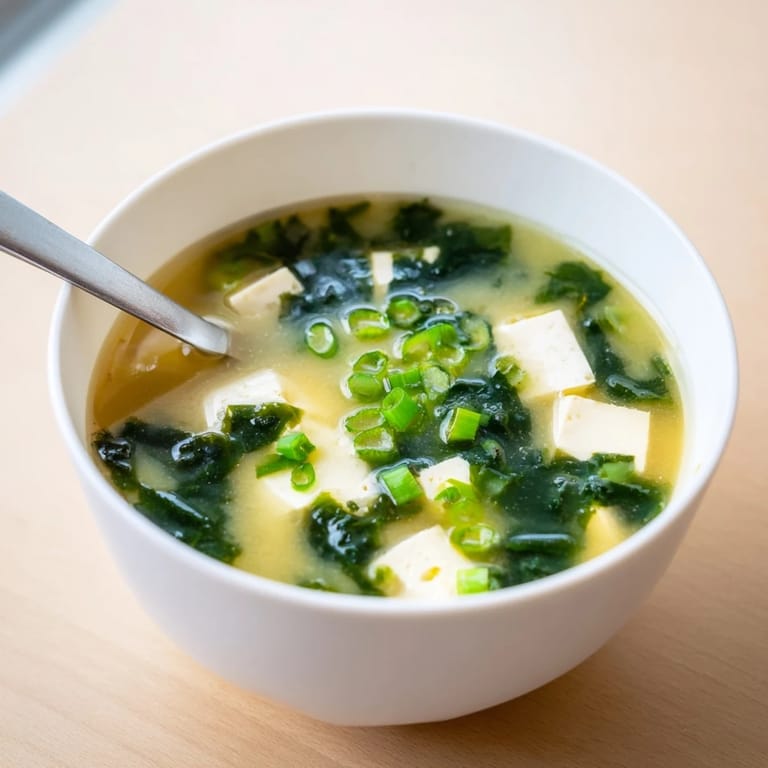
 Save
Save The first time I made wakame soup, I was recovering from a terrible cold and my Japanese neighbor brought over a small container of this steaming broth. I could barely taste anything, but something about that delicate, savory warmth made me feel genuinely cared for. Now whenever the weather turns grey or someone around me is feeling under the weather, I find myself reaching for that packet of dried seaweed. It is funny how a simple bowl of clear broth can feel like such an embrace.
Last winter my sister came over after a terrible week at work, and I made a huge pot of this soup while she sat at my kitchen table complaining about everything. By the time she finished her first bowl, she had gone from ranting to quiet, and eventually she admitted that it was exactly what she needed. We ended up sitting there for another hour just dipping more tofu into the broth and talking about nothing important.
Ingredients
- 8 g dried wakame seaweed: This expands dramatically when rehydrated, so a little goes a long way toward creating that oceanic depth
- 4 cups dashi stock: Use vegetarian dashi made from kombu and shiitake mushrooms to keep this plant based
- 100 g silken or firm tofu: Silken tofu will break apart more in the broth while firm cubes hold their shape nicely
- 2 scallions: Thinly sliced on a diagonal adds both color and a fresh bite to balance the salty richness
- 2 tbsp white miso paste: White miso is milder and sweeter than red miso, letting the seaweed shine through
- 1 tsp soy sauce: Choose gluten free soy sauce or tamari if that matters for your diet
- 1 tsp sesame oil: This is entirely optional but adds a lovely nutty finish that lingers beautifully
Tired of Takeout? 🥡
Get 10 meals you can make faster than delivery arrives. Seriously.
One email. No spam. Unsubscribe anytime.
Instructions
- Wake up the wakame:
- Place the dried wakame in a small bowl and cover with cold water, letting it plump up for about five minutes until it looks like delicate green ribbons.
- Heat the dashi:
- Bring the dashi stock to a gentle simmer in a medium saucepan, watching for those tiny bubbles that signal it is ready but not boiling.
- Add the heart:
- Gently slide in the cubed tofu and drained wakame, letting them cook together for just two or three minutes so the flavors start mingling.
- Master the miso:
- Whisk the miso paste with a ladleful of hot broth in a separate bowl until completely smooth, then stir it back into the soup.
- Finish with flair:
- Add the soy sauce and sesame oil, heating everything for one final minute without letting the soup boil, which can make the miso bitter.
- Serve with love:
- Ladle the soup into bowls and scatter those fresh scallion slices on top while it is still steaming hot.
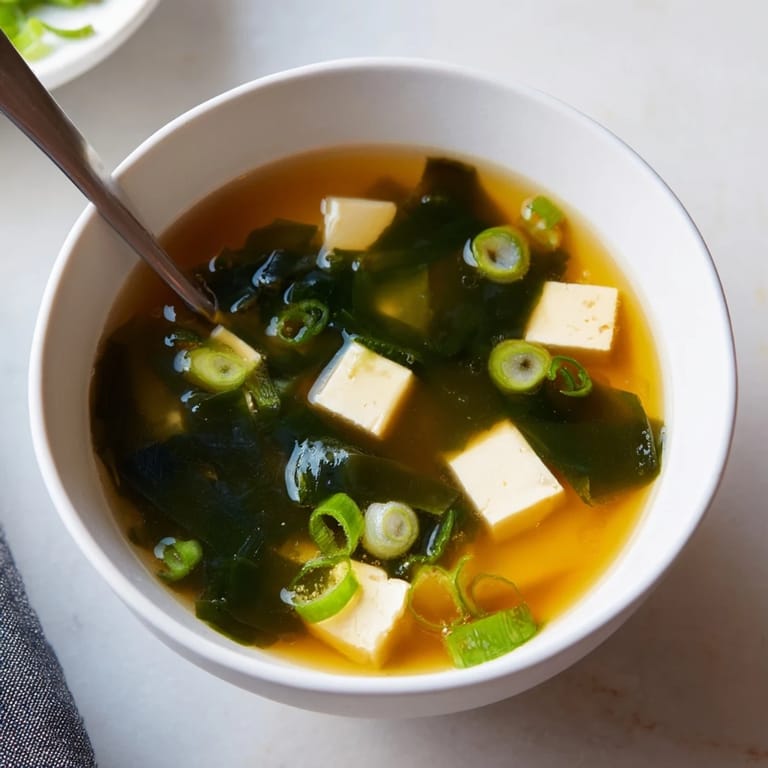 Save
Save This soup has become my go to whenever friends come over for sushi night because it is so effortless yet everyone always asks for the recipe. There is something about the combination of silky tofu and oceanic seaweed that makes people slow down and really appreciate what they are eating.
Building Your Broth
Good dashi makes all the difference here, and I learned the hard way that substituting regular vegetable broth leaves the soup tasting flat. If you cannot find dashi at your local store, kombu and dried shiitake mushrooms simmered for twenty minutes will get you pretty close to the real thing.
Perfecting the Texture
I prefer using firm tofu in this soup because it feels more substantial against the delicate wakame, but silken tofu creates this lovely, almost creamy mouthfeel that some people absolutely love. Try both ways to see which texture speaks to you more.
Customize Your Bowl
Sometimes I add thinly sliced mushrooms or baby spinach during the last minute of cooking to make the soup feel more like a complete meal.
- Drop in a handful of udon noodles for a heartier version
- Add a soft boiled egg for extra protein
- Stir in a teaspoon of chili oil for warmth
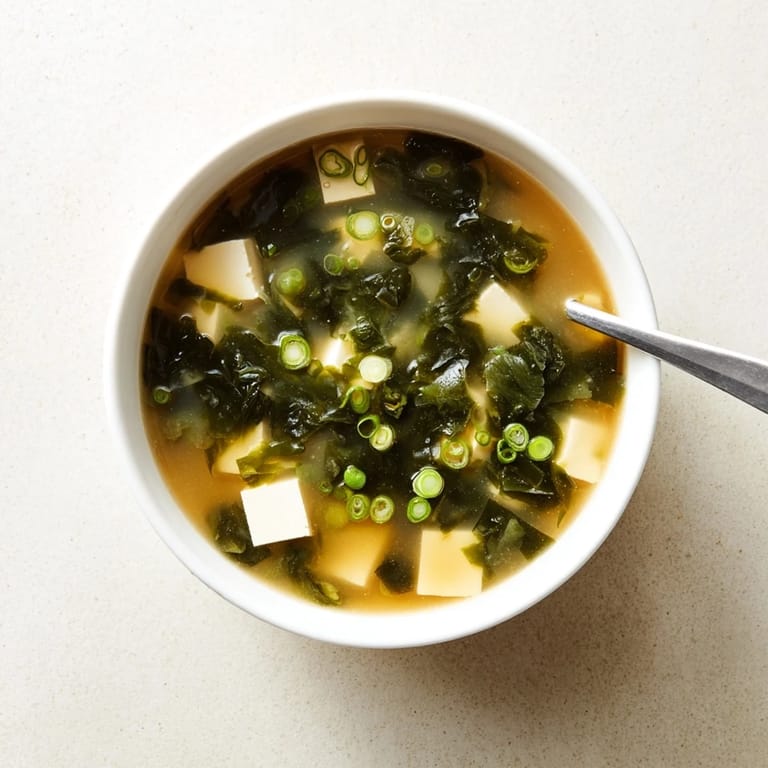 Save
Save There is something profoundly grounding about a bowl of soup that takes almost no effort but tastes like it was made with centuries of wisdom behind it.
Recipe FAQ
- → What does wakame taste like?
Wakame offers a delicate ocean flavor with a pleasant, slightly chewy texture when rehydrated. It's not as briny as some seaweeds, making it approachable for newcomers to Japanese ingredients.
- → Can I make this without dashi stock?
Yes, though the flavor profile will change. You can substitute with vegetable broth seasoned with a small piece of kombu (kelp) for 15 minutes, or use high-quality mushroom stock for a different but still delicious depth.
- → Why shouldn't I boil the miso?
Boiling miso paste kills its beneficial enzymes and can make the flavor bitter and harsh. Always dissolve it in a separate ladle of hot broth first, then stir it back in at the very end just before serving.
- → Is this suitable for meal prep?
Yes, though it's best enjoyed freshly made. Store the broth and solid ingredients separately for up to 3 days. Reheat the broth gently, add the tofu and wakame, then finish with miso paste just before eating.
- → Can I add other vegetables?
Absolutely. Thinly sliced mushrooms, spinach, or shredded carrots work beautifully. Add heartier vegetables like carrots earlier in the simmering process, while delicate greens like spinach should go in during the last minute.