 Save
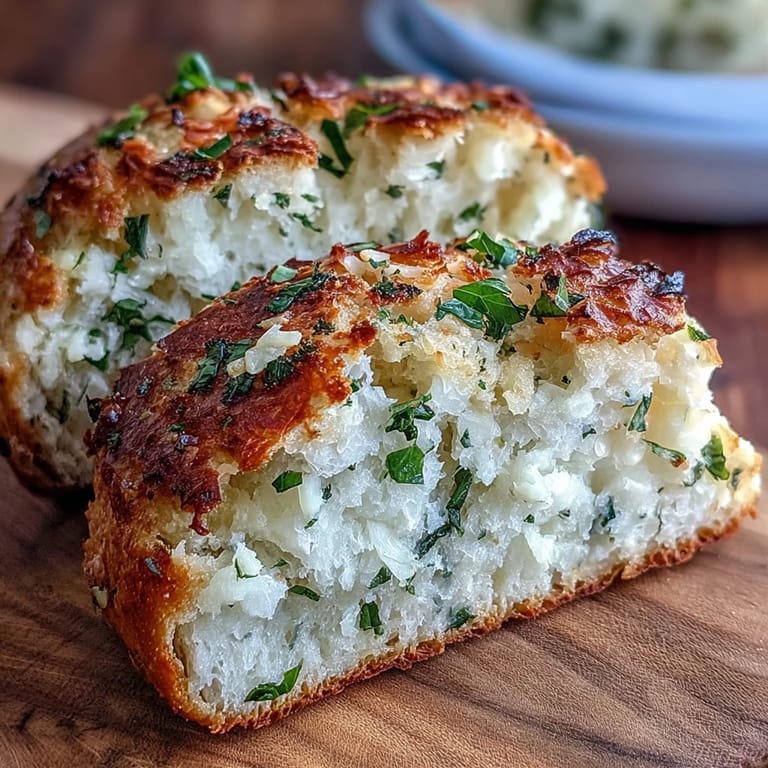
Save The smell of garlic and Parmesan hitting a hot skillet stops me in my tracks every time. Last winter, during a snowstorm that kept us housebound for days, I decided to experiment with an overnight bread dough. The house filled with this incredible savory aroma that had my teenage actually emerging from their room asking what was happening in the kitchen.
My neighbor texted me the next morning saying her whole family smelled something amazing drifting through the apartment vents. I brought over a warm loaf, and we stood in her kitchen tearing off pieces while they were still steaming. She asked for the recipe before she even finished her first bite.
Ingredients
- All-purpose flour: Bread flour works too but AP gives that tender rustic crumb were after
- Salt: Do not reduce this—it balances the rich cheese and sharp garlic
- Granulated sugar: Just enough to feed the yeast without making the bread sweet
- Active dry yeast: Instant yeast works fine but the bloom step is oddly satisfying
- Warm water: Think bath temperature, about 110°F—too hot kills the yeast, too cold wakes it slowly
- Olive oil: Adds subtle richness and helps the crust stay tender
- Freshly grated Parmesan cheese: Pre-grated cheese does not melt the same way, trust me on this
- Garlic cloves: Mince them small so they distribute evenly throughout the dough
- Fresh rosemary or parsley: Completely optional but that piney rosemary flavor is a game changer
Tired of Takeout? 🥡
Get 10 meals you can make faster than delivery arrives. Seriously.
One email. No spam. Unsubscribe anytime.
Instructions
- Wake up the yeast:
- Dissolve yeast in warm water and let it foam up for 5 minutes until it looks like a beige frothy island. If nothing happens, your yeast might be dead—start over with fresh yeast.
- Mix the base:
- Combine flour, salt, and sugar in a large bowl, then pour in the yeast mixture and olive oil. Stir with a wooden spoon until you have a shaggy, sticky dough—this is exactly right.
- Add the flavor:
- Fold in the Parmesan, garlic, and herbs until everything is evenly distributed. The dough will feel messy and that is perfect.
- Let it work overnight:
- Cover the bowl with a clean towel and set it somewhere warm for 12 to 18 hours. The dough should bubble up and double in size, developing those signature fermentation pockets.
- Shape it gently:
- Turn the dough onto a floured surface and fold it over itself a few times to create surface tension. Form it into a round loaf, being careful not to deflate all those precious air bubbles.
- Preheat strategically:
- Place your dough on parchment paper and let it rest while your oven and Dutch oven heat to 450°F. That hot pot is what creates the bakery style crust.
- Score and bake:
- Cut a slash across the top of the loaf with a sharp knife, then transfer it into the screaming hot Dutch oven. Bake covered for 30 minutes, then uncovered for 15 minutes more.
- The hollow test:
- When the loaf is golden brown and sounds hollow when tapped on the bottom, it is done. Cool on a wire rack for at least 30 minutes—slicing too soon will steam the crumb.
 Save
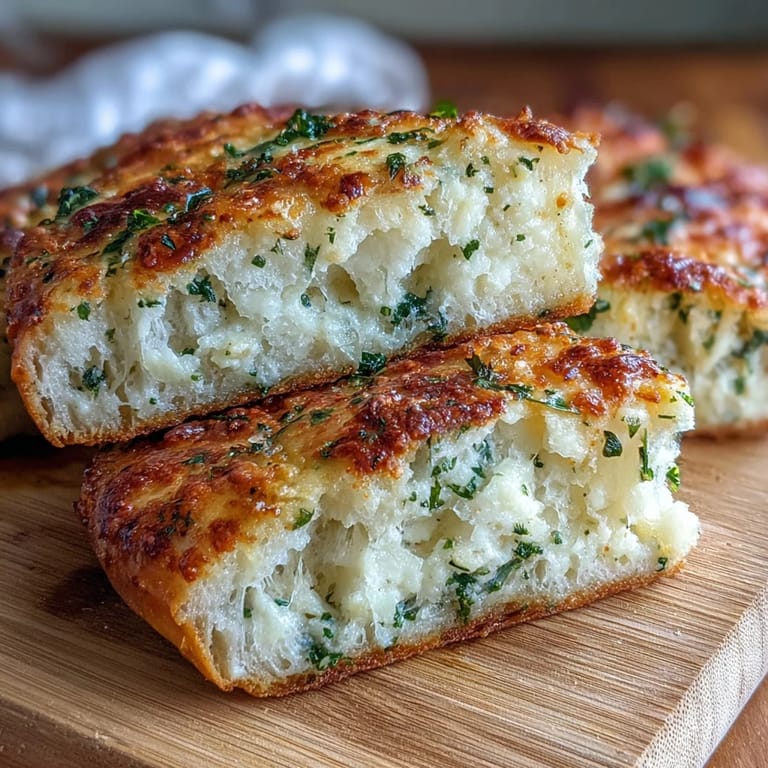
Save Last week, my husband took half a loaf to work and came home asking if I could teach him to make it. There is something deeply satisfying about watching someone who usually avoids the kitchen suddenly get excited about bread.
The Magic of Dutch Oven Baking
The trapped steam from the covered Dutch oven creates an oven environment that mimics professional deck ovens. I once tried baking this on a regular baking sheet and the crust was tough instead of shatteringly crisp.
Getting Creative with Add-ins
Sun dried tomatoes and basil make incredible variations, as does sharp cheddar and jalapeño. The key is keeping the add-in volume at about one cup total so the dough still rises properly.
Making It Ahead
The dough actually improves with a longer ferment in the refrigerator—up to 24 hours. Just bring it to room temperature for an hour before shaping and baking.
- Freeze baked loaves whole for up to a month, thawed and reheated at 350°F for 10 minutes
- Slice and freeze individual pieces for quick toast or garlic bread upgrades
- Leftover slices make the most incredible breakfast when toasted and topped with a fried egg
 Save
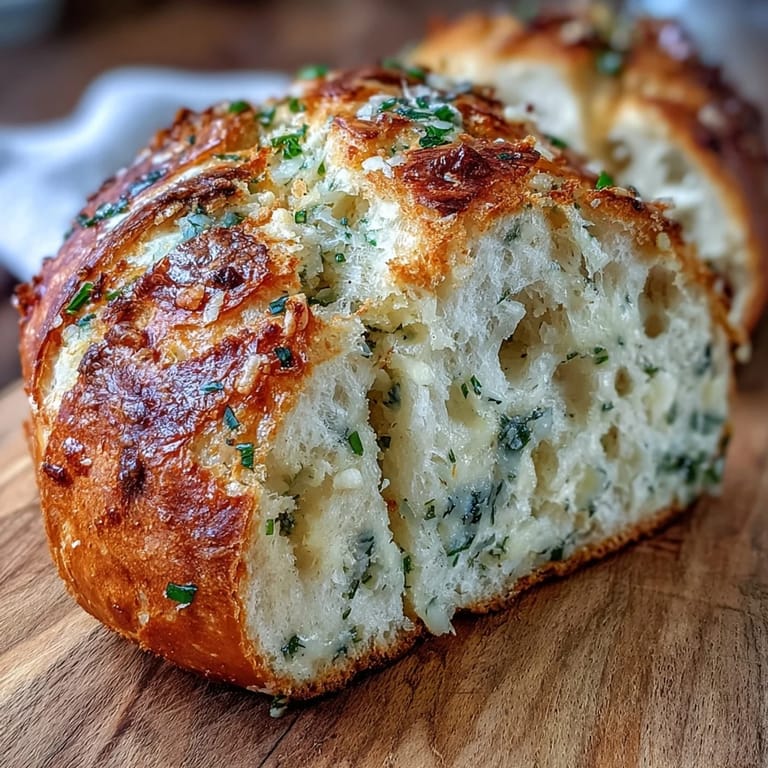
Save There is nothing quite like tearing into a warm loaf with your hands, butter melting into all those little crevices. This recipe has become my go-to for bringing something honest and homemade to the table.
Recipe FAQ
- → Can I use pre-shredded Parmesan cheese instead of freshly grated?
Freshly grated Parmesan works best as it melts evenly throughout the crumb. Pre-shredded cheese contains anti-caking agents that can create grainy texture. If you must use pre-shredded, reduce amount slightly and expect slightly denser results.
- → What if I don't have a Dutch oven?
A heavy oven-safe pot with tight-fitting lid works well—cast iron, enameled cast iron, or even ceramic. Alternatively, bake on a preheated baking stone and create steam by placing a pan of hot water on the bottom rack. The crust may be slightly less crispy.
- → Can I reduce the rising time?
The long, slow ferment develops flavor and creates that characteristic artisan texture. You can reduce to 8 hours in a very warm spot (85°F), but the loaf will have less complex taste. For best results, plan ahead and let it work overnight.
- → Why is my dough so sticky and shaggy?
This is exactly what you want! High-hydration dough creates the airy, open crumb structure artisan breads are known for. Avoid adding extra flour—this will make your final loaf dense. Trust the process and use flour only when shaping to prevent sticking.
- → How do I store leftovers and maintain freshness?
Wrap completely cooled loaf in plastic or store in a paper bag at room temperature for 2-3 days. For longer storage, slice and freeze in a sealed bag for up to 3 months. Reheat slices in a 350°F oven for 5 minutes to restore crust texture.
- → Can I add other ingredients like sun-dried tomatoes or olives?
Absolutely! This versatile base welcomes many additions. Try sun-dried tomatoes, chopped olives, caramelized onions, or different cheeses like Asiago and Gruyère. Keep add-ins to about 1 cup total to maintain proper dough structure and rise.