 Save
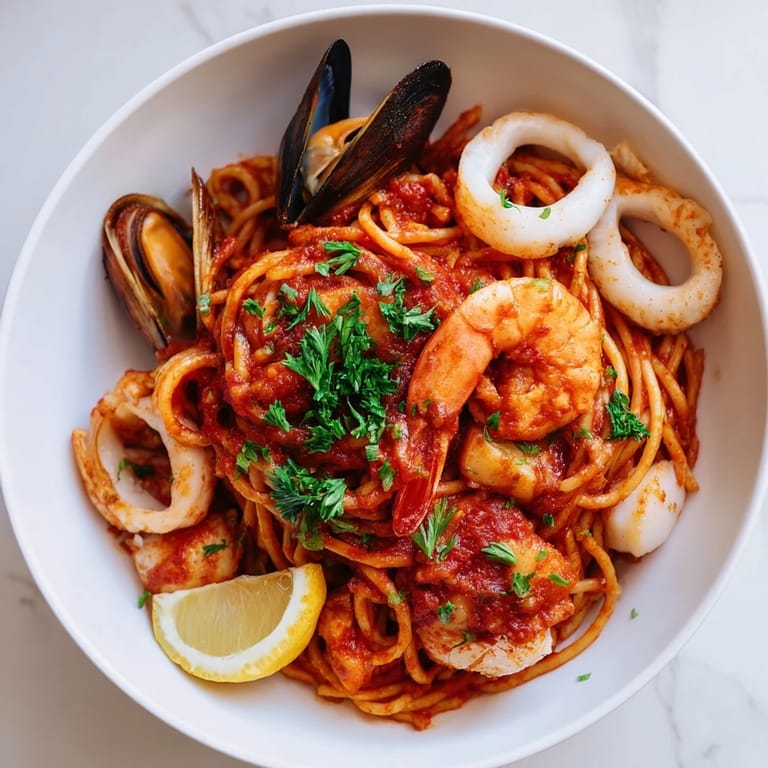
Save There's something magical about the moment when shrimp hit a hot pan and start to curl—I was halfway through cooking this the first time when my neighbor knocked on my door, and the aroma was so insistent that she practically invited herself in. That's when I realized this seafood marinara wasn't just dinner; it was a conversation starter, a dish that made my small kitchen feel like a trattoria in Naples. I've made it dozens of times since, each batch pulling me back to that evening of unexpected company and the way fresh seafood transforms something as simple as pasta into something unforgettable.
I cooked this for my sister's book club last spring, and everyone went quiet for that first bite—the kind of silence that tells you you've done something right. Someone asked if I'd made the sauce from scratch, and when I said yes, I watched her mentally recalculate what I'd been up to all day. The truth is simpler: good ingredients and about thirty minutes of patience transform into something that looks far more complicated than it is.
Ingredients
- Large shrimp: Buy them still frozen if possible and thaw just before cooking; they stay firmer and sweeter that way.
- Mussels: Look for tightly closed shells at the market, and give them a good rinse under cold water just before adding to the pan.
- Squid rings: These cook fast, so don't walk away—they go from tender to rubbery in about thirty seconds.
- Sea scallops: Pat them dry with paper towels before cooking, or they'll steam instead of developing that light golden crust.
- Spaghetti or linguine: The thinner shape works better here than chunky pasta; it lets the sauce coat every inch.
- Olive oil: Use something you actually like tasting; it's a main player here, not a supporting role.
- Onion and garlic: Mince them small so they dissolve into the sauce rather than staying chunky.
- Red pepper flakes: Optional, but they add a whisper of heat that makes everything taste more alive.
- Canned crushed tomatoes: San Marzano if you can find them; they're sweeter and less acidic than other varieties.
- Tomato paste: This concentrate adds umami and body that you can't replicate with tomatoes alone.
- Dry white wine: Something you'd drink, because cooking with wine you wouldn't is just gilding the lily with mediocrity.
- Oregano and basil: Dried is fine, but if you have fresh basil at the end, stir it in at the very last second.
- Sugar and seasoning: A tiny pinch of sugar balances the acidity; taste before you add more salt than you think you need.
- Fresh parsley and lemon: These final touches are not decoration—they're the bridge between richness and brightness.
Tired of Takeout? 🥡
Get 10 meals you can make faster than delivery arrives. Seriously.
One email. No spam. Unsubscribe anytime.
Instructions
- Start the pasta water:
- Fill your largest pot about three-quarters full with cold water, add a generous handful of salt, and let it come to a rolling boil. This is your foundation—under-salted water means under-flavored pasta no matter what sauce you make.
- Cook the pasta:
- Add pasta once the water is really boiling, and stir it in the first minute so it doesn't stick to itself. Check the package time and start tasting a minute or two before, so you catch it at that sweet spot where it's tender but still has a tiny bit of resistance.
- Build the sauce base:
- While the pasta cooks, warm your olive oil in a large skillet over medium heat, then add your finely chopped onion. Let it soften and turn translucent—this takes patience, maybe three minutes, and that's the point; you're not rushing.
- Bloom the aromatics:
- Stir in your minced garlic and red pepper flakes, and cook just until fragrant, about a minute. If you go longer, the garlic starts to brown and tastes bitter.
- Deglaze with wine:
- Pour in the white wine and let it bubble away for a couple of minutes, letting the alcohol cook off and leaving behind a subtle sweetness that anchors the sauce.
- Add the tomatoes:
- Pour in your crushed tomatoes and tomato paste, then add the oregano, basil, sugar, salt, and pepper. Stir everything together so the tomato paste dissolves evenly, and let it simmer uncovered for about ten minutes, stirring now and then so nothing sticks to the bottom.
- Cook the seafood:
- Start with the squid and scallops, giving them two minutes in the simmering sauce to firm up slightly. Add the shrimp and mussels next, cover the pan, and keep the heat at a gentle bubble until the shrimp turn pink and the mussels open up—usually three to four minutes.
- Bring it together:
- Drain your pasta, saving about half a cup of the starchy cooking water, then add the pasta directly to the skillet with the seafood and sauce. Toss it all gently together, using a little of that reserved water if the sauce seems too thick.
- Taste and serve:
- Give it one final taste for salt and pepper, then divide it among bowls, scattering fresh parsley on top and setting lemon wedges on the side.
 Save
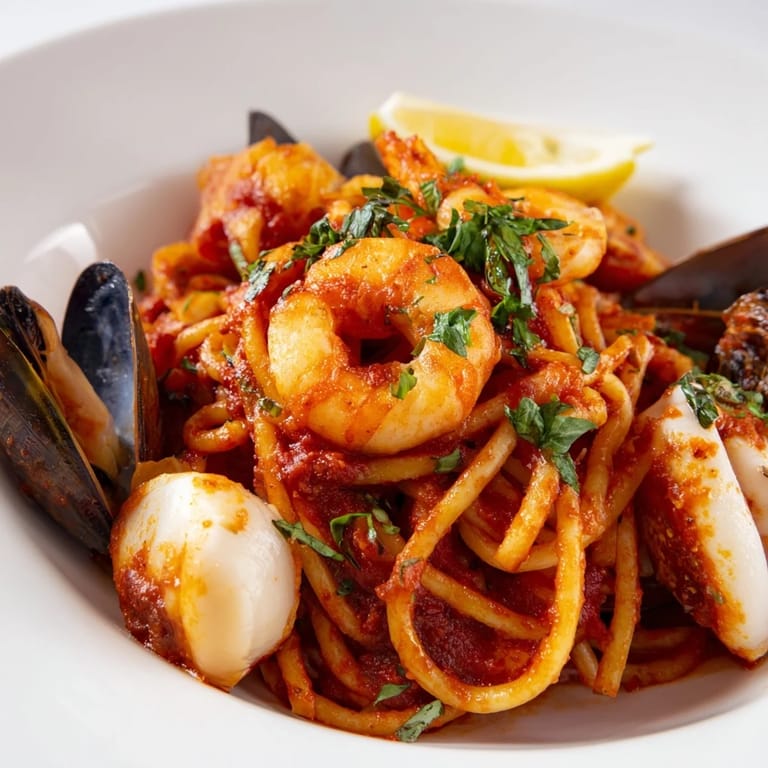
Save The best part of this dish isn't the seafood or the sauce individually—it's that moment when you're eating and someone says they didn't know you could make restaurant food at home. That's when you realize you've given them permission to try something they thought was beyond them.
The Art of the Sauce
The sauce is where this recipe lives or dies, and I learned early on that you can't just toss everything in and walk away. Letting it simmer for those ten minutes before the seafood goes in does something quiet but essential—the tomatoes soften and meld, the herbs infuse their flavor slowly rather than just sitting there like a salad, and the whole thing develops a depth that tastes like it's been building for hours. Watch for the sauce to darken slightly and smell almost caramelized at the edges; that's when you know it's ready for the seafood.
Timing Is Everything
I once made this dish for someone who was very particular about seafood, and I learned quickly that seafood waits for nobody. You need your pasta cooked and ready the moment the mussels start to open, because that's a two-minute window where everything is perfect. Start your pasta last, or time it so they're done at almost the same moment—this is the kind of coordination that feels stressful until it works, and then it feels like you've orchestrated something minor but beautiful.
Why This Works
Seafood and tomato sauce are an old pairing because they understand each other—the acidity of the tomato brightens the briny sweetness of the ocean, and the delicate flesh of the seafood doesn't fight the sauce but dissolves into it. Fresh lemon at the end is not a fancy touch; it's a necessity, cutting through the richness and making sure nothing feels heavy.
- A splash of seafood stock instead of plain water takes this from good to unforgettable, if you have it on hand.
- Fresh basil stirred in at the very end, instead of dried, tastes like summer no matter what season you're cooking in.
- Don't skip draining the mussels well before cooking, or you'll end up with grit in every bite.
 Save
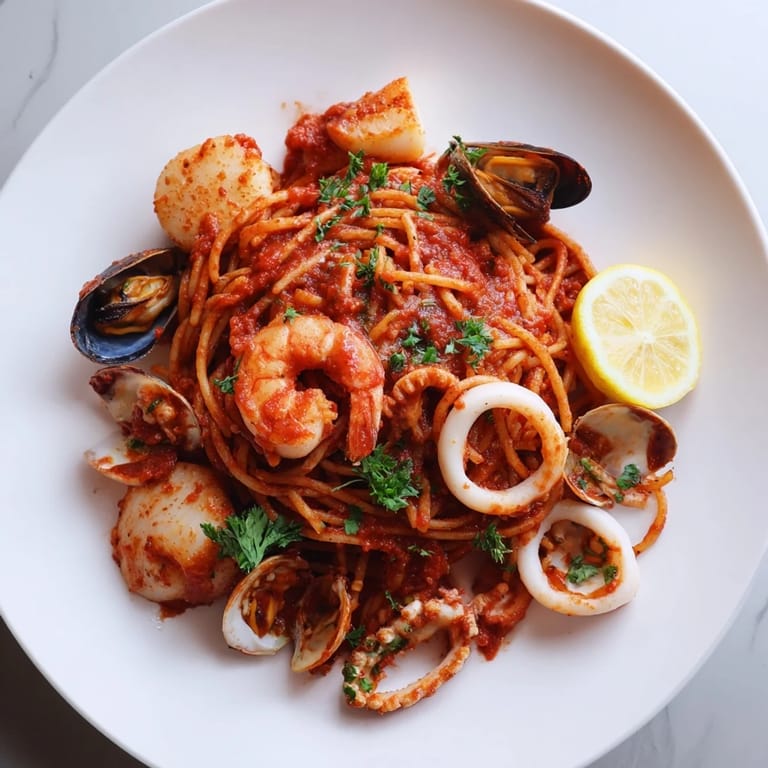
Save Cooking this dish is less about following steps and more about understanding a rhythm—the slow build of the sauce, the quick dance of the seafood, the moment everything comes together. It's the kind of meal that makes you feel resourceful and proud, which is the best reason to cook anything.
Recipe FAQ
- → What types of seafood work best for this dish?
Large shrimp, mussels, squid rings, and sea scallops provide a balanced mix of textures and flavors ideal for the sauce.
- → Can I use other pasta varieties?
Spaghetti or linguine work well, but any long, thin pasta that holds sauce nicely is a great choice.
- → How do I prevent the mussels from being gritty?
Ensure mussels are thoroughly cleaned and debearded; discard any that remain closed after cooking.
- → Is there a way to adjust the sauce’s spice level?
Omit or reduce the red pepper flakes for a milder sauce, or add more for extra heat.
- → What can I serve with this seafood pasta?
A crisp Italian white wine like Pinot Grigio complements the dish beautifully, as do simple green salads or crusty bread.