 Save
Save The first time I understood that a plate could be meditation, I was standing in a restaurant kitchen watching a chef arrange two identical piles of vegetables on a long board. There was something almost musical about it—the rhythm of placing, mirroring, leaving silence in the middle. I went home that night and tried it myself, and suddenly my kitchen felt different, quieter, more intentional. This is what became The Zen Balance for me: a reminder that sometimes the most nourishing thing food can do is slow us down.
I made this for a friend who had been working too hard, who came over talking fast and thinking faster. We set the board down between us, and she actually stopped mid-sentence. We sat there for a while just looking at it before we ate anything. That's when I knew this wasn't just about the food—it was about permission to pause.
Ingredients
- Fresh cucumbers: 8 slices of crisp, cool cucumber are the foundation—their crunch and subtle sweetness anchor everything else.
- Baby carrots: 8 of them, tender and sweet, their natural color doing half the visual work for you.
- Radishes, halved: 8 halves bring a peppery snap and that brilliant pink that makes the whole board come alive.
- Goat cheese: 60 grams shaped into small rounds, creamy and tangy, the one ingredient that ties all the elements together.
- Gluten-free crackers: 8 crackers give you something to build on, texture that complements rather than overwhelms.
- Roasted almonds: 30 grams scattered across—they add earthiness and a quiet crunch that surprises you.
- Seedless red grapes: 8 of them, small bursts of sweetness that balance the savory elements perfectly.
- Fresh herbs: Chives or dill for garnish, the final touch that adds aroma and reminds you this is alive, not static.
Tired of Takeout? 🥡
Get 10 meals you can make faster than delivery arrives. Seriously.
One email. No spam. Unsubscribe anytime.
Instructions
- Find your canvas:
- Choose a wooden or slate board at least 60 centimeters long—something that feels substantial and grounding. Wipe it clean and place it where the light hits it nicely.
- Build the first side:
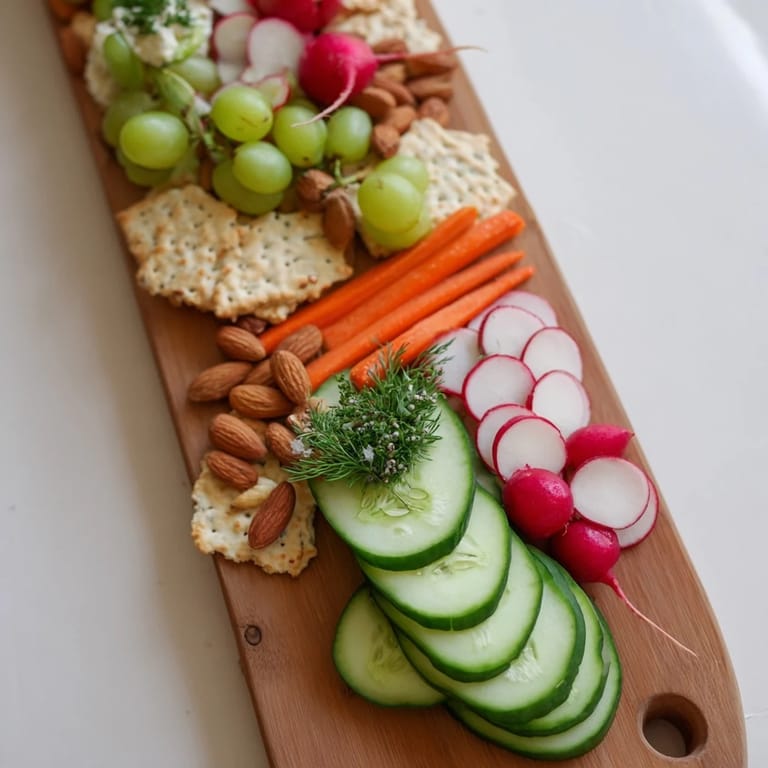
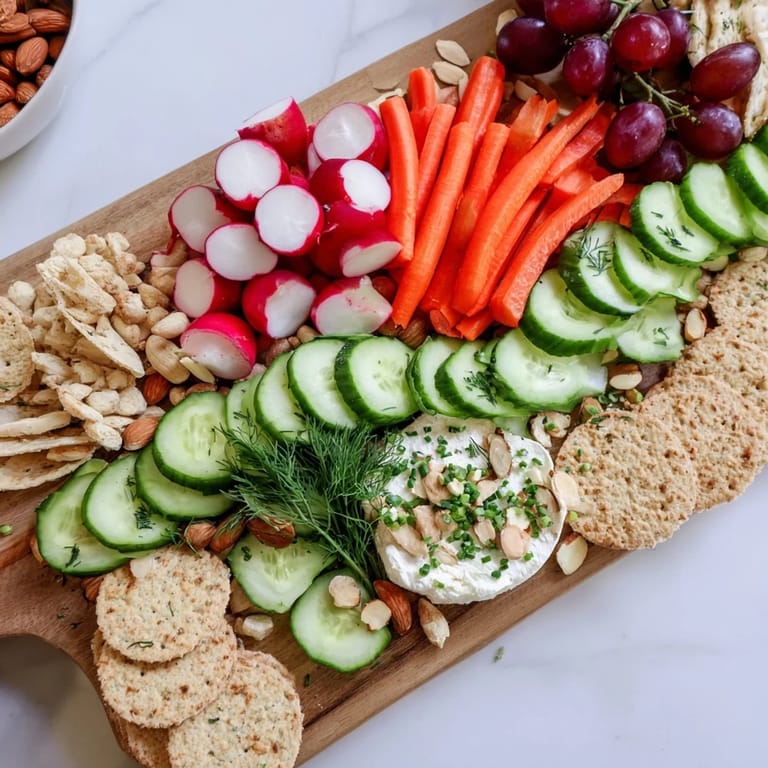
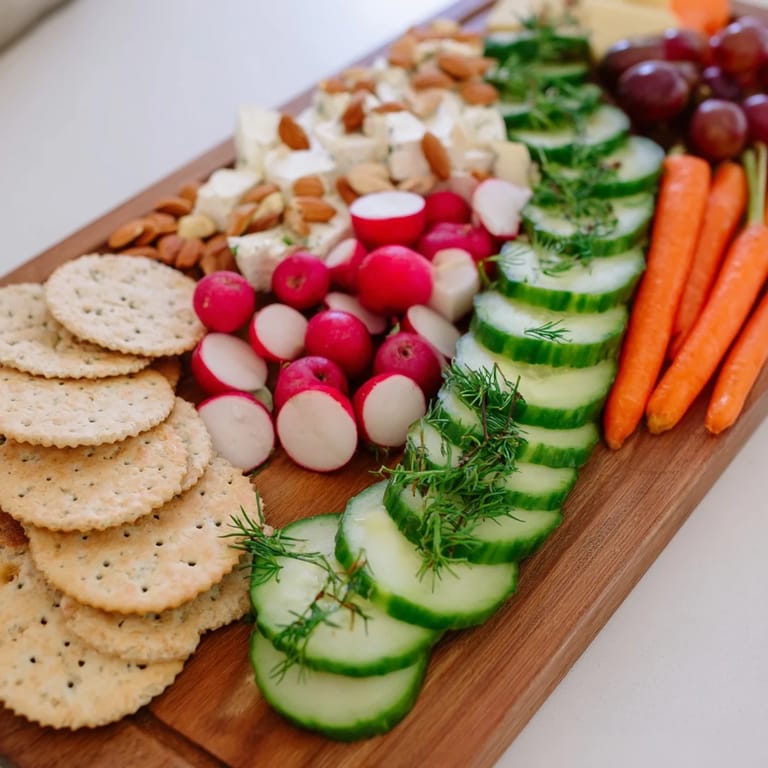
- At one end, arrange half of each ingredient into an intentional pile: lay down cucumber slices first as your base, add crackers, then layer in carrots, radishes, a few grapes, some goat cheese rounds, and a handful of almonds. Don't rush—think about color, texture, how each piece relates to the others.
- Mirror the opposite end:
- Walk to the other end of the board and recreate exactly what you just made with the remaining ingredients. This is where precision matters, where you're creating a conversation across empty space.
- Garnish with intention:
- Add a few sprigs of fresh herbs to each pile, tucking them in where they catch the eye and release their scent.
- Honor the space:
- Leave the center completely empty—this emptiness is part of the design, not a mistake or oversight. It's what makes the balance visible.
 Save
Save I remember my mother-in-law looking at this board for almost three minutes without saying anything, then taking a photograph. Later she told me it reminded her to slow down during meals, to actually see what she was eating instead of just consuming it. That's when I realized this recipe was doing something I didn't expect—it was teaching people how to be present.
The Art of Constraint
Limitations are where creativity hides. When you decide that every element must appear twice and symmetry is everything, you stop overthinking and start seeing. The board becomes a meditation on balance, and you realize how much calm can come from saying no to more and yes to enough. This is minimalism that doesn't feel sparse—it feels intentional, generous even in its restraint.
Pairing and Serving
A crisp white wine like Sauvignon Blanc is the only partner this deserves—its brightness echoing the freshness of the vegetables, its slight acidity cutting through the creaminess of the goat cheese. Serve this when you want people to actually talk, when phones disappear and time shifts. This is not casual eating; this is a small ceremony you're creating in your own home, and every detail matters because you decided it does.
Variations and Invitations
Once you understand the structure, you can play within it. Seasonal vegetables work beautifully—roasted beets in autumn, asparagus in spring, cherry tomatoes in summer. Swap the goat cheese for ricotta, the almonds for walnuts or pistachios. The recipe isn't rigid; it's a framework for mindfulness, a way of asking: what can I do with precision today?
- For vegans, use cashew cream or plant-based cheese rounds in place of goat cheese.
- Try toasted seeds like sunflower or pumpkin instead of almonds for different seasons and flavors.
- Make this hours ahead if needed, but add fresh herbs only just before serving so their scent is still alive.
 Save
Save This board is a reminder that food doesn't need to be complicated to be profound. Sometimes the most nourishing thing we can offer ourselves and others is simply presence, and a few perfect ingredients arranged with care.
Recipe FAQ
- → How should the ingredients be arranged for balance?
Arrange half of each ingredient in a neat pile on one end of a long board, then mirror the exact arrangement on the opposite end to emphasize symmetry and harmony.
- → Can this dish be made vegan-friendly?
Yes, substitute the goat cheese with a plant-based cheese alternative to maintain the flavor and texture while keeping the dish vegan.
- → What boards work best for serving this platter?
Use a long wooden or slate serving board, at least 60 cm in length, to allow distinct piles and display of the ingredients with balance and contrast.
- → How can garnishes enhance the dish?
Fresh herbs like chives and dill add bursts of color and aromatic notes, complementing the natural flavors and elevating the visual appeal.
- → Are gluten-free options available in this arrangement?
Yes, gluten-free crackers are included, making the dish suitable for gluten-sensitive individuals when using certified gluten-free products.
- → What wine pairs well with this fresh platter?
A crisp white wine such as Sauvignon Blanc complements the fresh vegetables, goat cheese, and nuts, enhancing the overall tasting experience.