 Save
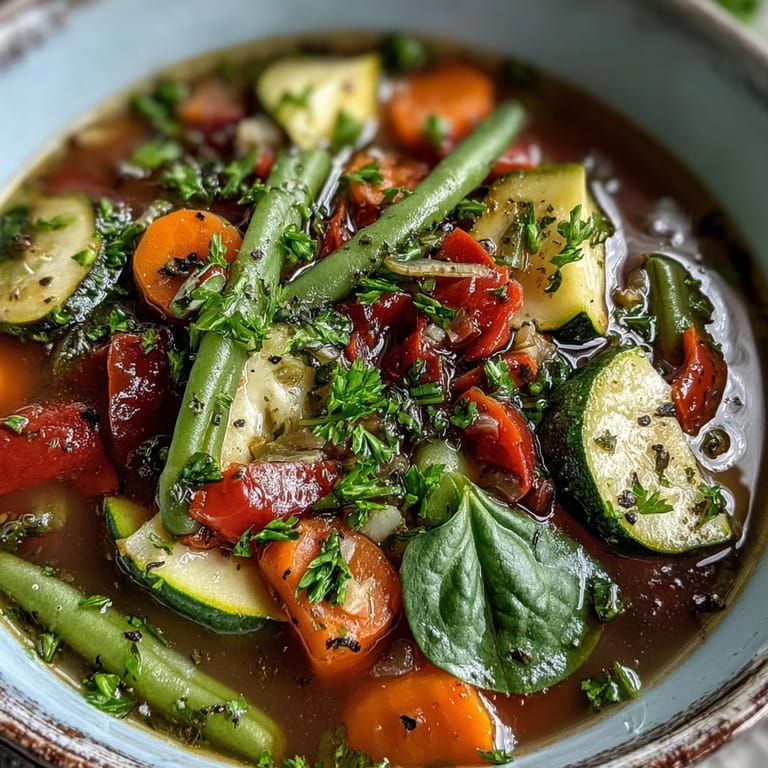
Save There's something about chopping vegetables on a quiet afternoon that settles the mind, and this Italian herb vegetable soup became my answer to those moments when the kitchen needed to smell like home. My neighbor Marco once mentioned that his grandmother would make a version of this using whatever the market had that day, and I realized soup didn't need a rigid recipe, just good instincts and herbs that knew what they were doing. The first time I made it, I burned the garlic slightly, but somehow that added a subtle depth that made the whole pot taste intentional. Now I make it whenever I want to feel grounded, or when friends drop by unexpectedly and I need something warm and honest.
I made this for a potluck during a particularly gray November, and honestly, I was nervous about bringing soup to a gathering full of elaborate dishes. But watching people come back for seconds, their shoulders dropping as they tasted it, made me realize that comfort food doesn't apologize. One friend asked for the recipe right there with the bowl still in her hands, and I knew I'd stumbled onto something worth repeating.
Ingredients
- Olive oil: This is your foundation, so use something you'd actually taste, not the cheapest bottle on the shelf.
- Onion and garlic: Sauté these slowly and let them become the aromatic backbone that makes people pause mid-conversation and ask what smells so good.
- Carrots, celery, and zucchini: These are your rhythm section, giving texture and substance while staying light enough to let the herbs shine.
- Red bell pepper: The sweetness here balances the earthiness of everything else, creating a gentle complexity.
- Green beans: Keep them in inch-long pieces so they stay tender but recognizable throughout cooking.
- Diced tomatoes with juices: Don't drain them, that liquid is flavor gold that brings acidity and depth.
- Vegetable broth: Use the kind that actually tastes like vegetables, not just salt and water.
- Potato: This adds body and makes the soup feel more like a meal than a starter.
- Baby spinach: Add it at the very end so it wilts but keeps its color and personality.
- Dried oregano, basil, thyme, and rosemary: These herbs are the soul of the soup, so don't skimp and don't use them if they've been sitting in your cabinet for three years.
- Bay leaf: One is enough, and remember to fish it out before serving or you'll startle someone.
- Salt and black pepper: Taste as you go because this matters more than the recipe instructions.
- Cannellini beans (optional): If you add them, the soup becomes more substantial and almost creamy without any cream.
- Fresh parsley and Parmesan (optional): These are your final word, the garnish that says you cared enough to finish the thought.
Tired of Takeout? 🥡
Get 10 meals you can make faster than delivery arrives. Seriously.
One email. No spam. Unsubscribe anytime.
Instructions
- Start with heat and patience:
- Warm the olive oil in a large pot over medium heat and let it become fragrant before adding the onion and garlic. Sauté them gently for two to three minutes, listening for the soft sizzle and breathing in that smell that signals good things are beginning.
- Build your vegetable foundation:
- Add the carrots, celery, zucchini, red bell pepper, and green beans, stirring occasionally as they soften over five to six minutes. You're not cooking them through yet, just coaxing them to release their flavors into the pot.
- Bring the soup to life:
- Pour in the diced tomatoes with their juices, vegetable broth, and diced potato, then sprinkle in all the dried herbs, the bay leaf, salt, and pepper. Stir everything together and let the aroma wash over you, because this is the moment the kitchen becomes something special.
- Simmer and let time do its work:
- Bring the soup to a boil, then lower the heat and let it simmer uncovered for twenty to twenty-five minutes until the vegetables are tender enough to taste like they melted into the broth. Check them gently with a fork and taste the broth; it should taste warm and complex, not just hot.
- Add beans if you're using them:
- Stir in the drained cannellini beans and let them warm through for about five minutes, which brings a subtle creaminess to the whole pot.
- Finish with spinach:
- Remove and discard the bay leaf, then add the baby spinach and let it wilt for one to two minutes, which takes less time than you'd think. The green brightness it brings is worth waiting for.
- Taste and adjust:
- This is non-negotiable; taste the soup and adjust the salt, pepper, and herbs until it tastes like home to you. It might need another pinch of oregano or just more salt, and only you know the answer.
- Serve with intention:
- Ladle the soup into bowls and finish with fresh parsley and Parmesan if you'd like, letting each person decide how much garnish feels right. The warmth of the bowl in your hands is part of the whole experience.
 Save
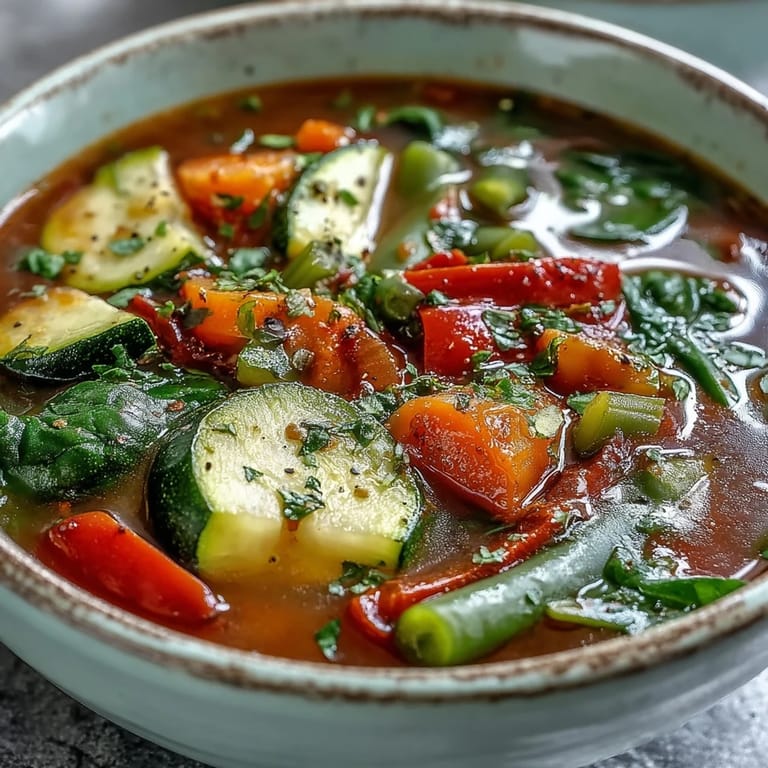
Save I've learned that this soup brings people together in a way that fancier dishes sometimes don't, maybe because everyone has a memory of vegetable soup that felt like being cared for. The moment someone asks for seconds or wants to know how you made it taste so effortless, you realize you've given them more than lunch.
Why This Soup Deserves a Regular Spot in Your Rotation
There's a gentleness to this soup that belies how much flavor is happening in each spoonful, and that balance is what keeps people coming back. It's the kind of recipe that improves when you're not rushing, when you can actually smell each layer developing and adjust as you go. Once you've made it a couple of times, you'll stop checking the recipe and start trusting your instincts, which is when cooking stops feeling like following instructions and becomes something closer to conversation.
Making It Your Own and Building On It
The beautiful thing about this soup is that it's a starting point rather than a destination, so don't be afraid to add small pasta like ditalini or orzo during the last ten minutes if you want something more substantial. Some people swear by adding a splash of balsamic vinegar at the end, which deepens everything without making it taste like balsamic vinegar, or a pinch of red pepper flakes if you want a gentle warmth. I once added a small can of white beans instead of cannellini just because that's what I had, and it was honestly perfect.
Storing and Freezing So You Always Have Comfort On Hand
This soup is one of those rare dishes that actually tastes better the next day once the flavors have had time to settle and deepen in the refrigerator. It also freezes beautifully if you let it cool completely first, which means you can make a massive batch on a Sunday and gift your future self several easy dinners. The spinach holds up surprisingly well through freezing, and when you reheat, taste again and adjust the seasoning because time sometimes softens flavors in ways you didn't anticipate.
- Cool the soup completely before freezing, and store it in flat containers so it thaws faster when you need it.
- Reheat gently over medium heat and add a splash of broth or water if it's thickened too much, stirring occasionally so nothing catches on the bottom.
- Fresh herbs and cheese should always be added after reheating so they taste bright and intentional rather than tired.
 Save
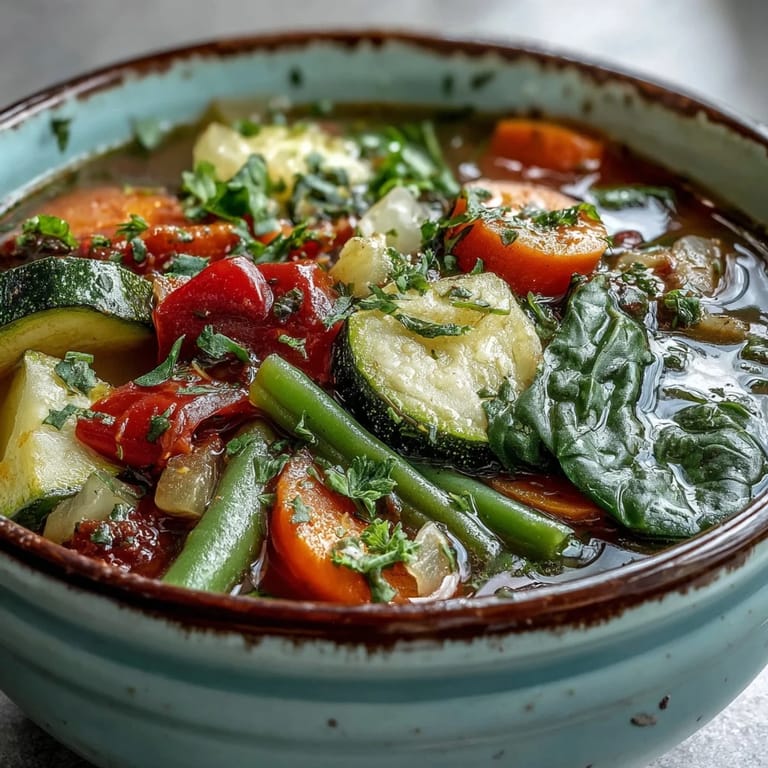
Save This Italian herb vegetable soup is proof that the best meals are often the simplest ones, made with attention and honesty. Make it whenever you need to feel grounded or want to remind someone that you're thinking of them.
Recipe FAQ
- → Can I make this soup ahead of time?
Absolutely. This soup tastes even better the next day as the flavors have time to develop. Store in an airtight container in the refrigerator for up to 4 days. Reheat gently on the stove, adding a splash of broth if needed.
- → Is this soup freezer-friendly?
Yes, it freezes beautifully. Cool completely before transferring to freezer-safe containers. It will keep for up to 3 months. Thaw overnight in the refrigerator and reheat on the stove. The vegetables may soften slightly but the flavor remains excellent.
- → Can I add pasta to make it more filling?
Certainly. Small pasta shapes like ditalini, orzo, or small shells work wonderfully. Add about 1 cup of dry pasta during the last 10 minutes of cooking. Keep in mind that pasta will continue to soften in leftovers, so you may prefer to cook it separately and add when serving.
- → What other vegetables can I use?
This soup is very versatile. Try adding chopped kale or Swiss chard instead of spinach, or substitute butternut squash for the potato. Fresh green peas, corn, or diced eggplant also work well. Use whatever vegetables are in season or what you have on hand.
- → How can I make this soup more protein-rich?
The cannellini beans add about 15 grams of protein. You can also add lentils, chickpeas, or white beans. For a non-vegetarian version, stir in cooked sausage, shredded chicken, or ground beef during the last 10 minutes of simmering.
- → Can I use dried herbs instead of fresh?
This version uses dried herbs which work perfectly for long-simmered soups. If using fresh herbs instead, add about three times the amount—so 1 tablespoon each of fresh oregano, basil, and thyme. Add delicate fresh herbs like parsley and basil at the very end to preserve their bright flavor.