 Save
Save My sister called me on a gray Thursday afternoon asking if I could bring dinner to her place—she had just moved into a new apartment and the kitchen felt empty and unfamiliar. I wanted something that felt like home, warming, and didn't require a dozen pans scattered across her counters. This creamy veggie pot pie pasta came together in one skillet, tasting like every comfort meal I'd ever loved but without the fuss of building it in stages. It became her new favorite, and now whenever she's had a rough day, she texts me asking if I remember how to make that golden-topped pasta.
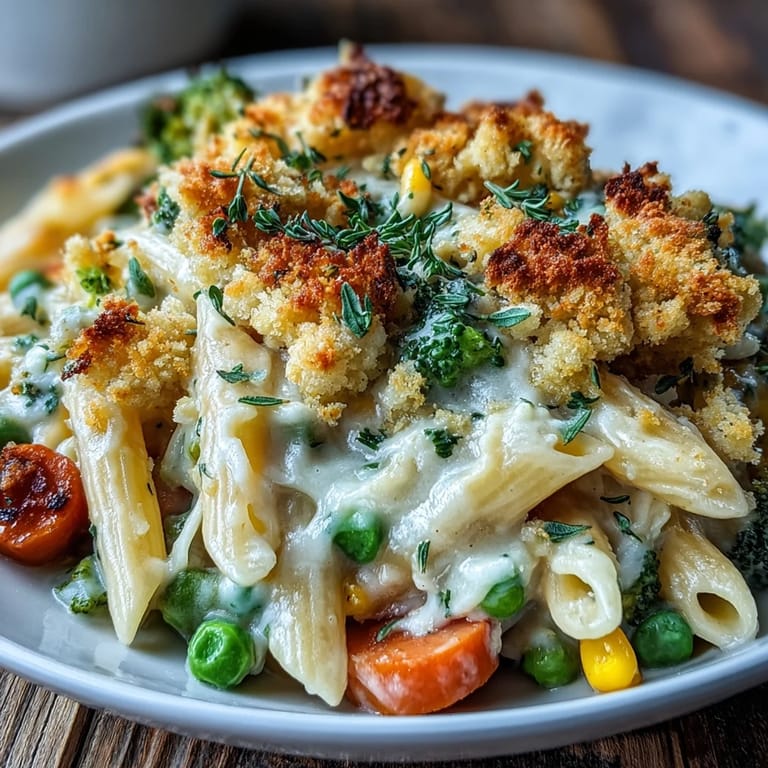
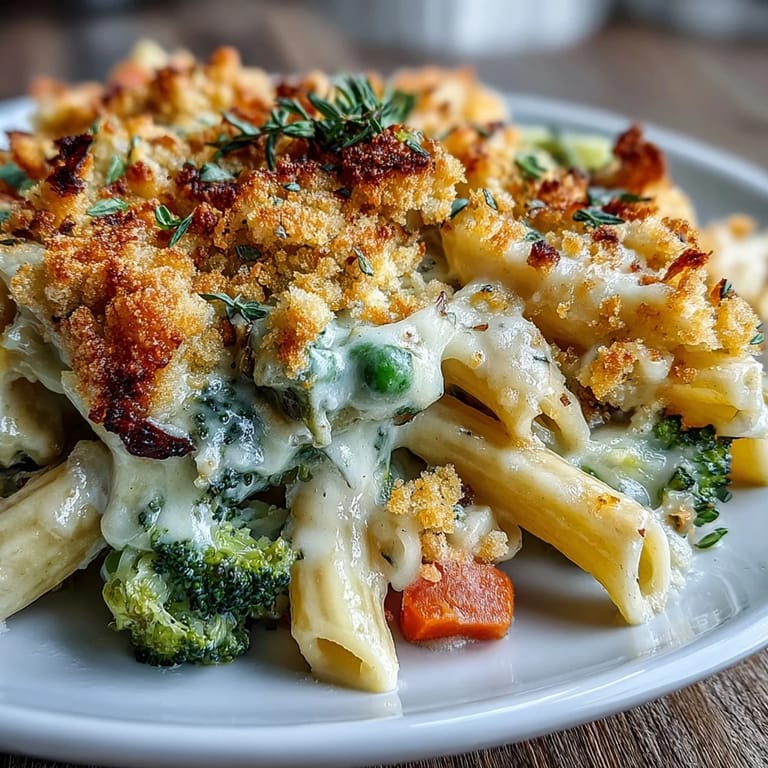
A friend's kid once told me this tasted like "what a pot pie wishes it could be," which somehow became the highest compliment I'd ever received in a kitchen. There's something about serving food from a cast iron that's still sizzling, with steam rising up and that golden crust catching the light, that makes people slow down and actually be present at the table. That moment when everyone goes quiet except for the sound of forks—that's when you know you've made something worth making.
Ingredients
- Olive oil: Just a tablespoon to start the vegetables without burning them—it lets the onions soften without any bitterness creeping in.
- Onion, garlic, carrots, celery, and potatoes: This is your flavor foundation, the same aromatic base that built centuries of soups and stews for a reason.
- Frozen peas and corn: Don't skip these out of some idea that fresh is always better—frozen vegetables here are actually perfect, tender without becoming mushy, and they arrive at your pan ready to go.
- Broccoli florets: Optional, but they add a slight earthiness and their texture holds up beautifully under the creamy sauce.
- Short pasta: Penne, rotini, or shells work best because they catch and hold the sauce in all their little crevices and curves.
- Unsalted butter and all-purpose flour: These two make your roux, the silky base that thickens everything and makes it feel luxurious without any cream.
- Vegetable broth and milk: Together they create the body of the sauce, and the combination keeps it from feeling too heavy.
- Heavy cream: The final touch that rounds everything out and gives it that pot pie richness you're chasing.
- Thyme, sage, and nutmeg: These herbs whisper in the background, making people ask what you did differently without being able to pinpoint it.
- Panko breadcrumbs: They toast up golden and stay crispy, completely different from those sad wet crumbs that sometimes happen on baked dishes.
Tired of Takeout? 🥡
Get 10 meals you can make faster than delivery arrives. Seriously.
One email. No spam. Unsubscribe anytime.
Instructions
- Get your oven ready:
- Turn on your broiler to high so it's preheating while you work on everything else.
- Build your vegetable base:
- Heat olive oil in a large, deep skillet over medium heat and add your onion, garlic, carrots, celery, and potatoes. Let them soften for about five to seven minutes, stirring occasionally so they cook evenly and start releasing their sweetness into the pan.
- Add the frozen vegetables:
- Toss in your broccoli, peas, and corn, giving everything a good stir. They need just two minutes to warm through and marry with the softer vegetables.
- Make your roux:
- Push everything to the side of the pan, add butter to the cleared space, and once it's melted, sprinkle your flour over it while whisking constantly for about a minute. You'll see it transform from a loose mixture into something that looks almost like wet sand—that's exactly right.
- Build the sauce:
- Slowly pour in your vegetable broth while whisking to break up any lumps, then add your milk and cream, stirring until everything is smooth and the roux has disappeared into the liquid. Bring it to a gentle simmer and watch how it thickens as you stir.
- Cook the pasta in the sauce:
- Add your pasta along with the salt, pepper, thyme, sage, and nutmeg. Stir everything together, cover the skillet, and let it simmer for twelve to fourteen minutes, giving it a stir every couple of minutes so the pasta cooks evenly and the sauce thickens around it.
- Make the topping:
- While the pasta's cooking, mix your panko with melted butter, parsley, garlic powder, and a pinch of salt in a small bowl until the breadcrumbs are evenly coated and smell toasted and savory.
- Finish under the broiler:
- Once your pasta is tender and the sauce has thickened to coat a spoon, sprinkle your breadcrumb mixture evenly across the top. Slide the whole skillet under the broiler for two to three minutes, watching it like you're standing guard, until the crumbs turn golden and crispy.
- Rest and serve:
- Let it sit for just a minute before serving so the sauce settles and the topping stays crispy instead of getting soggy from the steam.
 Save
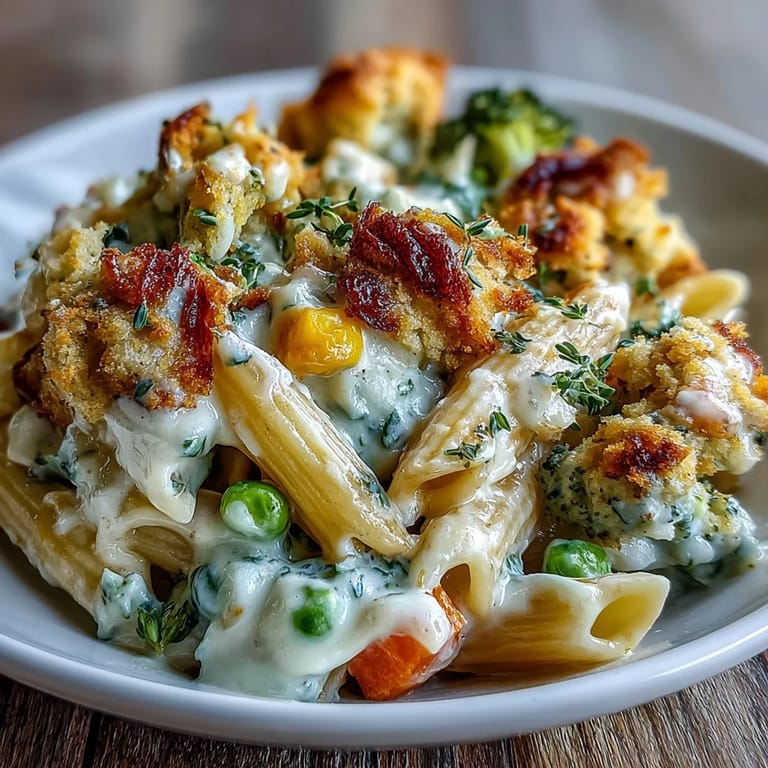
Save There's a moment, usually around day two when someone reheats this as leftovers, where they text you saying the pasta somehow tastes even better the next day. That's when you know you've made something that sticks around, that improves with a little time, that people actually think about when they're planning their week. Food that does that is the kind worth mastering.
Customizing Your Version
This recipe is forgiving enough to meet you wherever you are in your kitchen or pantry. If you don't have celery, your dish won't suffer—the onion and carrots carry enough flavor to hold everything up. Mushrooms, zucchini, or green beans swap in seamlessly, and I've even made this with leftover roasted root vegetables from a previous dinner. The beauty is that you're not locked into a specific ingredient list; you're learning a technique for turning whatever vegetables you have into something creamy and comforting.
Making It Vegan or Dairy-Free
Swap your butter for plant-based butter, use unsweetened plant milk and coconut cream instead of dairy, and everything works exactly the same way. The roux still thickens, the sauce still becomes silky, and the breadcrumb topping still crisps up beautifully. I had a friend try this version expecting it to taste like an apology for using substitutes, and instead she said she couldn't taste any difference—it tasted like comfort, and that was enough.
Storage and Reheating
This keeps in the refrigerator for three days, and honestly, it gets better as the flavors deepen and the pasta absorbs more of the sauce. Reheat it gently on the stovetop over medium-low heat, adding a splash of milk if it's gotten too thick, and don't broil the topping again—just warm it through and it'll be perfect. You can also freeze the pasta portion (without the topping) for up to a month, though the cream-based sauce can sometimes separate slightly when thawed, so just whisk it smooth over low heat and it comes back together.
- Make the breadcrumb topping fresh right before serving if you're reheating, so it stays crispy.
- Store any leftover topping in an airtight container for up to five days and use it on roasted vegetables or salads.
- If you're cooking for guests, you can prepare everything up to the broiling step in advance and finish it just before eating.
 Save
Save This is the kind of dish that reminds you why you cook in the first place, why a full table and hot food still matters even on ordinary weeknights. Make it soon, and make it for people you want to sit with a little longer.
Recipe FAQ
- → Can I make this dish gluten-free?
Yes, simply use gluten-free pasta, gluten-free breadcrumbs, and substitute the all-purpose flour with a 1:1 gluten-free flour blend. The sauce will still thicken beautifully.
- → How do I store leftovers?
Store in an airtight container in the refrigerator for up to 4 days. Reheat gently on the stovetop with a splash of milk to restore creaminess. The crumb topping will soften but remain tasty.
- → Can I freeze this dish?
Freezing works best before adding the crumb topping. Cool the pasta mixture completely, transfer to freezer-safe containers, and freeze for up to 3 months. Thaw overnight in the refrigerator, reheat, and add fresh crumbs before broiling.
- → What vegetables can I substitute?
Feel free to use whatever vegetables you have on hand. Zucchini, green beans, mushrooms, bell peppers, or diced sweet potatoes all work wonderfully. Just keep the total amount around 5 cups for the right consistency.
- → Can I add protein to make it non-vegetarian?
Absolutely. Diced cooked chicken, turkey, or ham can be stirred in during the last few minutes of cooking. For a seafood variation, try adding shrimp or cubes of white fish during the final 5 minutes.