 Save
Save My coworker brought these Korean turkey naan pockets to lunch one Tuesday, and I spent the next twenty minutes trying not to make a mess while everyone watched me devour one. The warm bread gave way to this perfectly seasoned, gochujang-kissed turkey, and suddenly I understood why she'd been raving about them all week. What struck me most was how something so craveable came together in less time than it took to order delivery. I went home that evening and immediately raided my pantry, determined to recreate that exact moment.
My partner was skeptical about anything described as Korean fusion at first, skeptical in that way people get when they think you're overcomplicating dinner. But after one bite, they asked if I could make these every week, and that quiet approval meant more than any compliment ever could. Now whenever we're behind on time or need something that feels like a little celebration, these pockets happen in our kitchen.
Ingredients
- Ground turkey: The blank canvas here, mild enough to let the Korean flavors sing without overwhelming, and lean enough that you don't end up swimming in oil.
- Sesame oil: Use the toasted kind and don't skip this—it's where the entire flavor story begins the moment it hits the hot pan.
- Gochujang: Korean red chili paste that brings heat, depth, and a slight fermented funk that makes people ask what your secret ingredient is.
- Fresh ginger and garlic: These two do the heavy lifting for aroma, so mince them fine and don't be stingy with the amount.
- Soy sauce and rice vinegar: The balance keepers that prevent the dish from becoming one-note spicy.
- Honey: A small touch that rounds out the heat with subtle sweetness, learned this the hard way when I skipped it once.
- Naan bread: Warm it properly or it becomes chewy and disappointing, so treat this step like it matters because it does.
- English cucumber: The cooling element that every bite needs, thinly sliced so it doesn't overpower the filling.
- Mayonnaise: The gochujang mayo is where umami happens, so quality matters here.
- Scallions: Added at the very end so they stay bright and fresh rather than wilting into the filling.
Tired of Takeout? 🥡
Get 10 meals you can make faster than delivery arrives. Seriously.
One email. No spam. Unsubscribe anytime.
Instructions
- Bloom your aromatics:
- Heat sesame oil until it shimmers and just starts smoking slightly, then add the onion, garlic, and ginger together. You'll know it's ready when the smell hits you—that moment where your kitchen suddenly smells like something happening. Let it sauté for a full two minutes so the ginger releases its warmth.
- Brown the turkey:
- Crumble the ground turkey into the skillet in smaller pieces rather than large clumps, and resist the urge to stir constantly—let it sit for 30 seconds at a time so it actually develops color. The browning takes five to seven minutes depending on how wet your meat is, and that's the foundation for everything else tasting right.
- Build the sauce:
- Once the turkey is cooked through, pour in your soy sauce, gochujang, honey, and rice vinegar all at once, stirring constantly so the gochujang dissolves smoothly rather than clumping. The mixture should look glossy and coat the back of a spoon after two to three minutes, and it will smell so good you'll forget why you were ever ordering this frozen.
- Make the mayo:
- Whisk gochujang into mayonnaise gradually while adding lime juice, so you avoid any lumps and end up with a smooth, creamy sauce that's deeper red than typical mayo. This happens best in a small bowl with a regular whisk, not a blender.
- Warm your naan:
- If using store-bought naan, follow package instructions, but honestly a dry skillet over medium heat for 30 seconds per side gives you better control and slight browning. Don't let it sit long or it hardens into something almost inedible.
- Assemble with intention:
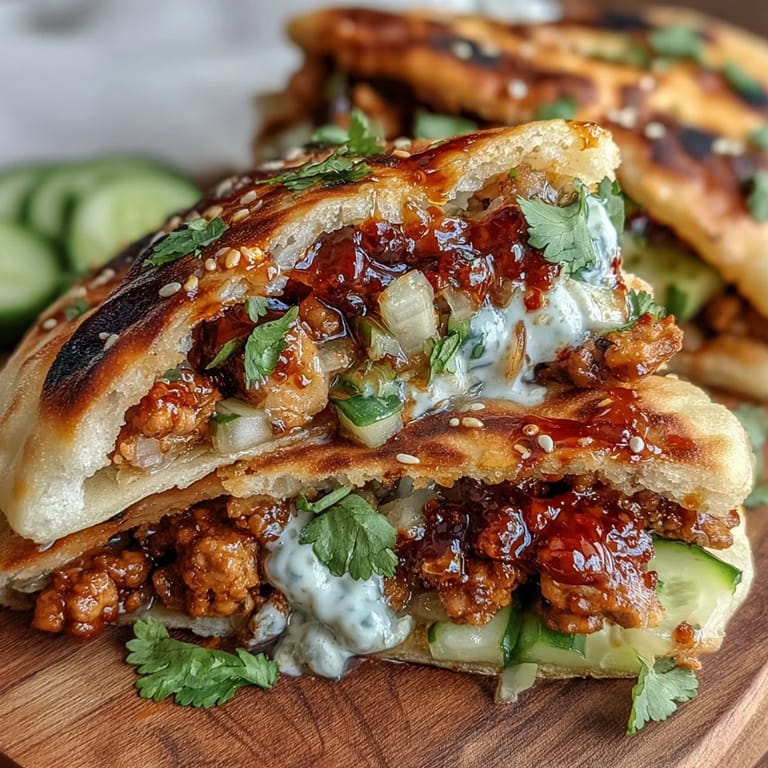
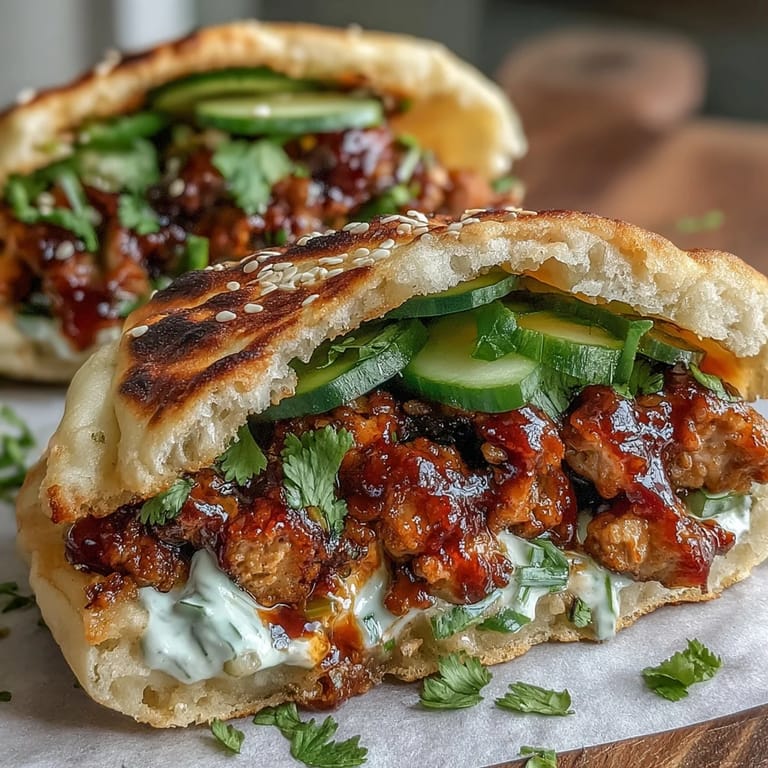
- Spread a generous spoonful of gochujang mayo on the inside of each warm naan—this is your base flavor, so don't be timid. Layer the turkey filling, then cucumber slices, then cilantro and sesame seeds if you have them, and fold the naan loosely so it holds together without being a stress to eat.
- Serve while everything is warm:
- These are best eaten immediately when the naan is still pliable and the turkey still steaming, so don't let them sit around waiting.
 Save
Save Last month, my daughter brought a friend over who said they didn't eat spicy food, and I made these anyway but with less gochujang in the filling. They ended up loving them and asking for the recipe, which felt like a small victory in proving that food doesn't have to be complicated to be memorable. That's when I realized these pockets work because they're approachable while still feeling special.
Why The Gochujang Mayo Changes Everything
The mayo is honestly where the magic lives, because it bridges Korean spice culture with something universally creamy and comforting. I used to make these with just mayo and gochujang on the side, and it was fine, but keeping it mixed means every bite has that balance already built in. Lime juice cuts through the richness, sesame oil adds nuttiness, and suddenly you're eating something that tastes both familiar and completely new.
Customizing Your Filling
The turkey isn't precious here—this recipe works just as well with ground chicken, ground beef, or even crumbled tofu if you're feeding vegetarians. I've made versions where I added a tablespoon of doenjang for deeper flavor, or crispy shiitake mushrooms for people who wanted something meatier. The soy and gochujang combination is flexible enough that you can play around and still end up with something delicious.
Building Your Side Plate
These pockets are filling enough to eat alone, but they shine when served alongside something cool and fermented like kimchi or quick-pickled vegetables. I always keep sliced cucumbers and cilantro on hand because they're the easiest way to add freshness without extra cooking steps. The sesame seeds aren't just decoration—they add a nutty crunch that your teeth actually register, making each bite more interesting.
- Kimchi on the side is non-negotiable if you want the meal to feel authentically Korean fusion rather than just naan with spiced meat.
- Toast your sesame seeds in a dry skillet for 30 seconds before sprinkling so they taste alive instead of flat and dusty.
- Keep extra gochujang mayo on the side for people who want to add more heat without your permission.
 Save
Save These naan pockets became my go-to when I need to feed people something that looks like I tried harder than I actually did. They've never disappointed anyone, including people who claim they don't like spicy food, which is the kind of reliable magic you hope for in a recipe.
Recipe FAQ
- → Can I make the turkey filling ahead of time?
Absolutely. Cook the turkey mixture completely and store it in an airtight container in the refrigerator for up to 3 days. Reheat gently in a skillet before assembling the naan pockets. The filling actually develops more flavor as it sits, making it perfect for meal prep.
- → What can I use instead of naan bread?
Try pita bread, flatbread, or even large flour tortillas as alternatives. Homemade naan works wonderfully if you have time. Just ensure whatever bread you choose can fold or wrap around the filling without tearing.
- → How can I make this dish dairy-free?
Use vegan mayonnaise in the gochujang mayo and ensure your naan is dairy-free (many store-bought versions contain milk or yogurt). The filling itself contains no dairy, making it naturally safe for dairy-free eaters.
- → Is gochujang very spicy?
Gochujang offers mild to moderate heat with a rich, fermented flavor profile. It's less spicy than fresh chili peppers but adds depth and umami. If you're sensitive to heat, start with half the amount and adjust to taste.
- → Can I use ground chicken or beef instead of turkey?
Both work beautifully. Ground chicken is lighter and cooks similarly to turkey. Ground beef adds more richness but may release more fat during cooking—simply drain excess before adding the sauce. Plant-based ground meat alternatives also work well for a vegetarian version.
- → What side dishes pair well with these naan pockets?
Serve with kimchi for authentic Korean flair, a simple cucumber salad dressed with rice vinegar, or roasted vegetables like broccoli or carrots. Miso soup also makes a light, complementary starter.