 Save
Save There's something about watching someone's face light up when they realize their dinner is literally served inside a roasted squash. A friend brought this to a potluck last autumn, and I remember thinking it was clever until I tasted it—the creamy, spiced chili mac contrasting with the sweet, tender squash flesh was unexpectedly perfect. That night convinced me that the best comfort food doesn't have to be complicated; it just needs to feel intentional and a little bit special.
I made this on a quiet Tuesday when my partner came home exhausted from work. Watching them go from tired to genuinely excited about dinner felt like a small victory in the kitchen. That moment taught me that sometimes the most nourishing thing you can offer isn't perfection—it's thoughtfulness wrapped in warm, filling food.
Ingredients
- Acorn squash (2 medium): The vessels that make this dish memorable—pick ones that feel heavy for their size, as that means more flesh and better texture when roasted.
- Olive oil (3 tbsp total): Use a decent quality here; it builds the base flavor for both the squash and the filling, so it matters more than you'd think.
- Yellow onion (1 small, diced): This is your aromatic foundation—don't skip the step of letting it soften first; it sweetens as it cooks and holds the other flavors together.
- Garlic (2 cloves, minced): Mince it fresh rather than using jarred; the difference in brightness is noticeable once everything simmers together.
- Red bell pepper (1, diced): Adds natural sweetness and color—if you can't find red, orange works just fine, though it's slightly sweeter.
- Jalapeño (1, seeded and minced): This is where you control the heat level; leave more seeds in if you want genuine fire, remove them all for just a whisper of spice.
- Kidney beans and black beans (1 can each, drained and rinsed): Rinsing them matters because it removes excess sodium and starch, making the chili less gummy and more refined.
- Diced tomatoes (1 can, 14 oz): Don't drain these—the juice becomes part of your sauce and keeps everything creamy without extra liquid.
- Vegetable broth (1 cup): Low-sodium if you can find it, since you're seasoning separately and the squash itself adds subtle richness.
- Chili powder, cumin, and smoked paprika: This trio is what gives the dish its warm, rounded spice profile—don't use pre-mixed chili seasoning packets, as they're often too salty and lacking in depth.
- Hot honey (1 tbsp): The secret weapon that makes people pause and wonder what they're tasting; if you don't have it, warm regular honey with hot sauce until it's smooth and glossy.
- Elbow macaroni (1 cup dry): Standard size works best—it holds sauce in every curve and cooks predictably, so you won't end up with mushy pasta.
- Sharp cheddar cheese (1 cup shredded): Sharp, not mild—the tang cuts through the richness and prevents the dish from feeling one-note and heavy.
- Fresh cilantro (2 tbsp chopped, for garnish): This is optional but recommended; it adds brightness and makes the dish feel finished rather than just filling.
Tired of Takeout? 🥡
Get 10 meals you can make faster than delivery arrives. Seriously.
One email. No spam. Unsubscribe anytime.
Instructions
- Prepare and roast the squash:
- Preheat your oven to 400°F and line a baking sheet with parchment paper. Cut your acorn squash in half lengthwise, scoop out the seeds with a sturdy spoon, then brush the cut sides generously with olive oil and season with salt and pepper. Place them cut-side down on the sheet and slide them into the oven—they'll roast for 35 to 40 minutes until the flesh yields easily when you poke it with a fork, and the kitchen will smell like toasted, caramelized autumn.
- Build the flavor base:
- While the squash roasts, warm a large skillet over medium heat and add a tablespoon of olive oil. Dice your onion and let it cook for about 3 minutes, stirring occasionally, until it becomes translucent and soft—this is where the sweetness begins. Add your minced garlic, diced red bell pepper, and seeded jalapeño, then cook everything together for another 4 to 5 minutes, stirring frequently until the peppers soften and the garlic releases its fragrance.
- Combine the chili elements:
- Pour in both cans of drained and rinsed beans, the canned diced tomatoes with their juice, the vegetable broth, and all your spices—chili powder, cumin, smoked paprika, salt, and pepper. Add that tablespoon of hot honey and stir everything together until it's well combined. Bring the mixture to a gentle simmer, where little bubbles break the surface occasionally, and let it bubble quietly for a few minutes so the spices can bloom and deepen.
- Cook the pasta in the sauce:
- This is the clever part—stir in your dry elbow macaroni right into the simmering mixture without cooking it separately. Cover the skillet and let it cook for 8 to 10 minutes, stirring occasionally to prevent sticking, until the pasta is tender and has absorbed much of the liquid. If it looks too thick as it cooks, splash in a little more broth or water; the sauce should be creamy and coating, not soupy.
- Finish with cheese and heat:
- Remove the skillet from heat and stir in your shredded sharp cheddar cheese until it's completely melted and the mixture becomes wonderfully creamy and cohesive. Taste it and adjust the seasoning if needed—sometimes you'll want just a pinch more salt or another small drizzle of hot honey for brightness.
- Fill the roasted squash:
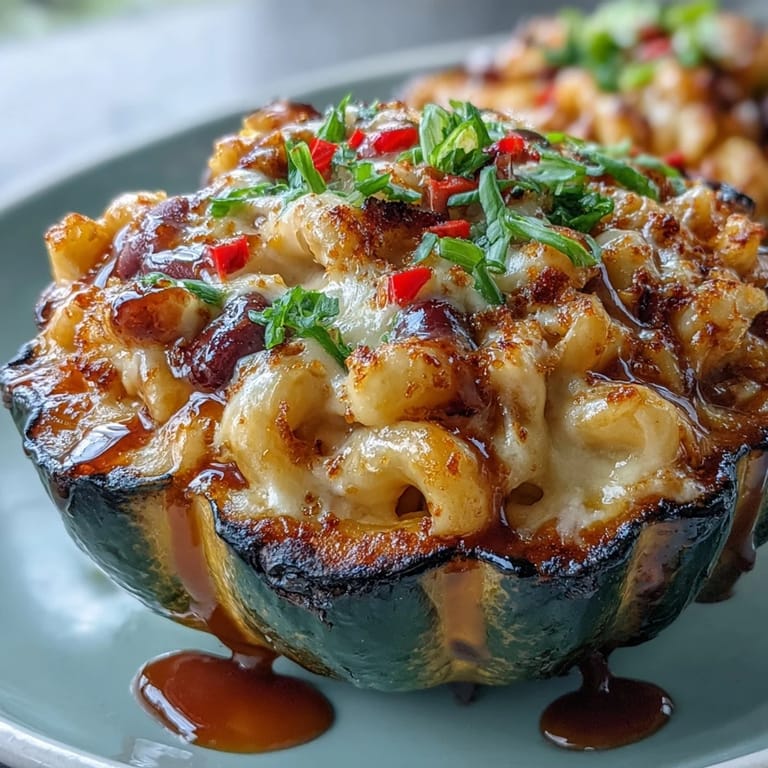
- Once the squash halves are tender and cool enough to handle safely, carefully flip them cut-side up. Using a large spoon, divide the chili mac generously among the four squash halves, filling them until they're full but not overflowing. If you're serving them immediately, they'll be warm and steamy; if you're plating for guests, you can prep them a few minutes ahead and cover loosely with foil.
- Garnish and serve:
- Just before serving, drizzle each stuffed squash with a little extra hot honey—just a small spiral—and scatter the fresh cilantro over top. This final touch adds brightness, visual interest, and a subtle reminder that heat and sweetness work beautifully together.
 Save
Save The first time I made this for my family, my skeptical mother actually went back for seconds, which almost never happens. There's something about eating directly from the squash—you get that tender flesh with each bite mixed into the chili mac—that makes the whole experience feel less like dinner and more like a small occasion worth celebrating.
Why the Squash Makes the Difference
Acorn squash isn't just a pretty vessel; it contributes real flavor to the dish. As it roasts, the natural sugars concentrate and caramelize slightly, creating this subtle sweetness that plays against the spicy, savory chili mac. When you scoop a bite that includes both the tender squash flesh and the creamy beans and pasta, you're getting layers of texture and taste that wouldn't exist if you simply plated everything on a bowl.
Balancing Heat and Sweetness
The hot honey is the secret that makes people lean in and ask what they're tasting. It's not about setting your mouth on fire; it's about adding a gentle warmth and a subtle sweetness that rounds out the earthiness of the beans and spices. Some people assume more heat means more jalapeño, but honestly, the combination of a moderate amount of jalapeño plus the hot honey creates better balance—you get complexity instead of just a one-note burn.
Make-Ahead and Storage Wisdom
This dish actually tastes even better the next day, after the flavors have mingled overnight in the refrigerator. You can make the chili mac completely separate from the squash, store them both in airtight containers, and assemble everything fresh when you're ready to eat. Just gently reheat the chili mac on the stove with a splash of water or broth to restore its creamy texture, and warm the squash halves in a 350°F oven for about 10 minutes.
- If you're making this for a crowd, prep the squash halves earlier in the day, cover them loosely, and fill them just before serving so they stay warm.
- Leftover chili mac is wonderful on toast, stirred into eggs for breakfast, or eaten straight from the container as a late-night snack.
- This recipe freezes beautifully for up to two months if you store it in a freezer-safe container, though I recommend freezing the components separately for easier reheating.
 Save
Save This is one of those dishes that proves you don't need meat or complicated techniques to feel satisfied and comforted. Make it once, and it becomes something you return to when you want to impress people or simply take care of yourself.
Recipe FAQ
- → Can I make this ahead of time?
Yes, you can roast the squash and prepare the chili mac filling up to a day in advance. Store them separately in the refrigerator, then reheat the filling, stuff the squash, and warm everything in a 350°F oven for 15-20 minutes before serving.
- → What if I can't find hot honey?
Regular honey works perfectly—simply add a pinch of cayenne pepper or a few dashes of hot sauce to achieve that sweet-spicy balance. You can adjust the heat level to your preference.
- → Can I use a different type of squash?
Delicata or butternut squash are excellent alternatives. Delicata requires less roasting time, while butternut may need slightly longer. Just adjust roasting until tender when pierced with a fork.
- → How do I store leftovers?
Store stuffed squash halves in an airtight container in the refrigerator for up to 4 days. Reheat in a 350°F oven for 15-20 minutes or microwave individual portions until warmed through.
- → Can I freeze this dish?
You can freeze the chili mac filling separately for up to 3 months. Thaw overnight in the refrigerator before reheating. The squash is best fresh, as freezing can affect its texture.
- → Is this suitable for meal prep?
Absolutely. Prepare the components on Sunday and assemble individual portions throughout the week. The flavors actually improve after a day or two as the spices meld together.