 Save
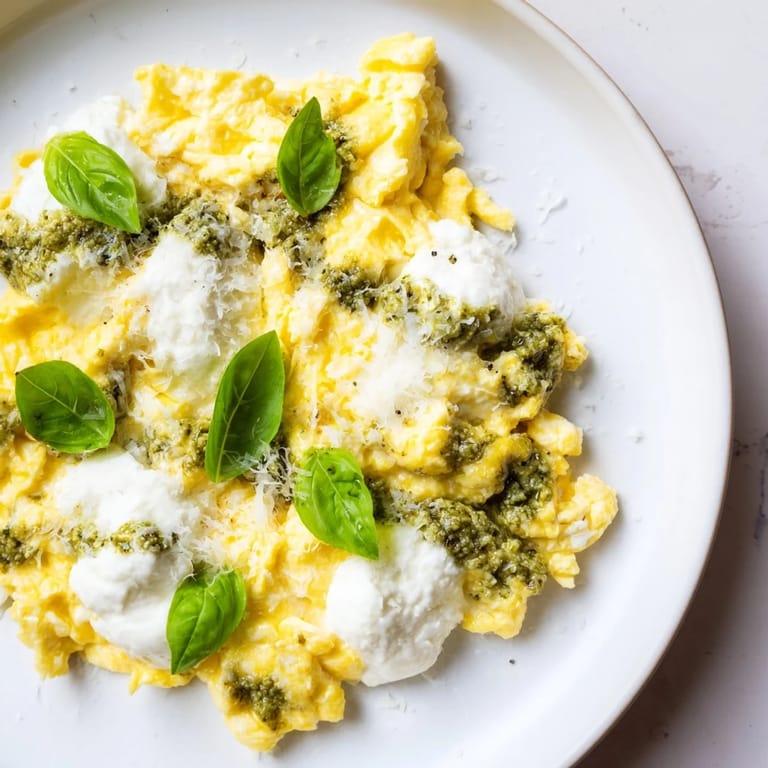
Save There's something about the smell of basil hitting a hot pan that stops me in my tracks every time. I stumbled onto these pesto cottage cheese eggs on a morning when I was tired of my usual scramble routine and had nearly empty containers staring back at me from the fridge. That combination of creamy cottage cheese, pesto, and soft eggs seemed improbable until the first bite, which completely changed how I think about breakfast.
I made this for a friend who'd been skeptical about cottage cheese in anything sweet or savory, and watching her expression shift from doubt to genuine enjoyment was worth more than any compliment. She came back the next week asking if I could teach her the technique, which meant everything to me because cooking together turned into one of our favorite Sunday rituals.
Ingredients
- Eggs: Four large ones give you a fluffy base that won't feel dense or heavy, and they scramble more gently when you resist the urge to rush.
- Milk or cream: Two tablespoons optional but honestly worth it because it keeps everything silky even if you second-guess your timing.
- Cottage cheese: Half a cup of full-fat tastes richer, but low-fat works beautifully if that matters to you.
- Basil pesto: Two tablespoons of whatever kind you trust because the heat will soften any harsh edges.
- Salt and pepper: A quarter teaspoon salt and an eighth teaspoon black pepper bring everything into focus.
- Fresh basil leaves, extra pesto, Parmesan, and crusty bread: These aren't mandatory but they transform a quick breakfast into something you actually remember eating.
Tired of Takeout? 🥡
Get 10 meals you can make faster than delivery arrives. Seriously.
One email. No spam. Unsubscribe anytime.
Instructions
- Whisk your foundation:
- Crack four eggs into a bowl with milk if you have it, then whisk until the yolks and whites are completely married together. Season with salt and pepper.
- Warm the pesto gently:
- Heat your nonstick skillet over medium-low and add the pesto, letting it warm for about thirty seconds until you can smell the basil. This wakes up the flavors without burning anything.
- Begin the scramble:
- Pour in your egg mixture and let it sit undisturbed for ten to fifteen seconds so the bottom can set slightly. Then gently push the eggs from the edges toward the center with a spatula, moving slowly.
- Fold in the cottage cheese:
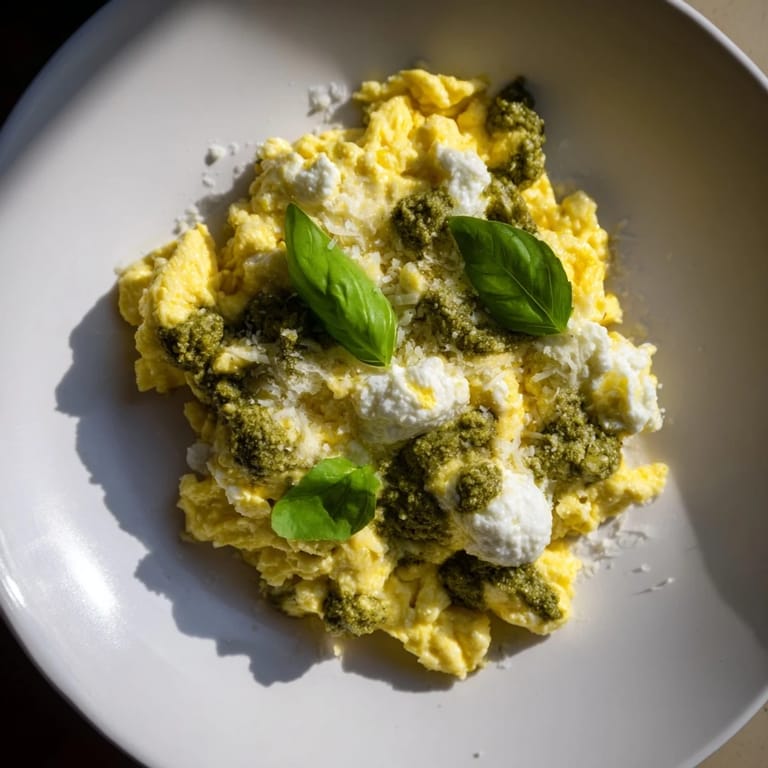
- When the eggs are just beginning to set but still look creamy on top, add your cottage cheese and fold it in gently. Stop the moment everything is warmed through and the texture turns soft and broken.
- Remove and serve immediately:
- Take the pan off the heat because these eggs will keep cooking from residual warmth and you want them creamy, not rubbery. Plate them while they're still steaming.
 Save
Save The first time I brought these eggs to a breakfast gathering, someone asked for the recipe before they'd even finished their plate. That moment taught me that simple food made with intention has a way of surprising people, and I've been making these ever since.
Why Pesto Makes All the Difference
The basil pesto isn't just a flavoring here—it's the whole personality of the dish. When you warm it first, the aromatics release and create this fragrant foundation that transforms plain scrambled eggs into something that feels intentional. I've tried skipping this step and the eggs taste flat no matter what else is in the pan, so I never skip it anymore.
Playing with Textures
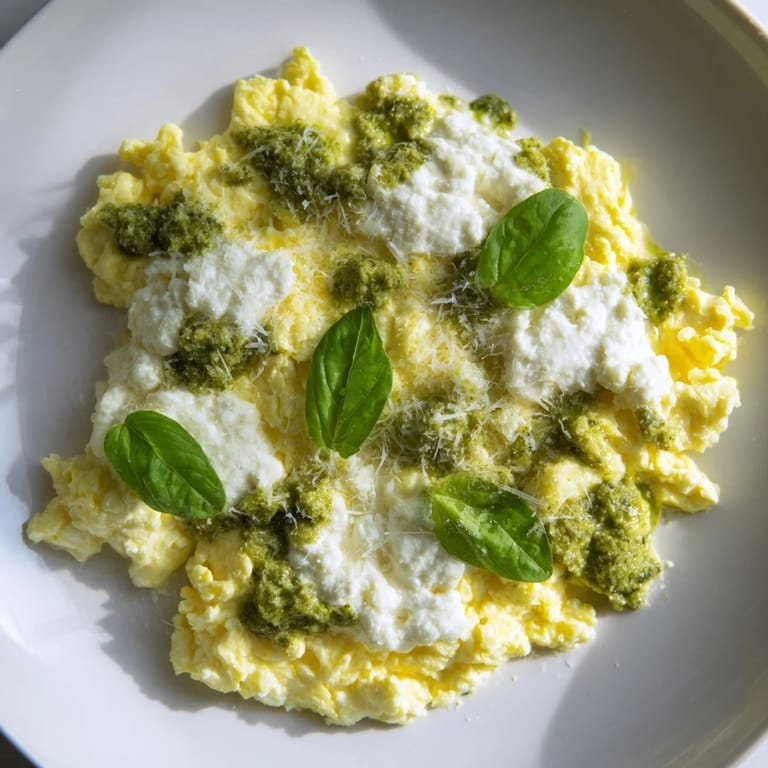
The magic happens in how the soft eggs, creamy cottage cheese, and slight richness from the pesto create different sensations in every bite. If you want to push it further, try sun-dried tomato pesto instead of basil, or fold in some sautéed spinach at the very end so it stays bright and doesn't get mushy. Ricotta works instead of cottage cheese if you prefer something lighter and fluffier.
Making It Work for Your Kitchen
This breakfast is as forgiving as it is flexible, which is why I keep coming back to it when I'm cooking tired or when I need something that works for almost every dietary preference at my table. The only non-negotiable is using a nonstick skillet because scrambled eggs will stick to anything else and ruin the whole quiet, gentle vibe.
- If you're reducing fat, low-fat cottage cheese and skipping the cream still tastes delicious and feels lighter in your stomach.
- Toast some good bread while the eggs cook so it's ready the moment the eggs hit the plate.
- Always taste before you plate because you might need more salt than you think, and it's easier to adjust in the pan than at the table.
 Save
Save These eggs have become my go-to when I want breakfast to feel special without spending an hour in the kitchen. They're the kind of dish that reminds you why cooking for yourself matters.
Recipe FAQ
- → Can I use another cheese instead of cottage cheese?
Yes, ricotta can be used for a similar creamy texture with a milder flavor. Just fold it gently into the eggs as you would cottage cheese.
- → What type of pesto works best for this dish?
Basil pesto is traditional and adds a fresh herbal note, but sun-dried tomato pesto can also provide a rich, tangy variation.
- → How do I avoid overcooking the eggs?
Remove the pan from heat as soon as the eggs begin to set but are still slightly creamy. Residual heat will finish cooking them gently.
- → Is it necessary to add milk or cream to the eggs?
Milk or cream is optional and adds extra creaminess, but you can omit it to keep the eggs firmer and lighter.
- → What is the best way to warm the pesto?
Gently heating the pesto in the skillet for about 30 seconds releases its aroma without cooking off its fresh flavors.
- → Can this dish be served with bread?
Yes, crusty bread or toast complements the creamy eggs and pesto well, adding a satisfying crunch.