 Save
Save I discovered the magic of The Snail Shell Spiral while wandering through a Parisian farmers market on a lazy Sunday afternoon. A chef friend was arranging vegetables in a mesmerizing spiral pattern at her stall, and I was completely captivated. She invited me into her kitchen that evening, and as we layered those beautiful slices of eggplant, zucchini, and bell pepper into that hypnotic spiral, I realized we weren't just cooking—we were creating art. The first time I made it for guests, everyone stopped mid-conversation to admire it before taking their first bite. That moment taught me that food arranged with intention and love speaks a language all its own.
I remember making this for my sister's birthday dinner last summer. She arrived early and caught me in the middle of arranging the spiral, and instead of hiding it away, I invited her to help finish. We stood there together, laughing at how seriously we were taking the vegetable placement, and somehow that shared moment of creation made the dish taste even better. Now whenever she mentions that dinner, it's not just about the food—it's about us working side by side, creating something beautiful together.
Ingredients
- Eggplant, thinly sliced lengthwise (1 small): The deep purple slices are your spiral's anchor, providing substance and a subtle earthiness. Slice them lengthwise so you get those long, elegant ribbons that naturally curve with the spiral.
- Zucchini, thinly sliced lengthwise (1 medium): These pale green slices bring lightness and delicate flavor that won't overpower. They're also the most forgiving vegetable if your knife skills are still developing.
- Red bell pepper, seeded and thinly sliced (1): Don't underestimate the power of that vibrant red. It's not just beautiful—it adds a gentle sweetness that plays beautifully with the earthier vegetables.
- Yellow squash, thinly sliced lengthwise (1): This one surprised me with how much brightness it adds. It's like capturing a little bit of sunshine on your plate.
- Carrot, peeled and thinly sliced lengthwise (1 small): The carrot brings a subtle sweetness and that warm orange tone that grounds the spiral visually.
- Goat cheese, softened (100 g): This is your foundation, your glue that holds the spiral together. Softening it first makes spreading it an absolute pleasure.
- Crème fraîche (2 tbsp): A generous dollop makes the cheese mixture luxuriously smooth and creamy. It's the secret that keeps every vegetable slice moist and tender.
- Fresh basil leaves, finely chopped (2 tbsp): Basil and roasted vegetables are kindred spirits. Chop it just before you use it to capture all that fragrant liveliness.
- Fresh thyme leaves (1 tbsp): Thyme adds an herbaceous depth that makes people ask, 'What is that flavor?' without realizing it's coming from just a whisper of herb.
- Olive oil (2 tbsp): Use good olive oil here—not your priciest, but something you actually enjoy eating. It's the medium that makes everything glisten and taste like it came from an Italian kitchen.
- Sea salt (½ tsp): Sea salt has a cleaner taste than table salt. Season generously because the vegetables will absorb it during roasting.
- Freshly ground black pepper (¼ tsp): Always grind it fresh. Pre-ground pepper tastes tired in comparison.
- Pine nuts, lightly toasted (1 tbsp): Toasting them yourself makes an enormous difference—they go from merely present to absolutely singing with flavor. Toast them in a dry pan for just two minutes until fragrant.
- Microgreens, for garnish (optional): These are the final flourish that says you care about every detail. They add a peppery freshness and make the whole dish feel intentional.
Tired of Takeout? 🥡
Get 10 meals you can make faster than delivery arrives. Seriously.
One email. No spam. Unsubscribe anytime.
Instructions
- Prepare your canvas:
- Preheat your oven to 200°C (400°F). Line a baking tray with parchment paper—this small act prevents heartbreak later when your beautiful vegetables want to stick. Trust me on this.
- Dress the vegetables:
- Lightly brush each slice with olive oil, being gentle but thorough. Season them with sea salt and pepper. This is where the flavor journey begins. You're not drowning them in oil, just giving them a silky coat.
- Roast until tender:
- Spread the slices in a single layer on the tray. Roast for 10-12 minutes until they're pliable and tender but not yet browning. You want them soft enough to curve naturally but still holding their shape. Open the oven door gently and inhale—if it smells like a vegetable garden on a warm evening, you're on track.
- Let them breathe:
- Remove the tray from the oven and let the vegetables cool slightly. This matters more than you'd think—warm vegetables are fragile, but cool ones are cooperative.
- Make the magic spread:
- In a small bowl, combine the softened goat cheese, crème fraîche, chopped basil, and thyme. Mix gently but thoroughly until completely smooth. Taste it. Adjust the herbs if you like—this is your flavor foundation.
- Begin the spiral:
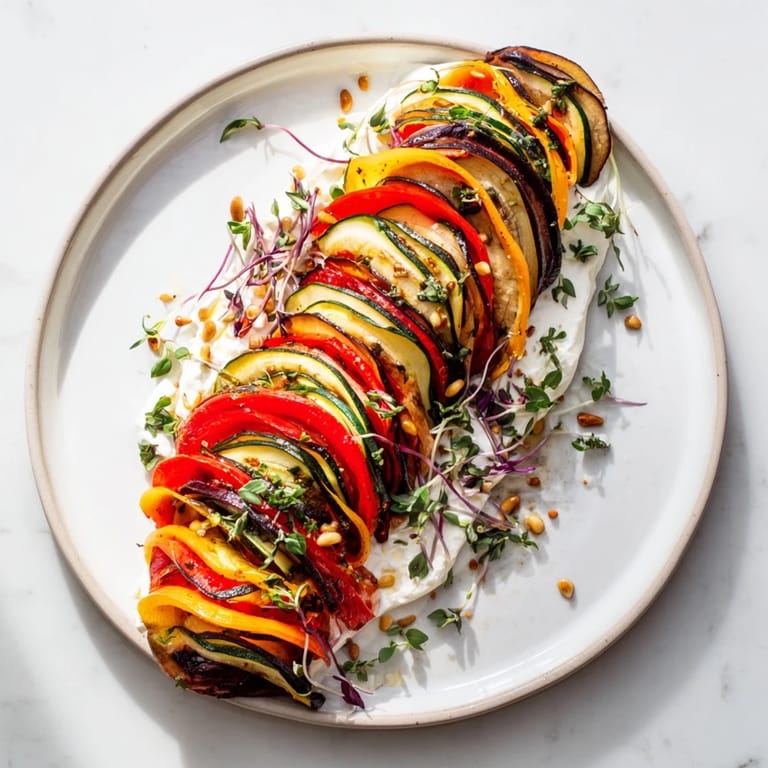
- On a large serving plate, spread a thin, even layer of the cheese mixture starting from the very center and moving outward in a spiral motion. Make it thin enough that you can still see the plate slightly through it. This isn't a thick cake frosting—it's a delicate base.
- Dance with the vegetables:
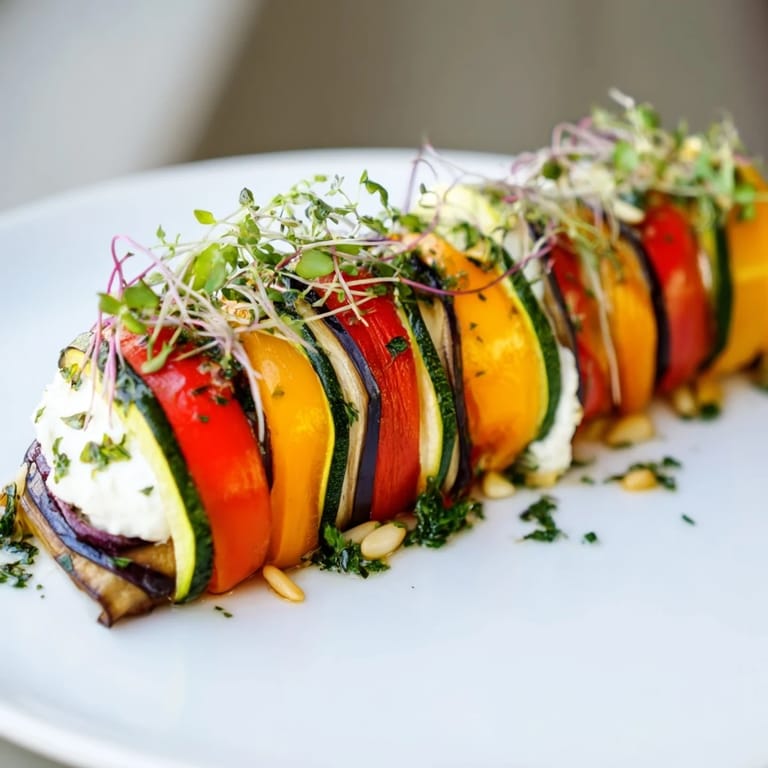
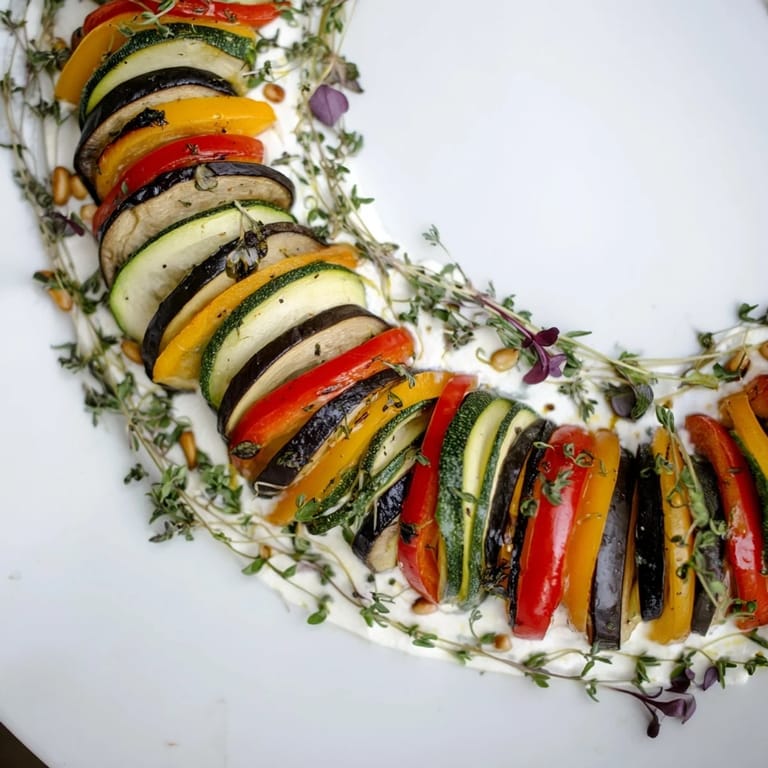
- Starting at the center where you began the cheese, arrange the roasted vegetable slices in a continuous spiral, slightly overlapping each slice. Alternate the vegetables deliberately—eggplant, then zucchini, then bell pepper, then squash, then carrot—creating a rainbow effect that draws the eye inward and outward simultaneously. This step is meditative. Take your time. The spiral will emerge naturally as you work outward.
- The finishing touches:
- Sprinkle the toasted pine nuts gently over the spiral, letting them nestle into the grooves. Scatter microgreens across the top if using them. Step back and admire what you've created before serving at room temperature.
 Save
Save Last winter, I made this for a dinner party where someone came with heartbreak written all over their face. As we sat around the table, the conversation naturally found its way to laughter, and at one point, someone looked at the spiral and said it was so beautiful they almost didn't want to eat it. We all laughed, clinked our glasses, and dove in together. By the end of the meal, there was something different in the air—that particular warmth that comes when a simple dish somehow becomes a memory everyone holds onto.
Choosing Your Vegetables Wisely
The vegetables you choose are the entire story of this dish. I've learned that vegetables at the peak of their season taste incomparably better than those shipped from somewhere cold and distant. In summer, my farmers market has the most extraordinary zucchini and squash—tender, sweet, and practically vibrating with life. That's when I make this dish. The quality difference is remarkable. If you can't find vegetables that make you genuinely excited, consider what's in season and build from there. A beautiful spiral made with mediocre vegetables is still just a spiral. A spiral made with vegetables that taste like they want to be on your plate is something altogether different.
Variations That Honor the Original
Once you understand how this spiral works, you have permission to improvise. I've made it with paper-thin slices of roasted beets that bleed into the cheese in the most gorgeous way—the colors become almost watercolor-like. Sweet potato slices add warmth and a subtle spice note. One autumn, I added roasted mushroom slices for earthiness, and it completely changed the mood of the dish. What I've learned is that the structure—the spiral itself—is strong enough to hold any vegetables you love. The magic is in understanding how color, texture, and flavor work together, then building your own masterpiece.
Serving This Work of Art
This is genuinely one of those rare dishes that demands to be served on your most beautiful plate. There's no point in creating something this stunning and then plating it carelessly. Bring it to the table before anyone cuts into it—let it have its moment of glory. The first slice is always awkward (welcome to spiral geometry), but by the second slice, people understand the rhythm and can cut cleanly. Serve with crusty bread to capture every trace of that herbed cheese mixture. I've found that crackers work beautifully too, especially something with seeds or whole grains that can stand up to the delicate flavors without overwhelming them.
- Use your most beautiful plate or serving board—this deserves to be displayed.
- Let guests admire it before eating; anticipation makes food taste better.
- Have extra olive oil on hand for drizzling at the table; some people love adding that final richness.
 Save
Save Every time I make this dish, I'm reminded that the most impressive meals don't require elaborate techniques—they require intention and care. This spiral will make people slow down and actually look at what they're eating, and that moment of connection is what cooking is really about.
Recipe FAQ
- → How should the vegetables be sliced?
Slice vegetables thinly lengthwise to ensure even roasting and easy layering in the spiral.
- → What is the best way to soften the cheese mixture?
Blend goat cheese with crème fraîche and fresh herbs until smooth for easy spreading and balanced flavor.
- → Can this dish be served warm?
It is best served at room temperature to maintain the texture of the roasted vegetables and creaminess of the cheese.
- → What alternatives enhance the spiral’s flavor and appearance?
Adding thinly sliced roasted beets or sweet potatoes introduces vibrant colors and subtle sweetness.
- → Are there easy substitutions for allergens?
For dairy allergies, replace goat cheese and crème fraîche with plant-based spreads; note pine nuts contain tree nuts.