 Save
Save The first time I made crispy rice salmon stacks, I was trying to impress someone who thought I couldn't cook sushi at home. I'd spent half the afternoon figuring out how to make rice crispy—not the mushy stuff from a rice cooker, but actual golden squares that crackled when you bit into them. When I pulled them from the pan and they made that perfect sizzling sound, I knew I'd discovered something special. Now it's the dish people ask me to bring, because it looks fancy but the secret is laughably simple.
I made this for a dinner party on a rainy Thursday, and something magical happened—everyone put their phones down and just ate. There were no complaints about texture or seasoning, just quiet appreciation. My friend Sarah asked for the recipe three times before I finally texted it to her, and now she makes it for her own dinner parties. That's when I realized it wasn't just good food; it was the kind of dish that makes people feel welcomed.
Ingredients
- Sushi rice: This is your foundation—rinse it well to remove the starch, or you'll end up with gluey rice instead of those distinct, separable grains. Short-grain sushi rice is essential because it has the right stickiness to hold together when fried.
- Rice vinegar, sugar, and salt: These three ingredients are what transform plain steamed rice into something with personality. The vinegar adds brightness, the sugar balances it, and the salt ties everything together.
- Sushi-grade salmon: Buy it from a reputable fishmonger and use it the same day. The quality of your salmon makes an enormous difference in how fresh and clean the final dish tastes.
- Soy sauce: Low-sodium soy sauce gives you control over the saltiness without overpowering the delicate salmon flavor.
- Toasted sesame oil: Just a teaspoon goes a long way. It adds a nutty depth that regular oil can't touch.
- Sriracha: Optional, but it adds a gentle kick of heat and a slight sweetness that plays beautifully with the salmon.
- Avocado: Choose one that's ripe but still holds its shape—too soft and it'll mash, too hard and it'll be mealy.
- Spicy mayo: This is the glue that holds everything together, literally and flavor-wise. The sriracha cuts through the richness of the mayo.
- Sesame seeds: Toast them lightly if you have time; the nutty flavor is worth those extra two minutes.
Tired of Takeout? 🥡
Get 10 meals you can make faster than delivery arrives. Seriously.
One email. No spam. Unsubscribe anytime.
Instructions
- Prepare the rice foundation:
- Rinse your sushi rice under cold water, stirring gently with your fingers until the water runs clear—this removes surface starch so each grain stays separate. Cook it with the measured water, then let it steam off the heat for ten minutes while covered; this completes the cooking without drying it out.
- Season with intention:
- While the rice is still warm, fold in the vinegar-sugar-salt mixture gently with a wooden spoon or shamoji (rice paddle). The warmth helps the seasonings absorb evenly, and you want to separate the grains rather than mash them together.
- Set and chill the rice block:
- Press the cooled rice into a parchment-lined pan to an even thickness, then refrigerate it for 20 minutes. This firms it up so you can cut clean squares that won't crumble when you fry them.
- Marinate the salmon:
- Combine your diced salmon with soy sauce, sesame oil, sriracha, lime juice, and green onion in a bowl, then refrigerate it. The cold prevents the salmon from cooking prematurely while the flavors meld together.
- Make the spicy mayo:
- Whisk together mayonnaise and sriracha until you get a smooth, sunset-colored sauce. This only takes thirty seconds but tastes like you put in way more effort.
- Fry until golden:
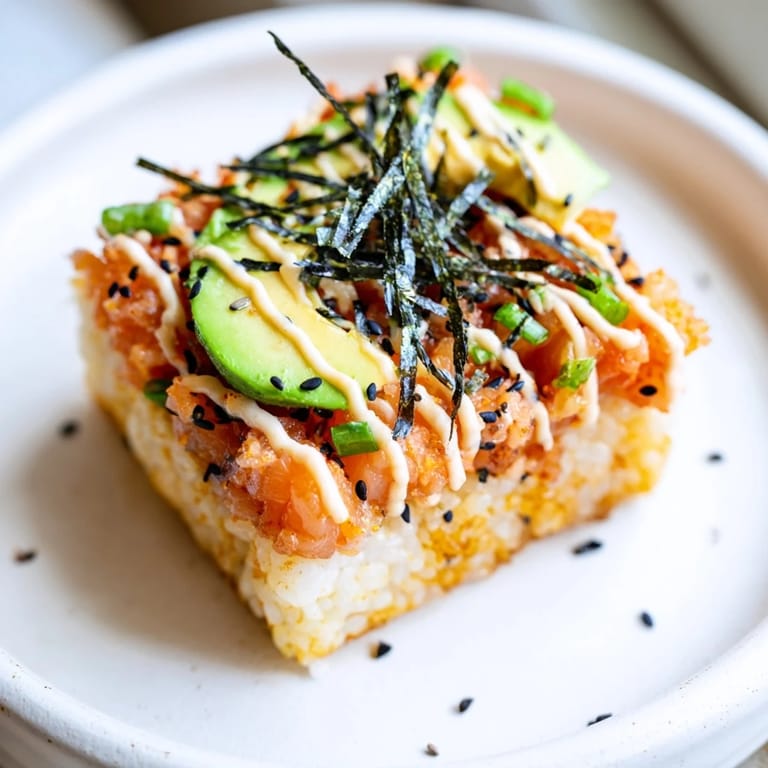
- Cut your chilled rice into two-inch squares and fry them in a hot nonstick skillet with just enough oil to coat. You'll hear them sizzle immediately—that's how you know the temperature is right; two to three minutes per side gives you a shatteringly crispy exterior while keeping the inside tender.
- Assemble with care:
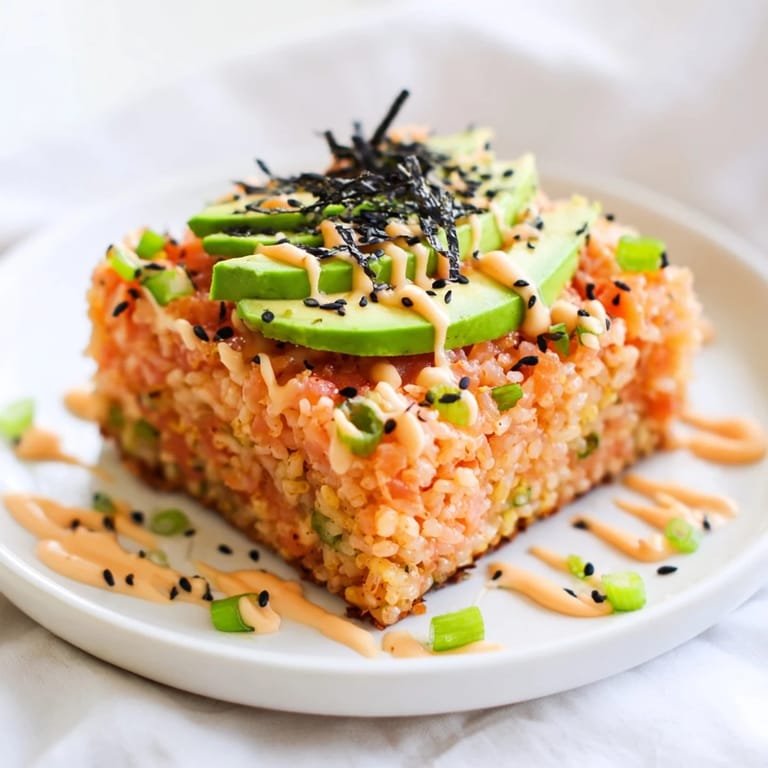
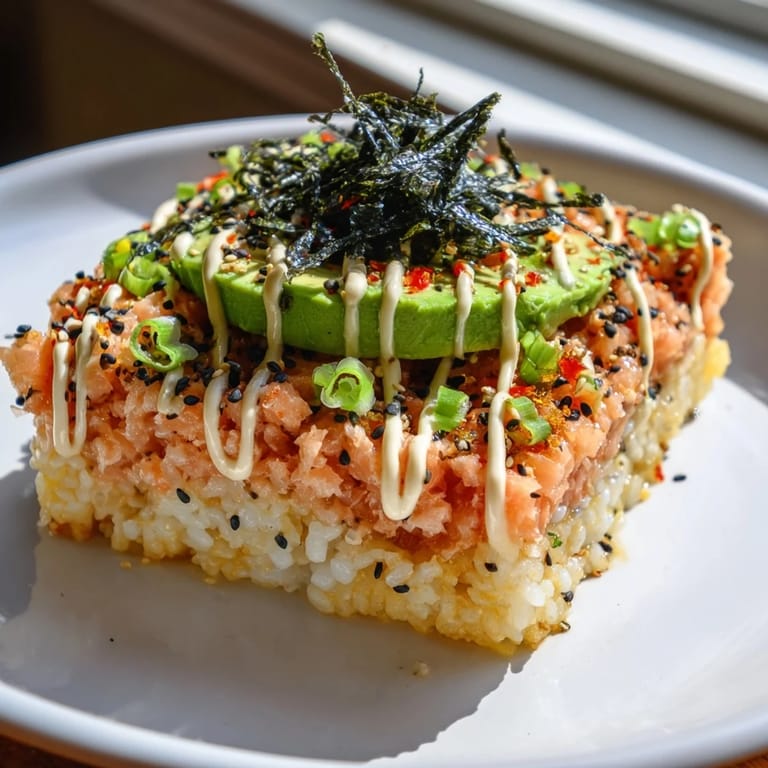
- Start with your warm crispy rice square, then layer avocado, salmon mixture, a drizzle of spicy mayo, and a generous sprinkle of sesame seeds. If you're using nori strips or chives, add them at the very end so they stay crisp.
- Serve right away:
- The magic of this dish is in the temperature contrast—warm crispy rice against cold, fresh toppings. Eat them while the rice still crackles.
 Save
Save There was a moment during that Thursday dinner when I realized I'd stopped thinking about technique and started just enjoying the food. That's when cooking shifts from something you do to something that brings people together. This dish does that for me every single time.
The Art of Crispy Rice
Crispy rice is one of those cooking techniques that seems intimidating until you understand what's actually happening. You're essentially shallow-frying compact blocks of cooked rice, and the key is having enough moisture in the rice to create steam that helps it crisp on the outside while staying tender inside. Too dry and it shatters; too wet and it steams instead of fries. The thirty seconds you spend getting the pan temperature right saves you from ten minutes of frustration. Medium-high heat is your sweet spot—hot enough to create a golden crust in two to three minutes, but not so hot that the outside burns before the inside heats through.
Salmon Selection and Handling
Sushi-grade salmon is more than just a label—it means the fish has been flash-frozen to kill parasites and handled with precision from ocean to counter. When you buy it, look for a deep coral-pink color and ask your fishmonger when it was frozen and thawed. Never refreeze salmon that's been thawed, and use it the same day you bring it home. The marinade of soy sauce, sesame oil, and lime juice seasons the salmon while the cold temperature keeps it firm and silky. Some people worry about eating raw fish, but sushi-grade salmon is genuinely safe when sourced properly, and the flavors it brings are worth a trip to a good fish counter.
Building Layers That Actually Work
The stacking order matters more than you'd think. Start with the crispy rice on the bottom—it's your structural base and the textural anchor. Avocado goes next because it clings to the warm rice and adds creaminess without sliding off. The salmon mixture sits on top of that, held in place by gravity and its own slight stickiness. The spicy mayo acts as edible glue, binding the layers while adding a bright, creamy counterpoint. Sesame seeds, chives, and nori are purely for the top because they need to stay visible and crisp. If you reverse the order or try to build it upside down, everything slides around and you lose that satisfying architectural moment when you pick it up whole and take that first bite.
- If your avocado is too soft, slice it instead of mashing—it'll hold its shape better on the warm rice.
- Make your spicy mayo slightly thicker by using a little less mayo if you want everything to stay stacked without sliding.
- Assemble each stack individually right before serving rather than building everything at once.
 Save
Save This dish has become my answer to the question of what to make when I want to impress without spending all day in the kitchen. It's modern enough to feel exciting and familiar enough to be deeply satisfying.
Recipe FAQ
- → How do you make the rice crispy?
Cook sushi rice, chill it to firm up, then cut into squares. Fry the squares in vegetable oil until golden and crispy on all sides.
- → What salmon is best for this dish?
Use sushi-grade salmon for freshness and safety. If preferred, cooked or canned salmon can be substituted.
- → How is the salmon mixture seasoned?
The salmon is combined with soy sauce, toasted sesame oil, lime juice, sriracha, and green onion for a balanced and zesty flavor.
- → Can this dish be served warm?
Yes, serve immediately so the rice remains crispy and the salmon mixture is chilled for contrast.
- → What toppings enhance the flavor?
Avocado adds creaminess, spicy mayo provides heat, and sesame seeds with optional chives or nori strips offer extra texture and flavor.