 Save
Save My neighbor stopped by one November afternoon with a ham bone wrapped in foil, insisting I do something useful with it instead of tossing it. I'd never made stock from scratch before, and something about the weight of that bone in my hands felt important—like I was about to learn a kitchen secret. That evening, while the broth simmered quietly on my stove, the house filled with this warm, savory smell that made me understand why people save these things. It became the foundation for this soup, which has since become my answer to almost every cold day that follows.
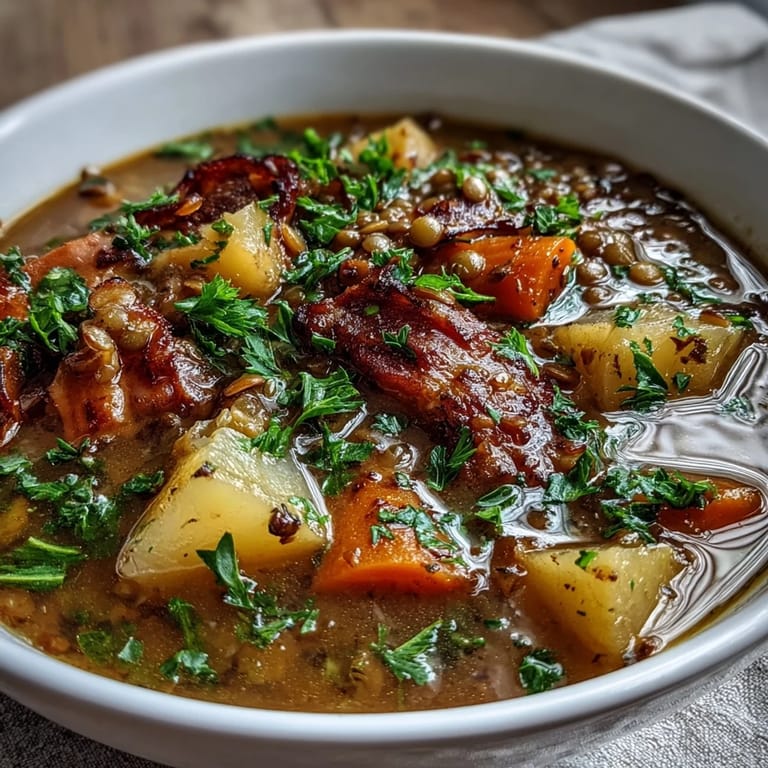
I made this for my sister's family on a gray Sunday, and her kids actually asked for seconds—a small miracle at their house. The root vegetables turned soft enough to almost dissolve, while the lentils stayed intact with just enough chew to feel substantial. Watching them eat something I'd built from a ham bone felt oddly triumphant, like I'd cracked some kind of code about real cooking.
Ingredients
- Meaty ham bone: This is your secret weapon—ask your butcher to leave extra meat on it, or save it from a holiday ham, because that's where the soul of the broth lives.
- Brown or green lentils: They hold their shape better than red lentils and actually taste earthier, like they belong in a proper soup.
- Root vegetables (carrots, parsnips, celery, potatoes): Each one brings its own sweetness to the party—parsnips especially add an almost creamy undertone when they soften.
- Bay leaves and peppercorns: These steep into the broth slowly, building layers of flavor you can't rush.
- Thyme and rosemary: Dried herbs work perfectly here since they'll simmer for hours and develop a deeper, almost woody character.
- Olive oil: A good glug helps the vegetables release their natural sugars when you sauté them, which is the real foundation of flavor before anything hits the broth.
Tired of Takeout? 🥡
Get 10 meals you can make faster than delivery arrives. Seriously.
One email. No spam. Unsubscribe anytime.
Instructions
- Build your broth foundation:
- Place the ham bone in a large pot with cold water, bay leaves, and peppercorns, then bring it to a boil over medium-high heat. You'll see foam rise to the surface—skim it off with a spoon because that's impurities leaving, which keeps your broth clear and clean tasting. Reduce the heat and let it simmer partially covered for 1 hour and 15 minutes, just gentle enough that you can hear it bubbling quietly in the background.
- Prep while the broth works:
- While the bone is doing its job, peel and dice all your vegetables into similar-sized pieces so they cook evenly—think roughly half-inch cubes. Rinse your lentils under cold water until the water runs clear, which removes any dust or debris that might have come from the bag.
- Strain and clarify:
- When the broth time is up, carefully remove the ham bone and let it cool just enough to handle without burning yourself. Strain everything through a fine mesh into a fresh pot, discarding the bay leaves, peppercorns, and any solids—what you're left with is pure, golden liquid that tastes nothing like store-bought.
- Sauté the vegetables:
- Heat olive oil in a skillet over medium heat and add your onion, carrots, parsnips, and celery all together. Cook for about 5 minutes until they start to soften and turn slightly golden at the edges, then add your minced garlic and cook just 1 minute more—this is the sweet spot before garlic turns bitter.
- Bring everything together:
- Add the sautéed vegetables, potatoes, lentils, thyme, and rosemary to your broth and simmer over medium heat for 35 to 40 minutes. You'll know it's done when the lentils are tender but still holding their shape and the potatoes practically fall apart if you press them with a spoon.
- Rescue the meat:
- While the soup finishes, pick any meat clinging to the ham bone—there's usually more than you'd expect—chop it roughly, and stir it back into the pot. This is the moment the soup becomes whole and complete.
- Taste and finish:
- Remove those bay leaves if you spot them, then taste a spoonful and season generously with salt and pepper. This is your only chance to correct it, so trust your palate and add what feels right.
 Save
Save This soup somehow tastes better the next day, which I discovered almost by accident when I reheated leftovers and found the flavors had deepened into something more rounded and complex. It's become my go-to gift when someone's having a rough week—something about handing over a container of homemade soup says care in a way flowers never quite manage.
The Magic of a Slow Simmer
There's something meditative about letting a pot bubble away on the stove for two hours, knowing that time and low heat are doing work you can't rush. I learned early on that watching it doesn't help—the best soups develop while you're reading in the other room or folding laundry. The smell is your timer, not the clock.
Making It Your Own
Once you understand the bones of this soup—the broth, the lentils, the soft vegetables—it becomes a canvas for whatever you have on hand or whatever mood you're in. Some days I add a splash of cider vinegar at the end for brightness, other times I stir in a spoonful of Dijon mustard when I'm feeling adventurous. The ham bone is non-negotiable, but everything else can shift and change.
Storage and Second Life
This soup freezes beautifully for up to three months, which means you can make a huge batch once and solve dinner multiple times over—a win in any season.
- Cool it completely before freezing so condensation doesn't make the container sweaty and weird.
- If you're adding fresh parsley and lemon at serving time, wait until after you've thawed to keep those flavors bright and alive.
- A frozen container pulled from the freezer and reheated on the stove tastes like you just made it, which is the whole point.
 Save
Save This soup has quietly become the thing I make when I want to feel like I know what I'm doing in the kitchen. Every bowl tastes like home, like patience, like someone who cared enough to get it right.
Recipe FAQ
- → How do I prepare the ham bone for the broth?
Place the ham bone in cold water with bay leaves and peppercorns, bring to a boil, then simmer for over an hour to extract rich flavors.
- → Can I use different lentils for this dish?
Brown or green lentils work best as they hold their shape and impart a hearty texture to the soup.
- → What vegetables complement the broth's flavor?
Root vegetables like carrots, parsnips, potatoes, celery, and onion add natural sweetness and earthiness that balance the savory broth.
- → How can I add a smoky depth to the soup?
Incorporate smoked sausage or a pinch of smoked paprika during cooking to enhance the smoky flavor profile.
- → Is it better to cook this soup ahead of time?
Yes, allowing the soup to rest enhances the flavors, making it even more satisfying when reheated the next day.
- → What garnishes brighten the finished dish?
Fresh parsley adds herbaceous notes, while lemon wedges provide a refreshing, tangy contrast to the rich broth.