 Save
Save My neighbor Marcus taught me how to make proper gumbo on a humid August afternoon when the kitchen felt like it might melt. He stood at my stove with a wooden spoon, patiently explaining that the roux was the whole ballgame, and I'd ruined mine twice by rushing it. That day, watching the flour and oil transform into liquid mahogany over 20 minutes, something clicked. Now whenever I make gumbo, I can almost hear his voice reminding me that slow is the only speed that matters here.
I made this for my partner's work friends on a Friday night, nervous because gumbo felt fancy and intimidating. Within an hour, people were circling back to the pot with their bowls, asking for seconds before finishing their first. One guest asked for the recipe, and I remember feeling a small, silly pride standing there with a ladle in my hand.
Ingredients
- Boneless, skinless chicken thighs (350 g): They stay tender through the long simmer and carry more flavor than breasts ever could.
- Smoked andouille sausage (225 g): This is where the soul of gumbo lives; don't swap it for regular sausage without acknowledging what you're losing.
- Fresh or frozen okra (250 g): It thickens the gumbo naturally as it breaks down, though some people swear by filé powder instead.
- Onion, bell pepper, celery (the holy trinity): This combination is non-negotiable in Cajun cooking; it's the foundation of flavor.
- Garlic (3 cloves): Add it after the trinity softens, otherwise it can turn bitter from the heat.
- Diced tomatoes (2 fresh or 1 can): Fresh tomatoes add brightness, but canned works just as well and takes the guessing out of ripeness.
- All-purpose flour (60 g) and vegetable oil (60 ml): Equal parts make a roux that's forgiving; this ratio is your safety net.
- Chicken stock (1.5 liters): Use good stock here because it's going to be the voice of the entire pot.
- Bay leaves, thyme, smoked paprika, cayenne: These spices build layers; don't dump them all in at once.
- Worcestershire sauce and hot sauce: These are your adjusters at the end, the things that let you make it your own.
Tired of Takeout? 🥡
Get 10 meals you can make faster than delivery arrives. Seriously.
One email. No spam. Unsubscribe anytime.
Instructions
- Build the roux, the most important part:
- Heat oil in a large Dutch oven over medium heat, then whisk in flour slowly. Keep stirring constantly for 15 to 20 minutes until it's deep chocolate brown, almost mahogany. You'll smell it change, and that's your cue to keep watching; once it hits that color, remove from heat briefly if it's getting too dark.
- Cook the holy trinity:
- Add the chopped onion, bell pepper, and celery to the roux and sauté for 3 to 4 minutes until they soften and lose their raw edges. Stir in the garlic after a minute so it doesn't burn.
- Brown the meat:
- Add the sausage and chicken pieces and let them sit for a moment before stirring, so they pick up some color from the hot roux. Cook for about 5 minutes until the chicken is lightly browned on the outside.
- Welcome the okra:
- Slice fresh okra or thaw frozen okra and add it to the pot. Cook for 3 to 4 minutes, stirring often, as it begins to release its thickening properties.
- Bring it all together:
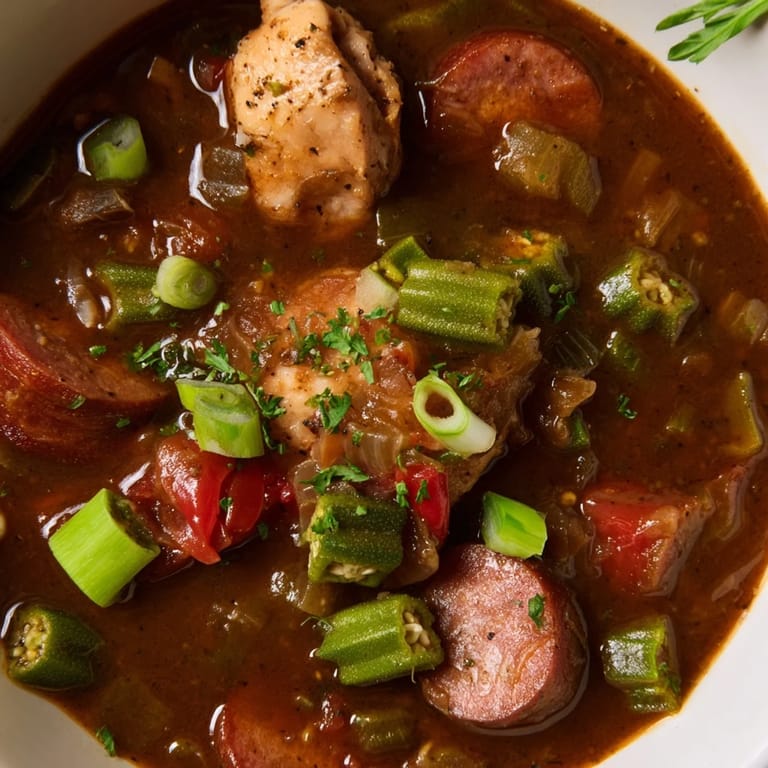
- Add the tomatoes, chicken stock, bay leaves, thyme, paprika, cayenne, Worcestershire sauce, salt, and pepper. Bring to a boil, then turn the heat down low and let it simmer uncovered for 45 to 50 minutes, stirring occasionally so nothing sticks to the bottom.
- Finish and taste:
- Remove the bay leaves and taste carefully. This is where you add more salt, cayenne, or hot sauce to make it yours. If you want it thicker, sprinkle in filé powder off the heat and stir.
- Serve with care:
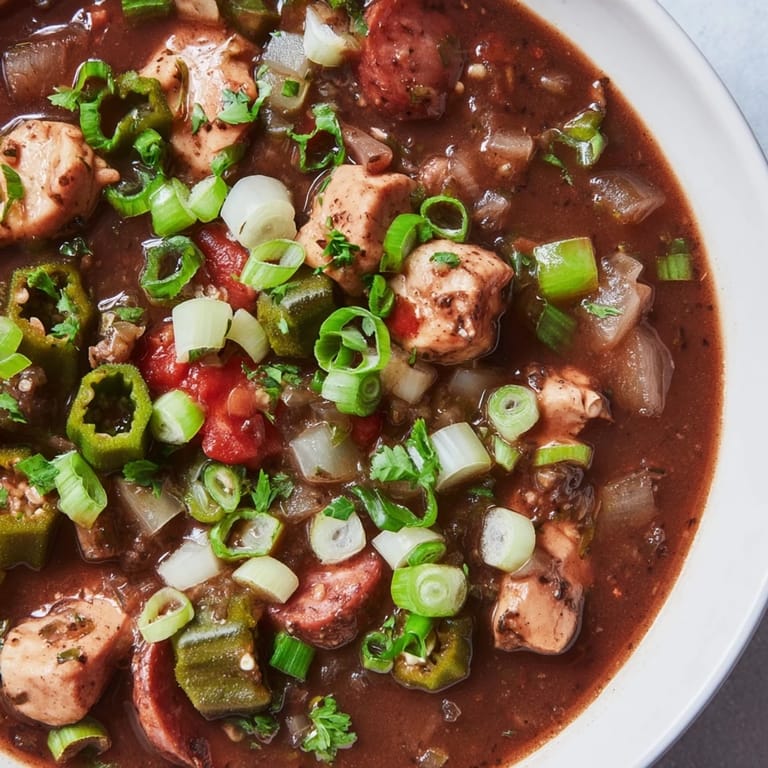
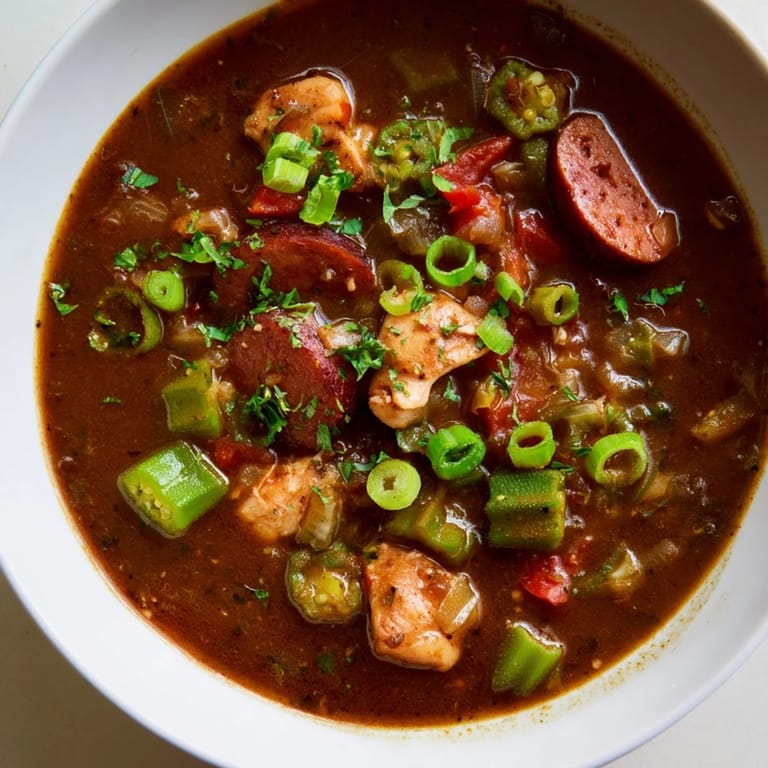
- Ladle the gumbo over a bowl of white rice, then top with fresh spring onions and parsley. Let people add hot sauce to their own bowls.
 Save
Save I'll never forget the moment my brother, who usually just pushes food around his plate, asked for thirds and actually praised something I made. Gumbo has this quiet power to make people slow down and linger at the table.
The Roux Is Everything
People fear the roux, and honestly, that fear is earned. But here's the thing: it's just flour and oil that need time and attention. The color transformation is real and visible, which means you're never flying blind. If you keep the heat at medium and stir constantly, you've already won half the battle. The moment it hits that deep brown, it smells almost like caramel, and you'll know you got it right.
Why Okra Works Here
Okra gets a bad reputation for being slimy, but that's exactly why it belongs in gumbo. As it simmers, those compounds break down and naturally thicken the broth without needing cream or cornstarch. Fresh okra is ideal because it has more flavor and texture, but frozen okra that's been properly thawed works just fine. Some people use filé powder instead, which is ground sassafras and tastes distinctly herbal.
Making It Your Own
Gumbo is forgiving once you understand the framework. You can swap the chicken for extra sausage, add shrimp in the last few minutes, or throw in different vegetables if that's what you have. The spice level is entirely up to you, so taste as you go and adjust the cayenne and hot sauce to match your preference. Some families add okra early, others late, and both camps swear their way is traditional.
- For seafood gumbo, add peeled shrimp or crab meat in the last 10 minutes so they don't toughen up.
- Serve with crusty French bread to soak up the broth, which is honestly half the meal.
- This tastes even better the next day, so don't be shy about making extra.
 Save
Save This gumbo has become the meal I make when I want to feed people something that feels like home, even if that home is just the one we're building together around a table. It's the kind of dish that reminds you why cooking for others matters.
Recipe FAQ
- → What type of sausage is best for this dish?
Smoked andouille sausage is traditional, lending a smoky, spicy flavor, but any smoked sausage works well as a substitute.
- → How is the roux prepared and why is it important?
The roux is made by cooking equal parts flour and oil slowly until deep chocolate brown, adding rich, nutty flavor and thickening the broth.
- → Can frozen okra be used in place of fresh?
Yes, just thaw and drain frozen okra before adding to avoid excess moisture that can affect the stew's consistency.
- → What is filé powder and how is it used?
Filé powder, made from ground sassafras leaves, is added off the heat to thicken the stew and add a unique herbal note traditional to this dish.
- → How long should this stew simmer for optimal flavor?
Simmer uncovered for 45–50 minutes to develop layers of flavor and tenderize the meat without losing the richness of the broth.