 Save
Save My neighbor handed me a steaming bowl of this soup on a crisp October morning, still wearing her barn jacket, and said nothing except, "You'll understand why I make this every year." She was right. There's something about navy beans and ham that tastes like actual comfort, the kind that settles into your bones when the weather turns. I've made it countless times since, and it never feels like a chore—just the opposite, really.
I made this for my parents the winter my dad was recovering from surgery, and watching him actually ask for seconds told me more than any get-well card ever could. My mom still asks for the recipe every few months, which means I've written it down approximately seventeen times and she still texts asking if she's missing something. The secret, I finally told her, is that there's no secret—it's just the patience to let everything simmer together.
Ingredients
- Dried navy beans: These small, creamy beans are the backbone here—soak them if you have time, but honestly, an hour-long quick soak works just fine when you're hungry.
- Smoked ham hock or diced cooked ham: The ham hock gives you miles of flavor simmered into the broth, but diced ham is faster and works equally well if you're short on time.
- Yellow onion, carrots, and celery: This is your flavor foundation, so don't skip the sauté step—it makes everything taste deeper and rounder.
- Garlic cloves: Minced fresh garlic blooms beautifully once it hits the hot pan, filling your kitchen with that unmistakable, mouth-watering smell.
- Low-sodium chicken broth or water: Use broth for richer flavor, water for something lighter—I've done both and neither is wrong.
- Fresh thyme sprigs: Fresh thyme gives you herbaceous notes that dried can't quite match, but if you only have dried, use half the amount and it's still delicious.
- Bay leaves: These quiet workers add complexity without announcing themselves—always remove them before serving.
- Black pepper: Freshly ground pepper tastes sharper and more alive than the pre-ground stuff.
- Fresh parsley: A handful scattered on top at the end brightens everything up and makes it look intentional.
Tired of Takeout? 🥡
Get 10 meals you can make faster than delivery arrives. Seriously.
One email. No spam. Unsubscribe anytime.
Instructions
- Soak your beans (or don't):
- Overnight soaking is the patient route, but if you're short on time, the quick soak of boiling water for five minutes then resting for an hour works just as well. Either way, drain and rinse before they go into the pot.
- Build your flavor base:
- Heat a splash of oil in your Dutch oven and let the onion, carrots, and celery soften for about five minutes over medium heat, stirring occasionally. You're not looking for color here, just for these vegetables to become tender and start releasing their sweetness.
- Wake up the garlic:
- Add minced garlic and let it cook for exactly one minute—long enough to smell incredible, short enough that it doesn't burn and turn bitter. This is the moment the soup starts smelling like home.
- Combine everything:
- Dump in your beans, ham, broth, thyme, bay leaves, and pepper, stirring everything together so nothing sticks to the bottom. This is when you can taste and adjust the seasoning, knowing it'll deepen as it simmers.
- Let it simmer:
- Bring everything to a boil, then lower the heat, cover the pot, and let it bubble gently for about ninety minutes until the beans are completely tender. You'll know they're ready when they practically fall apart if you push one against the side of the pot.
- Rescue the ham:
- If you used a ham hock, fish it out, let it cool slightly, then shred any meat from the bone and return it to the pot. If you used diced ham, skip this step.
- Finish and taste:
- Remove the thyme sprigs and bay leaves, then taste and adjust salt and pepper—remember that the broth was low-sodium, so you'll probably want more salt than you think. This is the moment to make it yours.
- Serve with intention:
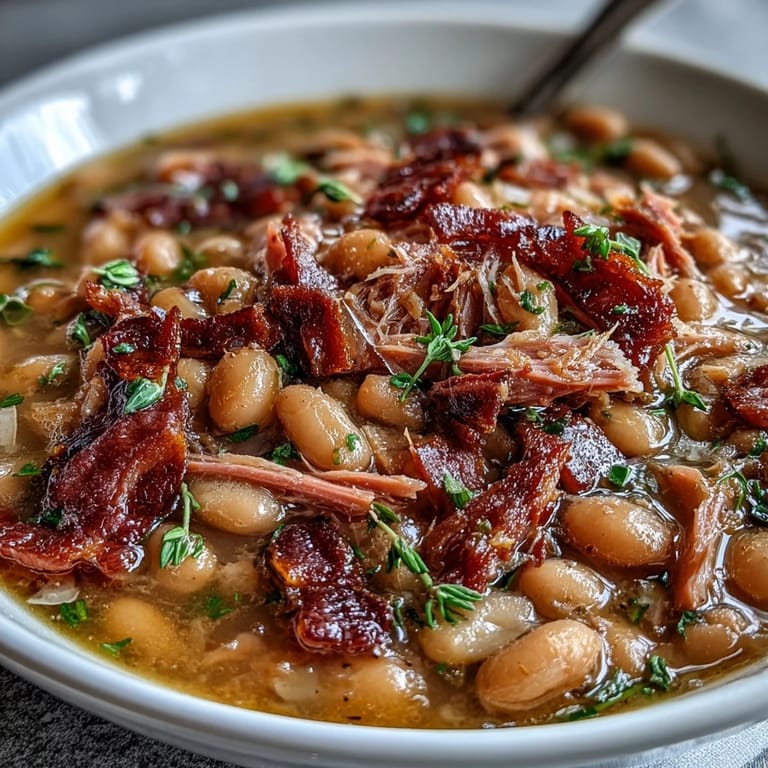
- Ladle it into bowls, scatter parsley on top if you're feeling fancy, and serve with crusty bread that's perfect for soaking up the broth. Eat it while it's hot and everything tastes exactly right.
 Save
Save There was a night when my daughter came home from school upset about something she wouldn't talk about, and I watched her eat two bowls of this soup without saying anything, just quietly eating. Halfway through the second bowl she finally started talking, and I realized the soup had done what I couldn't—created a safe, warm space where the words could start to come. That's when I understood that this recipe was about more than flavor.
When to Mash for Creaminess
If you want a thicker, creamier soup, grab a wooden spoon once the beans are fully tender and gently mash some of them right there in the pot—you're breaking them down just enough to thicken the broth without turning everything into mush. I do this maybe half the time, depending on my mood and whether anyone at the table prefers a brothier soup. Both versions are equally valid, equally comforting.
Swaps That Actually Work
This soup is forgiving enough to roll with whatever you have on hand, which is partly why I make it so often. Smoked turkey leg works beautifully instead of ham, giving you a slightly different but equally satisfying flavor profile, and I've used smoked sausage when I was feeling adventurous. If your thyme is looking sad in the fridge, dried thyme is fine—just use about half the amount since it's more concentrated.
The Days After: Leftovers and Storage
This soup tastes even better the next day after everything has had time to get to know each other, and it freezes for up to three months without losing a thing. I pour mine into containers and label them with the date because I've definitely opened the freezer three months later and wondered if something was safe to eat. A squeeze of fresh lemon or a dash of hot sauce can wake it up when you're reheating, reminding you why you loved it the first time.
- Store in the fridge for up to four days in an airtight container, or freeze in portions for grab-and-go meals.
- Thaw overnight in the fridge, then reheat gently on the stovetop with a splash of extra broth if it's too thick.
- Fresh parsley should be added fresh after reheating, never frozen, so it stays bright and alive.
 Save
Save This soup reminds me that the best recipes are the ones that show up when you need them most, whether that's a warm bowl on a cold day or a quiet kitchen moment when everything else feels loud. Make it, serve it, watch what happens.
Recipe FAQ
- → Can I use quick-soak beans for this dish?
Yes, quick-soaking navy beans saves time while still producing tender results. Boil for 5 minutes, then soak for an hour before cooking.
- → What can I substitute for ham in this soup?
Smoked turkey leg or sausage are excellent options that add a smoky flavor similar to ham.
- → Is it necessary to soak the navy beans overnight?
Soaking overnight softens the beans and reduces cooking time, but you can also use the quick-soak method or cook unsoaked beans longer.
- → How can I make the soup creamier?
Mash some of the cooked beans directly in the pot to thicken and create a creamier texture.
- → What herbs and spices enhance the flavor best?
Fresh thyme and bay leaves provide aromatic depth, while black pepper adds gentle heat. Fresh parsley can be added as garnish for brightness.